Weeping face: how to prevent it
Learn why weeping faces form and how proper drainage and soil pressure management prevents them.
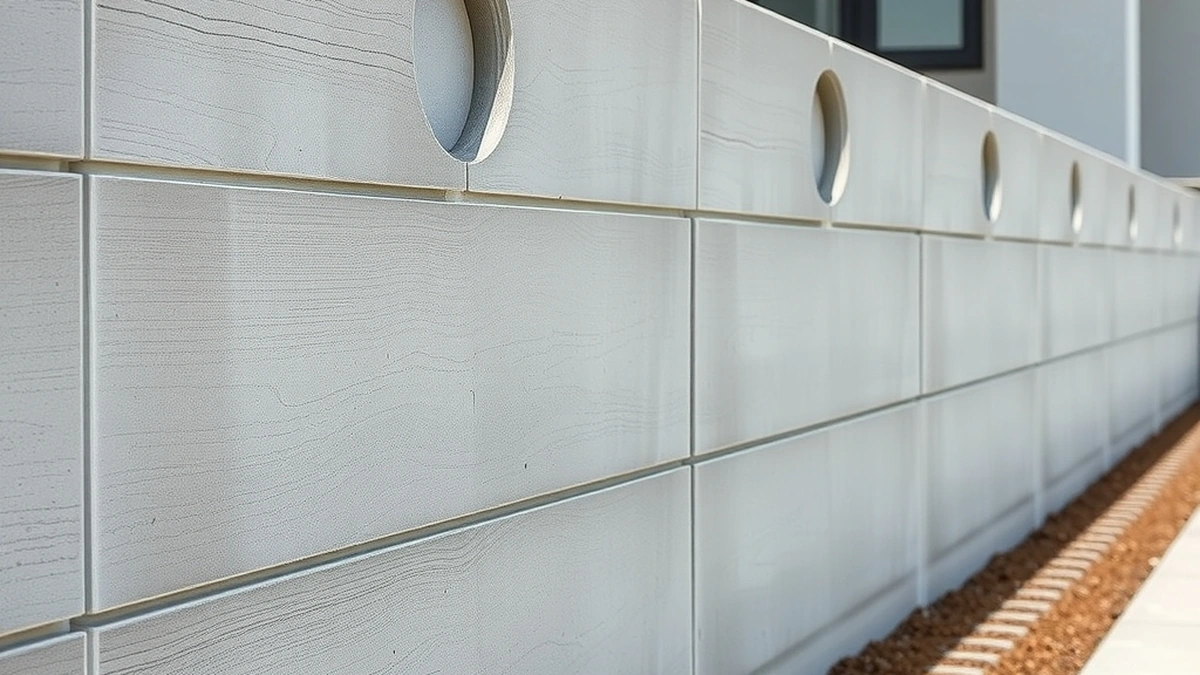
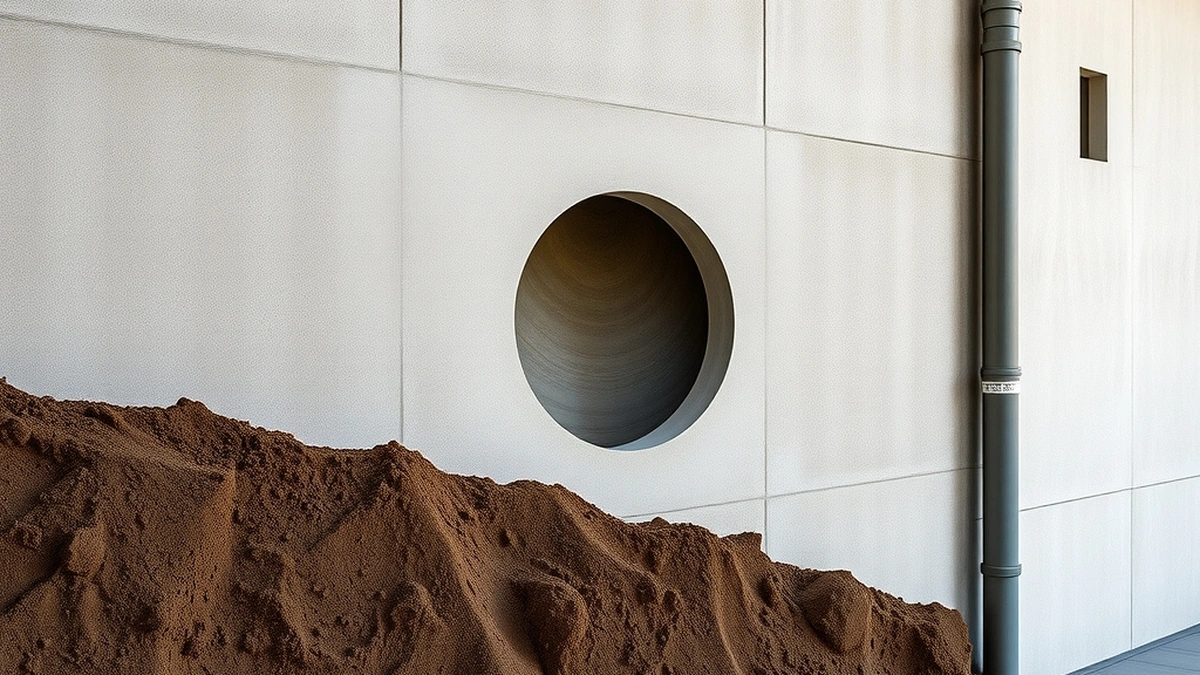
A weeping face occurs when soil behind the wall pushes outward through the face. Prevent it by installing a reliable drainage system and using appropriate backfill materials.
- Typical range
- Varies by system and site
- First step
- Measure the space and confirm the load
- Professional help
- Recommended for structural or electrical work
Some links on this page are affiliate links.If you buy through them we may earn a commission at no extra cost to you. We do not accept payment for rankings. Read the full disclosure.
A weeping wall face is water leaving the wall where it should have left through the drain, and preventing it costs $5 to $15 per square foot for the drainage and backfill detail that should have been built in the first place. On a 160 sq ft wall that is $800 to $2,400. Repairing the face after it has stained, spalled, or pushed out costs more, because the wall has to be opened.
What a weeping face is
A weeping face is a retaining wall that is passing water through its face rather than draining it through the gravel envelope and pipe behind the wall.
The water shows as damp patches, dark streaks, white mineral deposits, or actual flow at the joints. On a block wall it often appears along the courses. On a poured wall it shows at form lines and cracks. In either case the wall is acting as the drain, which is the job it was built to avoid.
Why water comes through the face
Water gets behind a wall from rain, from a slope above it, from a downspout, or from a spring. In a correctly built wall, that water enters a gravel envelope, flows down to a perforated pipe at the footing, and leaves through an outlet.
A weeping face means one of three things happened. The envelope is missing or too thin, so water sits against the wall. The filter fabric is missing or clogged, so the gravel has silted up and cannot pass water. The outlet is blocked or buried, so the pipe is full and the water finds another way out.
All three are construction defects, and all three are cheaper to prevent than to fix.
The drainage detail that prevents it
| Component | What it does | If it is missing |
|---|---|---|
| Washed gravel envelope | Collects water and keeps it off the wall | Water sits against the face |
| Filter fabric | Stops fines clogging the gravel | Envelope silts up within seasons |
| Perforated pipe at footing | Carries water along the wall | Water ponds at the base |
| Outlet to daylight | Removes water from the system | Pipe fills and backs up |
| Compacted backfill | Limits settling and void space | Wall loses support |
The detail is not complicated. It is also the first thing value-engineered out of a cheap quote, because none of it is visible when the wall is finished.
Weeping face vs efflorescence
A weeping face and efflorescence are related but not the same. Efflorescence is the white salt deposit left when water evaporates from the masonry surface. It tells you water is moving through the wall, but it can appear on a wall that only gets damp.
A weeping face is active water. It is wet to the touch, it darkens after rain, and it may run. Efflorescence can be a cosmetic symptom of a small amount of moisture; a weeping face is a drainage failure.
The test is simple. Watch the wall during and after a storm. A wall that is dry a day later has a moisture issue. A wall that stays wet, or runs, has a drainage issue.
What prevention costs, with arithmetic
The published rate for drainage and backfill is $5 to $15 per square foot of wall face. On a 160 sq ft wall: 160 × $5 = $800 to 160 × $15 = $2,400.
Compare that with the wall itself. Block is $15 to $35 per square foot, so the same 160 sq ft wall is 160 × $15 = $2,400 to 160 × $35 = $5,600. Poured concrete is $25 to $60, or 160 × $25 = $4,000 to 160 × $60 = $9,600.
Drainage is therefore a large share of the block wall’s cost, and the line that decides whether the wall lasts. Skipping it to save $800 is how a $2,400 wall becomes a $5,600 rebuild.
Retrofitting drainage to an existing wall
- Confirm the wall is structurally sound enough to keep. A bulging or leaning wall needs an engineer before drainage work.
- Expose the back of the wall by removing soil in sections, not all at once, so the wall is never unsupported.
- Install filter fabric against the soil, then washed gravel, then the perforated pipe at the footing.
- Route the outlet to a daylight or approved discharge point, and confirm it flows.
- Backfill in lifts and compact, then restore the surface and monitor the face for a season.
Retrofitting is more expensive than building it right the first time, because the excavation is done twice: once to open the wall and once to put the soil back. That is the cost of the omission, not the cost of the detail.
What a surface coating can and cannot do
A waterproof coating on the face can hide a stain and slow evaporation. It cannot stop water that is already behind the wall, and on a masonry wall it can trap moisture inside the units, which accelerates spalling in freeze-thaw cycles.
Coatings are a finish, not a fix. If the wall is weeping, the water is entering from behind, and the only durable answer is to give it a path out at the footing. A coating applied to a weeping wall is money spent to make the symptom invisible.
When the wall needs reconstruction
A wall that has moved, bulged, or lost units is beyond drainage work. The repair is a rebuild of the affected section with a new envelope, pipe, and outlet, and for a wall above 4 ft it needs engineering review and a permit check in most jurisdictions.
That is not a reason to delay the assessment. A weeping wall that is still plumb is a drainage repair; a weeping wall that has started to move is a structural repair, and the difference in cost is the difference between $800 and $5,600 on a 160 sq ft wall.
For the repair itself, see weeping face repair. For what the problem costs once it has progressed, see weeping face cost. For the drainage detail in full, see retaining wall drainage, and for the signs to watch, see weeping face signs.
Frequently asked questions
What is a weeping face?
A weeping face is when soil behind the wall pushes outward through the face due to hydrostatic pressure.
How does soil pressure cause weeping?
Hydrostatic pressure builds up and forces the wall face outward when water cannot escape.
Can drainage prevent a weeping face?
Yes, installing weep holes and drains redirects water away from the wall face.
How much does drainage cost per square foot?
Drainage and backfill typically cost $5 to $15 per square foot.
Do different blocks handle weeping differently?
Concrete blocks ($25-$60/sq ft) resist weeping better than timber ($10-$25/sq ft).
Is a weeping face dangerous?
Yes, it can lead to wall failure and property damage if left unaddressed.
Sources
Some links are affiliate links.If you buy through them we may earn a commission at no extra cost to you. We do not accept payment for rankings. Read the full disclosure.