Weeping Face: What a Fix Costs
Repair costs for a weeping retaining wall face, including drainage, backfill, and wall replacement by material.
Expect roughly $5 to $15 per square foot for drainage and backfill repairs, plus $10 to $60 per square foot if the wall face must be rebuilt.
- Drainage and backfill repair
- $5–$15 per sq ft
- Block wall replacement
- $15–$35 per sq ft
- Poured concrete replacement
- $25–$60 per sq ft
- Timber wall replacement
- $10–$25 per sq ft
- Gabion or boulder replacement
- $20–$45 per sq ft
Some links on this page are affiliate links.If you buy through them we may earn a commission at no extra cost to you. We do not accept payment for rankings. Read the full disclosure.
A weeping face on a retaining wall usually costs between $5 and $15 per square foot to fix if only drainage and backfill need attention. If the wall face itself must be removed and rebuilt, add $10 to $60 per square foot depending on the material. This guide breaks down what drives those numbers and how to estimate the repair for your wall.
What a Weeping Face Means
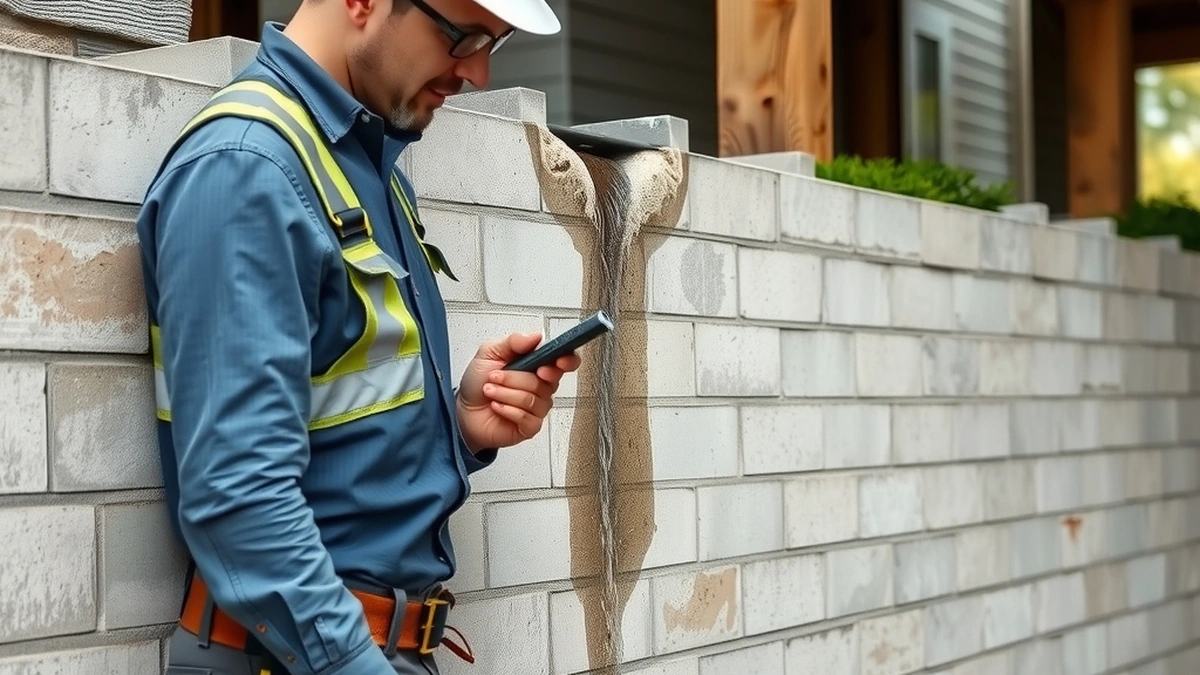
A weeping face is visible water seeping through the front of a retaining wall. It often appears as dark streaks, efflorescence, or steady drips along block joints or concrete surfaces. The water is not coming through the wall from the front; it is pushing from the soil behind the wall and finding the easiest exit.
That pressure is called hydrostatic pressure. Soil holds water, and water weighs roughly 62.4 pounds per cubic foot. If a 10-foot-tall wall holds back saturated soil, the pressure at the base can approach 624 pounds per square foot. Without a path to escape, that force presses directly against the wall face and can move or crack the structure over time.
Weeping is a symptom, not the disease. The real issue is usually missing or clogged drainage, compacted fine-grained backfill that traps water, or a failed drain pipe at the base of the wall.
Why Drainage Comes Before Block Choice
Retaining Wall Lab prioritizes drainage and soil pressure because they determine whether any wall material will last. A $40-per-square-foot block wall will fail quickly if water has nowhere to go. A $15-per-square-foot timber wall can perform adequately if the drainage system behind it is sound.
Before selecting replacement blocks or concrete, confirm that the following are addressed:
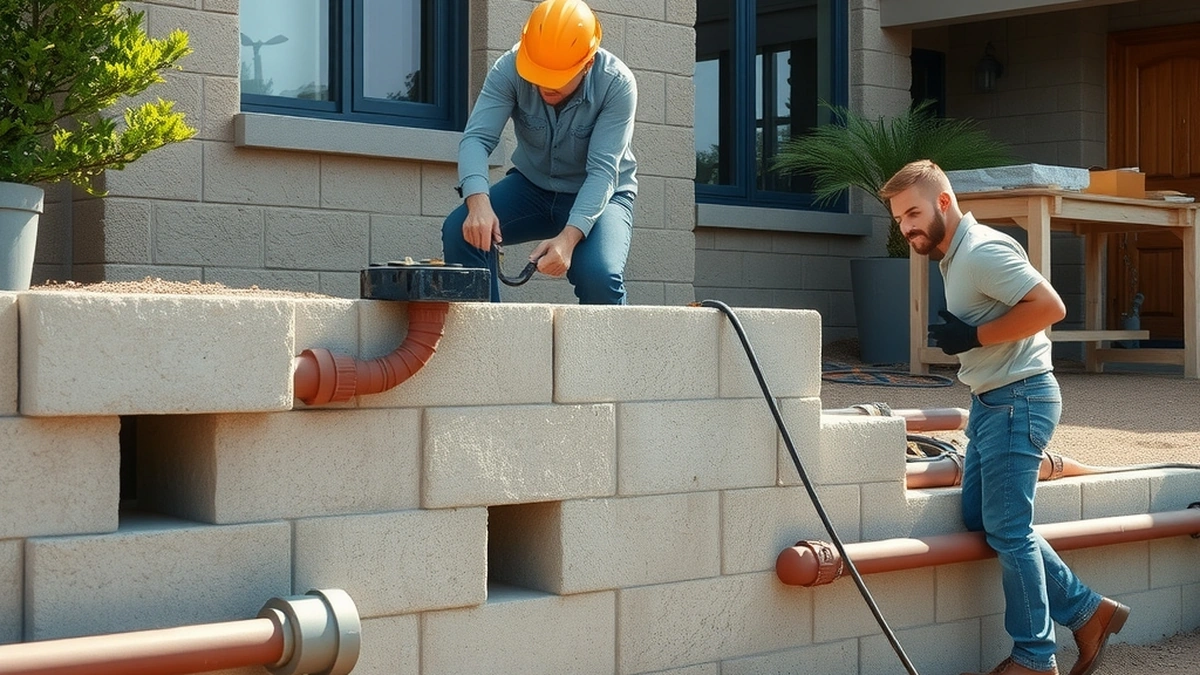
- A perforated drain pipe at the wall footing, sloped to daylight or a storm connection
- Clean, free-draining backfill such as crushed stone behind the wall
- A drainage mat or geotextile to separate backfill from native soil
- Surface grading that directs rainwater away from the top of the wall
Only after drainage is fixed should you consider the wall face material.
Repair Cost Arithmetic
Costs below are estimates. Actual pricing depends on local labor rates, site access, wall height, and whether equipment can reach the excavation area.
Drainage and Backfill Only
If the wall face is structurally sound and only the drainage system needs repair or replacement:
- Range: $5 to $15 per square foot
- Example wall: 6 feet high by 20 feet long = 120 square feet
- Low estimate: 120 sq ft × $5 = $600
- High estimate: 120 sq ft × $15 = $1,800
This scope typically includes exposing the base of the wall, installing or cleaning a drain pipe, placing drainage aggregate, and backfilling.
Wall Face Replacement Plus Drainage
If the weeping has stained, spalled, or displaced the wall face, you may need to remove and rebuild it. Add the drainage cost to the wall material cost.
Concrete block wall
- Material and installation: $15 to $35 per square foot
- 120 square feet × $15 = $1,800
- 120 square feet × $35 = $4,200
- Add drainage and backfill: $600 to $1,800
- Total range: $2,400 to $6,000
Poured concrete wall
- Material and installation: $25 to $60 per square foot
- 120 square feet × $25 = $3,000
- 120 square feet × $60 = $7,200
- Add drainage and backfill: $600 to $1,800
- Total range: $3,600 to $9,000
Timber retaining wall
- Material and installation: $10 to $25 per square foot
- 120 square feet × $10 = $1,200
- 120 square feet × $25 = $3,000
- Add drainage and backfill: $600 to $1,800
- Total range: $1,800 to $4,800
Gabion wall
- Material and installation: $20 to $40 per square foot
- 120 square feet × $20 = $2,400
- 120 square feet × $40 = $4,800
- Add drainage and backfill: $600 to $1,800
- Total range: $3,000 to $6,600
Boulder wall
- Material and installation: $20 to $45 per square foot
- 120 square feet × $20 = $2,400
- 120 square feet × $45 = $5,400
- Add drainage and backfill: $600 to $1,800
- Total range: $3,000 to $7,200
These figures are estimates and do not include permits, engineering, or unexpected rock excavation.
When to Repair Versus Replace
Not every weeping face requires tearing out the wall. Consider repair only when:
- The wall is plumb and shows no bulging or leaning
- No cracks run through individual blocks or concrete panels
- The footing appears stable and undisturbed
- The weeping is limited to a few joints or a short section
In those cases, a contractor might repoint joints, apply a breathable water-repellent treatment, or install a relief drain at the weep location. Costs for localized repairs often fall below the full square-foot averages because excavation is minimal.
Replace the wall face when:
- The wall leans more than 1 inch per 10 feet of height
- Blocks are cracked, shifted, or spalling
- The drain pipe is collapsed or buried too deep to access without wall removal
- Backfill is native clay that cannot be drained effectively without full exposure
A full replacement gives you the opportunity to correct the drainage system behind the wall, which is usually the root cause of the weeping.
Load and Pressure Context
Understanding the forces behind a weeping face helps explain why drainage repairs are not optional. Water weighs about 62.4 pounds per cubic foot. Saturated soil can weigh 100 to 120 pounds per cubic foot depending on composition.
For a simple estimate, consider a wall retaining 10 feet of soil height. The lateral earth pressure at the base increases with depth. At the bottom of a 10-foot wall, fluid-equivalent pressure from water alone can reach roughly 624 pounds per square foot. Add the weight of saturated soil, and the total lateral load is significantly higher.
A properly drained wall reduces that pressure because water exits through the drain pipe instead of pressing against the face. This is why a wall with good drainage can use lighter materials, while a wall with poor drainage may fail even if it was built with expensive blocks.
Choosing the Right Wall Material After the Fix
If replacement is necessary, match the material to the site and budget rather than choosing by appearance alone.
- Concrete block: $15 to $35 per square foot. Modular, durable, and common for residential walls. Works well with drained backfill.
- Poured concrete: $25 to $60 per square foot. Monolithic and strong, but expensive and difficult to modify after curing.
- Timber: $10 to $25 per square foot. Lower upfront cost, but susceptible to rot and insects over time, especially if drainage remains poor.
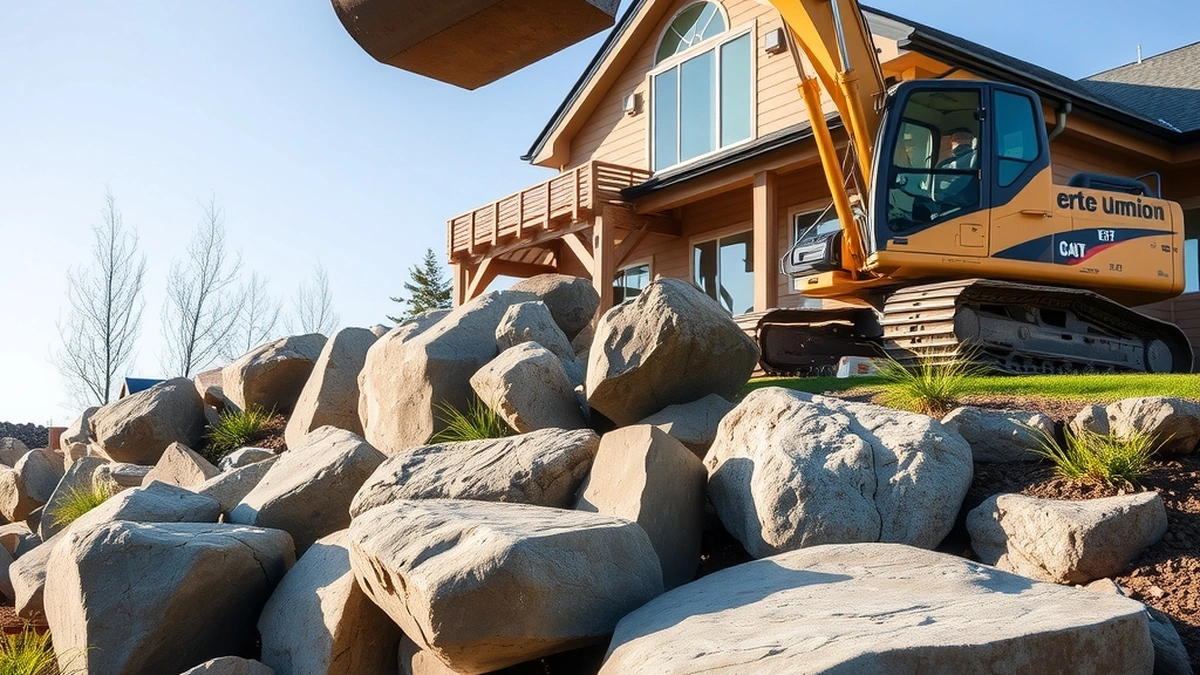
- Gabion: $20 to $40 per square foot. Wire cages filled with stone. Permeable by design, which can reduce hydrostatic pressure, though the wire can corrode.
- Boulder: $20 to $45 per square foot. Natural appearance and high mass, but placement is labor-intensive and depends on local stone availability.
For more detail on material selection, see the overview at /best-retaining-wall/. If you are comparing a wall to other property boundaries, the guide at /retaining-wall-vs-fence/ explains when a wall is the right structural choice.
Installation and Repair Scope
Drainage repair usually involves excavation at the base of the wall. A contractor will expose the footing, inspect or replace the drain pipe, place washed stone, and backfill in lifts. If the wall face is being rebuilt, the existing blocks or panels are removed, the foundation is rechecked, and the new wall is set on a level base with drainage integrated from the start.
Permits may be required depending on wall height and local jurisdiction. Many U.S. municipalities require permits for retaining walls over 4 feet, and walls supporting surcharge loads such as driveways often need engineering review. The International Code Council provides model code language that many local departments adopt, though local amendments always govern.
For a full picture of what installation involves, including drainage detailing, see /retaining-wall-installation/. If the wall already exists and needs partial work, /retaining-wall-repair/ covers common failure modes and repair methods.
Ongoing Maintenance
After the weeping face is fixed, inspect the wall after heavy rain. Look for new wet streaks, soil movement at the top, or blockages at the drain outlet. Keep the outlet clear of leaves and sediment. Regrade soil near the top of the wall so surface water flows away rather than ponding behind the face.
Routine care extends the life of the repair. For a maintenance checklist and seasonal inspection tips, see /retaining-wall-maintenance/. Homeowners considering doing some of the work themselves should review /diy-retaining-wall/ to understand which tasks are safe without professional equipment and engineering input.
Bottom Line
Fixing a weeping face starts with drainage, not with the wall material. Budget $5 to $15 per square foot for drainage and backfill work. If the face must be rebuilt, add $10 to $60 per square foot depending on whether you choose block, poured concrete, timber, gabion, or boulder. A 120-square-foot wall typically ranges from about $600 for drainage-only work to $9,000 for a full poured-concrete replacement with drainage. Always confirm local permit requirements and have a professional assess wall stability before signing off on a repair scope.
For broader pricing context, see /retaining-wall-cost-per-square-foot/ and /how-much-does-retaining-wall-cost/.
Next, compare how much does retaining wall cost, retaining wall installation, retaining wall repair before you commit.
Frequently asked questions
What is a weeping face?
A weeping face is a retaining wall surface where water seeps through the wall material or joints, often signaling poor drainage or failed backfill behind the wall.
How much does drainage repair cost?
Drainage and backfill work typically runs $5 to $15 per square foot, depending on site access, excavation depth, and pipe material.
Can I fix a weeping face myself?
Small surface repointing or clearing a drain outlet may be DIY-friendly, but structural drainage and wall reset work usually requires a professional.
Does a weeping face mean the wall is failing?
Not always, but persistent weeping often indicates hydrostatic pressure buildup, which can lead to bulging, cracking, or collapse if left unaddressed.
Which wall type costs least to replace?
Timber walls are generally the least expensive to replace at $10 to $25 per square foot, though they have a shorter service life than masonry or concrete.
How long does a weeping face repair take?
A minor drainage repair may take one to two days, while full wall removal, drainage installation, and rebuilding can take one to two weeks.
Sources
Some links are affiliate links.If you buy through them we may earn a commission at no extra cost to you. We do not accept payment for rankings. Read the full disclosure.