Segmental Block Maintenance: A Yearly Routine
The inspection, drainage, cleaning, and reset work that keeps a segmental block wall standing, plus what maintenance cannot fix and when to call an engineer.
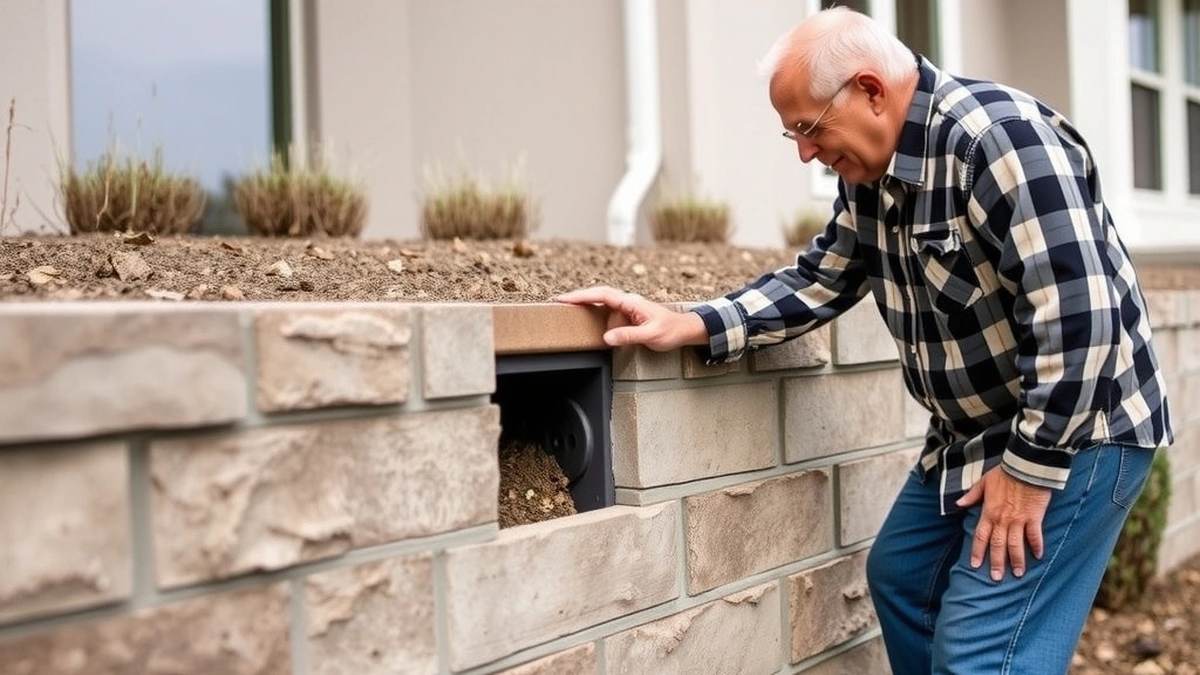
Segmental block maintenance is mostly water management: inspect twice a year, keep the drain outlet clear, wash efflorescence off the face, and reset any cap or block that has moved. Budget a few hours and under $100 a year, calling a pro only when movement appears.
- Inspection frequency
- Twice a year
- Typical DIY cost
- Under $100 a year
- Pressure washing limit
- About 1,500 psi
- Drain flush
- Once a year
- Wall service life
- 50+ years with care
Some links on this page are affiliate links.If you buy through them we may earn a commission at no extra cost to you. We do not accept payment for rankings. Read the full disclosure.
Segmental block maintenance is the small, regular work that keeps water moving and the face aligned: inspecting twice a year, clearing the drain, washing the block, and re-bedding anything that has shifted. It costs a few hours and under $100 in materials annually, against a wall that costs $15 to $35 per square foot to replace. Most of the work is looking closely and writing down what changed.
A segmental wall has no mortar to repoint and no coating to renew. Its maintenance is about the parts that are supposed to move water and the parts that are not supposed to move at all. Four tasks cover nearly everything: inspection, drainage, cleaning, and resetting.
The wall is dry-stacked and flexible, so minor settlement is normal in the first year. What matters is the difference between a wall that moved once and settled, and a wall that is still moving.
The Twice-Yearly Inspection
Walk the wall in spring and autumn with a notebook and a camera. Compare against the previous visit rather than against a memory.
Look for a lean at the top, a bulge in the middle, stair-step cracks, soil spilling through the face, a cap that has dropped, and water staining at the toe. Measure anything suspicious: a string line along the face gives you the bulge depth, and a level on the cap gives you the tilt.
Photograph the same three or four spots each time, from the same position. A photo taken two years apart answers questions that a visual check cannot.
Drainage Is the First Job
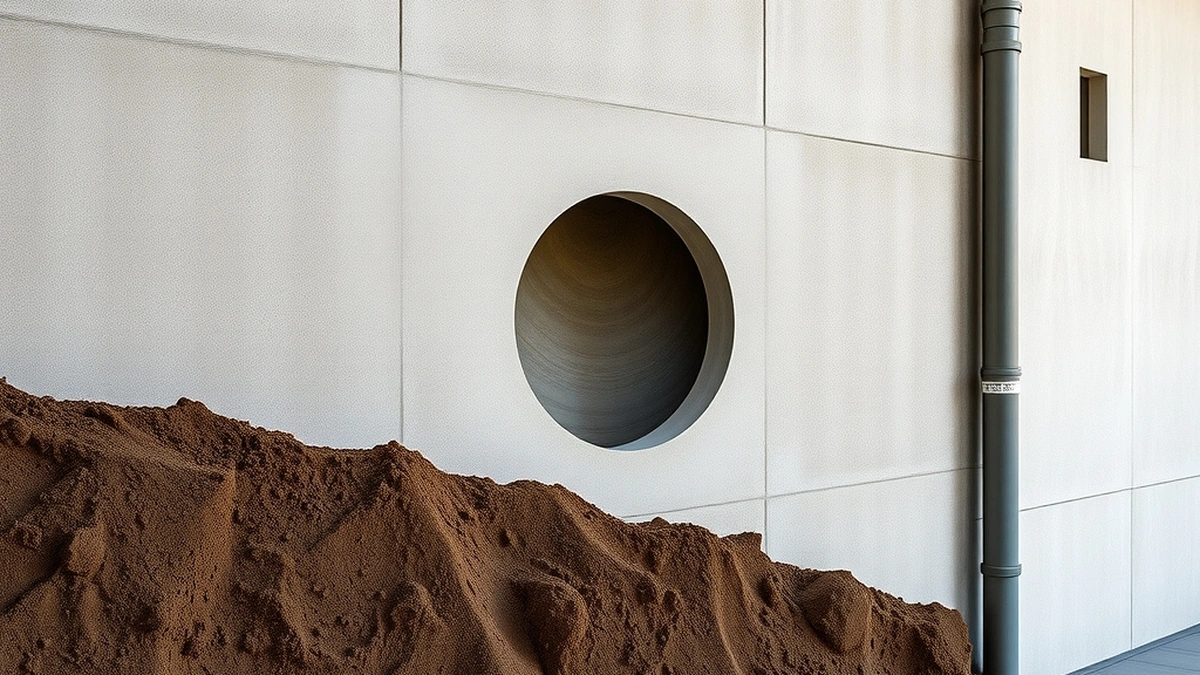
Drainage is the reason most walls survive, and it is the first thing to fail. Clear the outlet at least once a year, and more often if the wall drains toward a planted bed or a lawn.
Check that the perforated pipe actually discharges. Pour a bucket of water into the gravel at the high end of the wall and watch the outlet. If nothing comes out within a few minutes, the pipe is blocked or crushed, and the wall is carrying hydrostatic pressure it was not designed for.
Keep mulch, soil, and leaf litter from building up against the base of the wall. A raised bed against the face adds load and holds moisture at the block, which is the worst combination for freeze-thaw damage.
Cleaning the Face
Efflorescence is the white bloom that appears when soluble salts migrate to the surface. It is cosmetic, and it usually clears with a stiff brush and a diluted vinegar wash. Persistent bloom points to water entering the wall from above, so fix the source rather than washing repeatedly.
Pressure washing is safe at low pressure. Keep the nozzle under about 1,500 psi, use a fan tip, and work down the wall rather than blasting into joints. High pressure erodes the block face and drives water into the wall, which creates the next problem.
Avoid muriatic acid on dry-cast block. It attacks the cement matrix and leaves the surface more absorbent than before.
Resetting Caps and Blocks
Caps lift when water gets underneath and freezes. The fix is to pry the cap up, clean the old adhesive off both surfaces, and re-bed it with a flexible polyurethane adhesive. Do not use mortar, which cracks and lets water back in.
A single displaced block can be lifted and re-bedded on fresh gravel if the base under it is intact. Work from the top down, and keep track of the pin or lip orientation so the replacement engages the course below.
If a run of blocks has moved, stop. That is a base or reinforcement problem, and resetting the face hides it for a season.
Vegetation, Roots, and Mulch
Plants in the wall can be an asset or a problem. Shallow-rooted groundcover is fine. Woody shrubs and trees are not, because their roots lift blocks and their weight adds load.
Pull seedlings while they are small. A tree growing out of a wall joint is a removal job, and cutting it flush does not stop the root from growing.
Keep irrigation heads pointed away from the wall. A sprinkler that sprays the face every morning puts more water into the wall than most storms do.
What Maintenance Cannot Fix
Maintenance manages water and cosmetics. It cannot restore a rotated base, replace corroded reinforcement, or correct a wall built too tall for its design. Those are structural failures, and they show up as movement that continues between inspections.
| Sign | Maintenance response | Structural response |
|---|---|---|
| White bloom on face | Clean and find the water source | None needed |
| Loose cap | Re-adhesive | Check top course for movement |
| One shifted block | Reset on fresh gravel | Check base if it recurs |
| Bulge over 2 inches | None | Engineer assessment |
| Continuing lean | None | Engineer assessment |
| Soil spilling from face | Replace filter fabric locally | Rebuild the drainage zone |
The segmental block problems guide works through each failure pattern, and the drainage guide covers the detail that prevents most of them.
The Yearly Cost and Time
| Task | Frequency | Who | Typical cost |
|---|---|---|---|
| Inspection | Twice a year | DIY | $0 |
| Drain flush and outlet check | Once a year | DIY | $0 |
| Efflorescence cleaning | As needed | DIY | $10–$30 |
| Cap re-adhesion | Every 3–5 years | DIY or handyman | $20–$60 |
| Block reset, single unit | As needed | DIY or mason | $50–$150 |
| Drain camera or jetting | Every 3–5 years | Contractor | $150–$400 |
A wall that needs more than the top four rows in a year is telling you something. Repairs that recur in the same spot are a symptom, and the cause is almost always water or base movement.
A Maintenance Calendar
- Spring. Inspect after thaw, clear the outlet, check for new cracks, photograph the face.
- Early summer. Clean efflorescence, pull seedlings, redirect irrigation away from the wall.
- Late summer. Re-adhere loose caps in dry weather, when the adhesive cures best.
- Autumn. Clear the drain before the wet season, remove leaf litter from the base, check the grade behind the wall still slopes away.
- Before winter. Confirm no soil is piled against the face and that the outlet is open.
For the cost of the wall this routine protects, see segmental block cost. For the wider schedule across wall types, read retaining wall maintenance.
Frequently asked questions
How often should a segmental block wall be inspected?
Twice a year, in spring after the ground thaws and in autumn before it freezes. Those two points catch the damage from the wet season and the damage from freeze-thaw, and they give you a comparison against the previous inspection.
How do I clean efflorescence off a block wall?
Use a stiff brush and a diluted white vinegar solution, or a proprietary efflorescence remover, then rinse. Do not use muriatic acid on dry-cast block, and do not pressure wash above about 1,500 psi, which erodes the face and opens the surface to more water.
Should I seal a segmental block wall?
Usually not. Dry-cast block is designed to breathe, and a film-forming sealer can trap moisture and cause spalling. A penetrating siloxane sealer is the safer option where freeze-thaw is severe, and it should be applied to a dry wall in mild weather.
Why are my caps coming loose?
The adhesive has failed, usually because water got under the cap and froze. Lift the cap, clean both surfaces, and re-bed it with a flexible polyurethane construction adhesive. If caps keep lifting, check the wall's top course for movement.
Can I reset a block that has shifted?
A single block in a low wall can be lifted out and re-bedded on fresh gravel if the base beneath it is sound. If several blocks in one area have moved, the base or the geogrid is the problem, and resetting the face will not fix it.
Does a block wall need weep holes?
A segmental wall drains through the gravel and the pipe rather than through weep holes in the face, but some designs include small weep points at the base. Either way, the outlet is the critical part: a drain that ends in soil or mulch is a drain that does nothing.
Sources
Some links are affiliate links.If you buy through them we may earn a commission at no extra cost to you. We do not accept payment for rankings. Read the full disclosure.