Segmental Block Cost: What an Engineered Wall Runs
Segmental block walls cost $15 to $35 per square foot installed. What the block, geogrid, base, and engineering add, with two worked budgets.
A segmental block wall costs $15 to $35 per square foot of face installed, including block, base, drainage, and labor. Geogrid and sealed engineering push taller walls toward the top of that range. A 120-square-foot wall typically lands between $2,400 and $3,600 before permits.
- Installed rate
- $15 - $35 per square foot
- Drainage and backfill
- $5 - $15 per square foot
- Geogrid share
- 3 to 8 percent of wall cost
- Engineering, tall walls
- $500 - $2,000
- Typical 120 sq ft wall
- $2,400 - $3,600
Some links on this page are affiliate links.If you buy through them we may earn a commission at no extra cost to you. We do not accept payment for rankings. Read the full disclosure.
Segmental block cost is the installed price of a dry-stacked, modular concrete wall, and it runs $15 to $35 per square foot of wall face. That range covers the block, the caps, the compacted base, the drainage aggregate, any geogrid, and the labor. A 30-foot wall at 4 feet high is 120 square feet, so the typical bill lands between $2,400 and $3,600 before permits.
What Makes a Wall Segmental
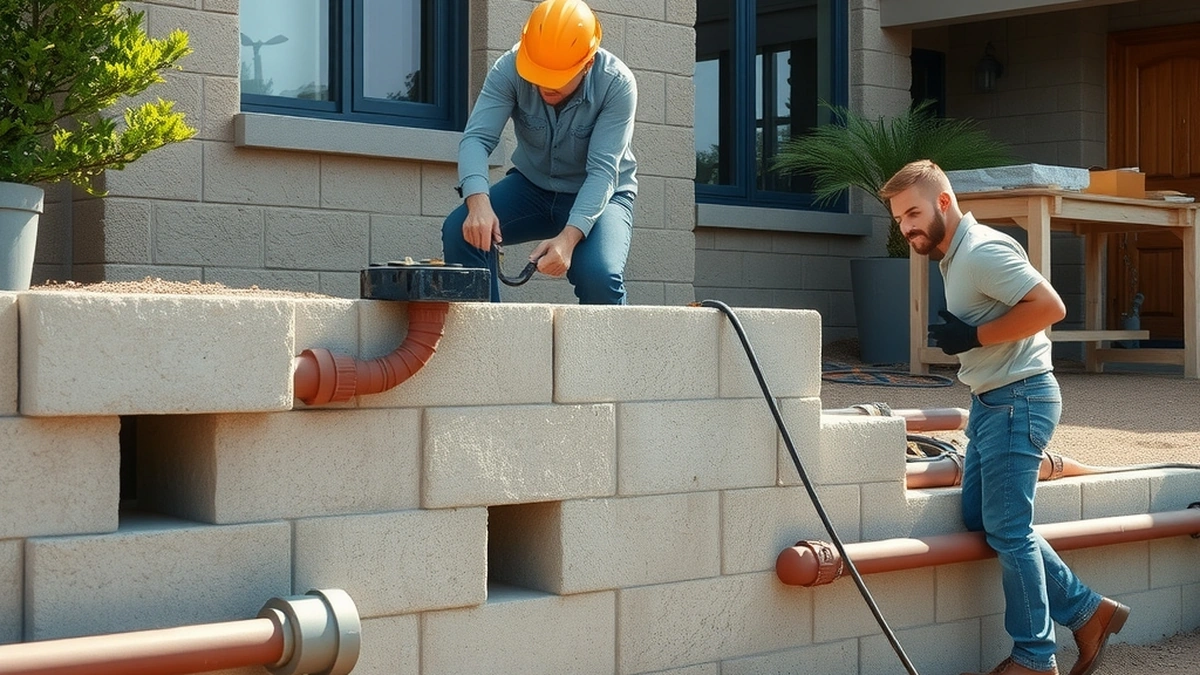
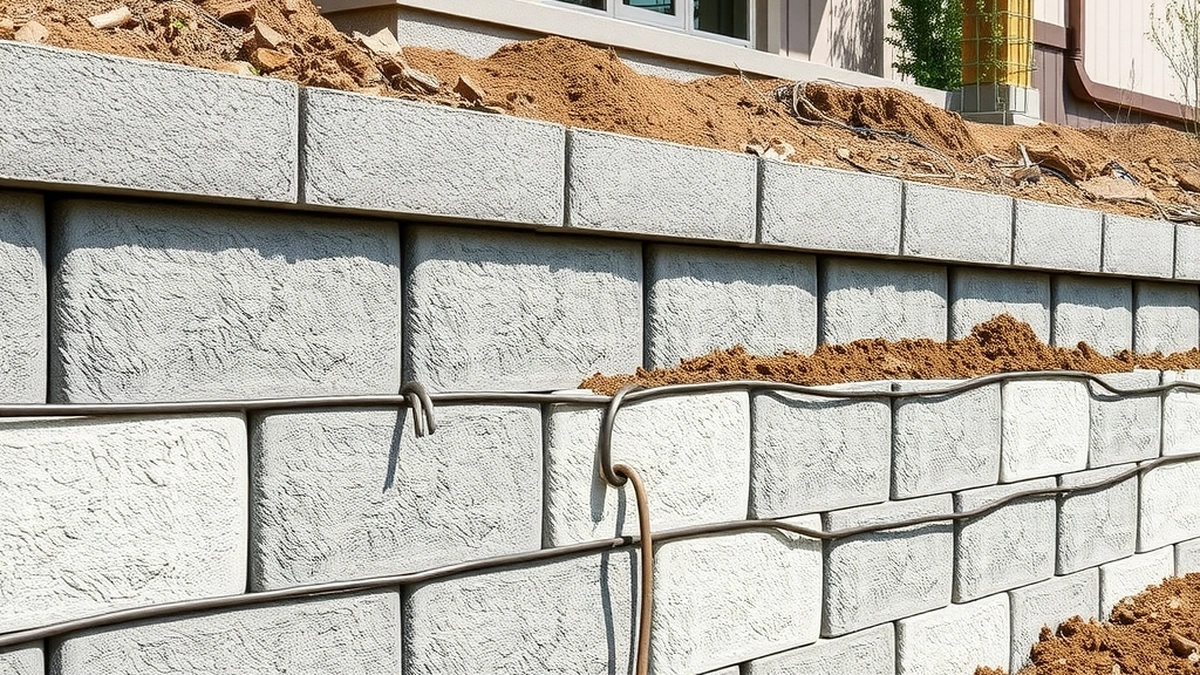
A segmental retaining wall is a system, not a pile of blocks. The units interlock through a lip, pin, or keyway, they sit on a compacted gravel base rather than on soil, and above a certain height they are tied back into the retained soil with geogrid. Each of those parts carries a cost, and each one is doing structural work.
That is the difference between a segmental wall and a garden wall made of the same block. The block may be identical; the base, the drainage, and the reinforcement are not. When a bid is much cheaper than the range, one of those three is usually missing.
Cost by Height
Height is the main driver, because soil pressure rises with the square of height and the design response escalates with it.
| Wall height | Typical rate | What changes |
|---|---|---|
| 2 ft | $15–$20 per sq ft | Base and drainage, no geogrid |
| 3 ft | $18–$24 per sq ft | Deeper base, caps |
| 4 ft | $20–$28 per sq ft | First geogrid layer on some soils |
| 5 to 6 ft | $25–$35 per sq ft | Multiple geogrid layers, engineering likely |
| Above 6 ft | Above the standard range | Sealed design, site-specific bid |
The per-square-foot rate rises because the buried work grows faster than the face area. A 6-foot wall has 50 percent more face than a 4-foot wall of the same length, but it may need three times the geogrid and a wider base.
What the Components Cost
| Component | Share of installed cost | Approximate rate |
|---|---|---|
| Block and caps | 25–35 percent | $4–$11 per sq ft |
| Base gravel and compaction | 8–12 percent | $1.50–$3 per sq ft |
| Drainage stone and pipe | 15–30 percent | $5–$15 per sq ft |
| Geogrid | 3–8 percent | $1–$3 per sq ft per layer |
| Labor | 30–40 percent | $5–$14 per sq ft |
| Engineering and permit | Separate | $600–$2,500 total |
The labor line is larger than most owners expect, and it is the line that separates a good wall from a cheap one. Compaction in 8-inch lifts, a level base course, and correctly oriented geogrid take time.
Two Worked Budgets
Residential wall, 120 square feet. 4 feet high by 30 feet long. Block at $24.
120 × $24 = $2,880. Add a permit at $250: $3,130. If the soil report calls for two geogrid layers at $2 per square foot each: 120 × $2 × 2 = $480, bringing the total to $3,610.
Terraced wall, 240 square feet. Two 3-foot tiers, 40 feet long each.
Each tier is 40 × 3 = 120 square feet, so the total face is 240 square feet. At $22 per square foot: 240 × $22 = $5,280. Two walls also need two base trenches and two drainage runs, which is already inside the rate, plus a permit and possibly engineering for the upper tier: $5,280 + $250 = $5,530 before design fees.
Terracing is often cheaper than one tall wall. Two 3-foot walls cost less than one 6-foot wall of the same total face, because the tall wall needs geogrid, a wider base, and engineering that the low walls may avoid.
Why Geogrid Changes the Number
Geogrid is a plastic mesh laid horizontally between block courses and extending back into the soil. It holds the wall to the earth behind it, so the wall and the soil act as one mass. That is what allows a segmental wall to exceed the height a gravity wall could carry.
The cost is small per layer and compounds with height. A 4-foot wall might use one or two layers; a 6-foot wall on a slope might use five or six, spaced every two courses. The installation guide shows the layer spacing and the embedment length that the design specifies.
Segmental Block Versus the Alternatives
| Material | Installed rate | Service life | Best use |
|---|---|---|---|
| Segmental block | $15–$35 per sq ft | 50+ years | Residential walls, terraces, curves |
| Poured concrete | $25–$60 per sq ft | 50–100 years | Straight structural walls |
| Timber | $10–$25 per sq ft | 15–25 years | Low garden walls |
| Boulder | $20–$45 per sq ft | 75+ years | Rural sites with machine access |
Block wins on curved layouts and on walls where a manufactured face is wanted. Concrete wins on straight runs and heavy loads. Timber wins only when the budget is the binding constraint and the wall is short.
How to Compare Segmental Bids
- Measure face area and divide each bid by it, so the comparison is per square foot.
- Ask for the base depth and width, the compaction method, and the gravel specification in writing.
- Confirm the geogrid layers, spacing, and embedment length, and whether they come from the engineer or the block manufacturer’s chart.
- Check that drainage stone, filter fabric, and a perforated outlet are included.
- Ask whether engineering and the permit are inside the number or billed separately.
- Confirm the block series and colour, and whether caps are included or priced as an extra.
For the unit-level material math behind these rates, see retaining wall blocks cost. For the failures that follow a skipped base or drainage layer, read segmental block problems, and for the full material range across wall types, retaining wall cost.
Frequently asked questions
How much does a segmental block wall cost?
Fifteen to thirty-five dollars per square foot of wall face installed. That covers block, caps, base gravel, drainage stone, geogrid where specified, and labor. Permits and engineering are separate and add $100 to $500 and $500 to $2,000 respectively.
What is the difference between segmental block and a plain block wall?
A segmental wall is an engineered system: interlocking units, a prepared base, drainage aggregate, and often geogrid layers that tie the wall into the soil behind it. A plain garden block wall uses the same idea without the design, which is why it is limited to low heights.
Does a segmental wall need geogrid?
Not always. Low walls on good soil often stand on their own mass. Geogrid usually enters the design above about 4 feet, on slopes, or where the wall carries a surcharge. The engineer or the block manufacturer's chart sets the layer spacing.
How much does geogrid add to the cost?
Typically 3 to 8 percent of the wall cost, or roughly $1 to $3 per square foot per layer installed. A 6-foot wall might use four or five layers, which is why height, not length, drives the geogrid line.
Are segmental blocks more expensive than poured concrete?
No. Segmental block runs $15 to $35 per square foot against $25 to $60 for poured concrete. Concrete competes on strength and on sites where a smooth finish matters, not on price, and it needs formwork and curing time that block does not.
How long does a segmental block wall last?
Fifty years or more is a reasonable expectation for a well-built wall on a proper base with working drainage. The block itself is durable; the failure points are the base, the drainage, and the geogrid connection, which is why installation quality decides the lifespan.
Sources
Some links are affiliate links.If you buy through them we may earn a commission at no extra cost to you. We do not accept payment for rankings. Read the full disclosure.