Understanding Block Retaining Wall Cost
A clear breakdown of costs for block retaining walls, including material prices and installation factors.
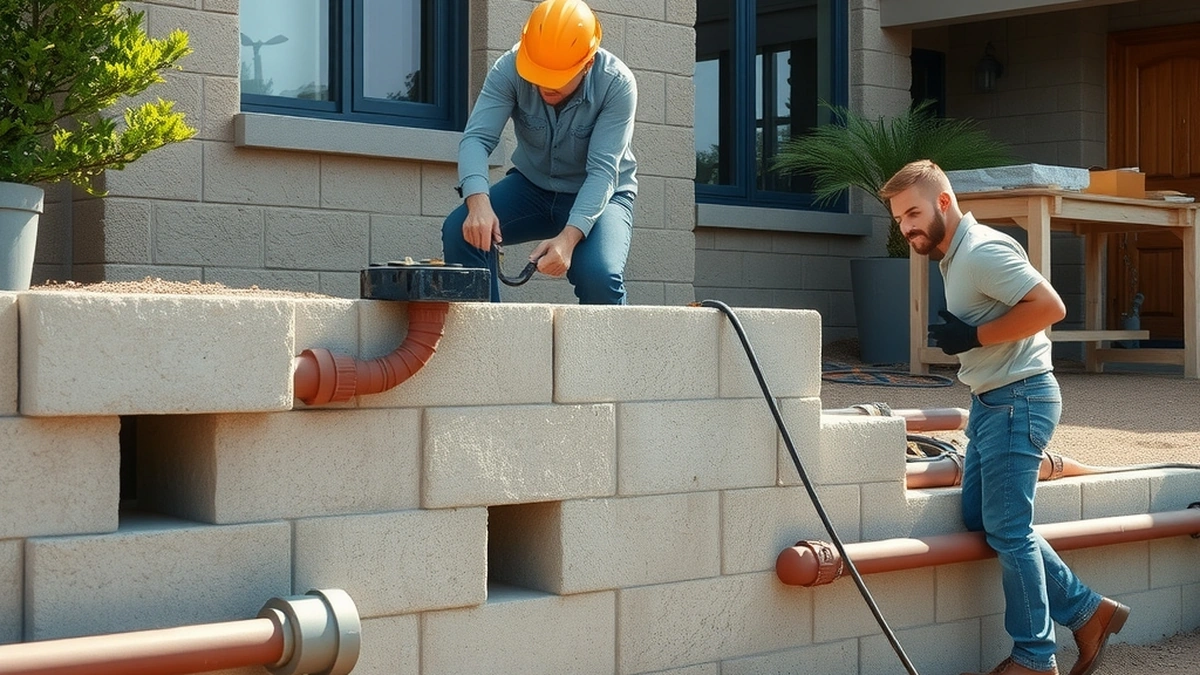
The cost to build a block retaining wall in the US ranges from $15 to $35 per square foot, plus $5 to $15 per square foot for drainage and backfill.
- Typical range
- Varies by system and site
- First step
- Measure the space and confirm the load
- Professional help
- Recommended for structural or electrical work
Some links on this page are affiliate links.If you buy through them we may earn a commission at no extra cost to you. We do not accept payment for rankings. Read the full disclosure.
Building a block retaining wall requires understanding both the upfront expense and the structural demands of the site. A standard block retaining wall typically costs between $15 and $35 per square foot, before accounting for drainage and backfill. This price range reflects varying block sizes, labor rates, and local soil conditions. When planning your project, it is essential to prioritize drainage and soil management over the specific block aesthetic, as proper load distribution prevents costly failures and ensures longevity. Ignoring these foundational elements often leads to premature wall failure, foundation shifting, and expensive emergency repairs.
The Role of Drainage and Soil Pressure
Soil pressure is the primary force pushing against your wall. As soil accumulates behind the wall, hydrostatic pressure increases, which can force the wall outward. To counteract this, drainage is mandatory. Without adequate drainage, water accumulates behind the blocks, increasing the effective soil load and forcing the wall to shift. For example, if you have a 10-foot wide wall, the soil behind it might exert 200 pounds per square foot (psf) of lateral pressure. If you install a layer of gravel drainage at $5 to $15 per square foot, you reduce the hydrostatic load significantly, preventing the need for a thicker, more expensive block wall later. Proper drainage also reduces the weight of the backfill, which directly lowers the overall material cost. You must account for both the vertical load of the soil and the horizontal thrust that pushes the wall outward.
Choosing the Right Block
While the block choice seems secondary to drainage and soil pressure, the physical properties of the block dictate how the wall handles compressive loads. Concrete blocks come in various strengths, typically ranging from 80 to 150 pounds per cubic foot (pcf). A standard 8x8x16 inch block weighs about 35 pounds. If you choose lightweight blocks, they may not handle the full weight of the backfill, requiring additional footing. Conversely, heavy blocks like 12x12x16 inches weigh around 65 pounds and provide better load distribution. Always match the block density to the expected soil pressure, keeping in mind that drainage must remain unobstructed by the block selection. Mortar joints also matter; thicker joints require more material and labor, slightly increasing the per square foot cost. Selecting blocks with thermal mass can also help regulate temperature fluctuations behind the wall.
Total Project Cost Breakdown
Calculating the total cost involves multiplying the wall area by the base rate and adding the drainage and backfill costs. Let us look at a hypothetical 15-by-15-foot block wall. The wall footprint is 225 square feet. Using the midpoint of the block wall range ($25 per square foot), the block cost is 225 times $25, equaling $5,625. Adding the drainage and backfill, we use the midpoint of $10 per square foot. That adds 225 times $10, or $2,250. The total estimated cost is $7,875. This calculation assumes a straightforward installation without specialized engineering, which can increase costs by 10 to 20 percent depending on the complexity of the terrain. For a larger wall, say 20 by 20 feet, the area is 400 square feet. The block cost would be 400 times $25, or $10,000. The drainage cost would be 400 times $10, or $4,000. The grand total would be $14,000.
Cost by Wall Type
The following table outlines the estimated cost per square foot for different retaining wall materials. These figures represent baseline material costs only and do not include drainage or backfill.
| Material | Price Range ($/sq ft) |
|---|---|
| Block Wall | $15 - $35 |
| Poured Concrete | $25 - $60 |
| Timber Wall | $10 - $25 |
| Gabion | $20 - $40 |
| Boulder Wall | $20 - $45 |
Poured concrete is significantly more expensive than standard blocks, but it offers superior durability and can handle much higher soil pressures. Timber walls are the least expensive option but require regular treatment to resist rot and insect damage. Gabion and boulder walls fall in the middle, offering natural aesthetics while still providing solid structural support. Choosing the right material depends heavily on your budget and the specific soil pressure requirements of your site.
Foundation and Footing Requirements
Before placing any blocks, the site must be properly prepared. Excavating the area to a depth of at least 12 inches below the local frost line is critical. This prevents the wall from heaving during freezing temperatures. The footing must be wide enough to distribute the wall’s weight evenly. For a 10-foot wide wall, a footing width of 2 feet is typically sufficient, requiring excavation for roughly 200 cubic feet of dirt. Using the midpoint for excavation and backfill, which averages $5 per cubic foot, the dirt work alone adds $1,000 to the project. Skipping this step guarantees future settlement and structural failure. For detailed guidance on foundation sizing, see how much does a retaining wall cost.
Installation and Labor Costs
Material costs do not tell the whole story. Labor typically accounts for 40 to 60 percent of the total project budget. In many regions, experienced masons charge between $40 and $80 per hour. For a 225 square foot wall taking 15 hours of labor, the labor cost alone could be $600 to $1,200. It is wise to compare quotes from licensed contractors, especially when dealing with complex soil conditions. A contractor familiar with local soil pressure dynamics can ensure the wall is built correctly the first time, avoiding the high cost of repairs. Proper installation also requires digging footings to a depth of at least 12 inches below the frost line, which adds to the overall expense. Following best practices during installation ensures the structural integrity of the wall.
Maintenance and Lifespan
A block retaining wall is a long-term investment, but it requires ongoing care. Annual inspections are recommended to check for bulging, leaning, or joint separation. If water is observed pooling behind the blocks, it indicates a drainage failure. Fixing this issue early is far less expensive than replacing a failed wall. Routine maintenance, such as clearing drains of debris, typically costs under $200 per year and extends the lifespan of the wall by decades. Keeping vegetation away from the wall base also prevents root expansion that can disrupt drainage paths. If a section does fail, consulting a professional for retaining wall repair is usually necessary rather than attempting a DIY fix.
Conclusion
Understanding the interplay between block choice, drainage, and soil pressure is vital for any commercial retaining wall project. By budgeting accurately and prioritizing proper drainage, you ensure that your block retaining wall remains structurally sound and cost-effective over its lifespan. Always consult with a professional to assess your specific soil pressure before breaking ground.
Next, compare how much does retaining wall cost, retaining wall installation, retaining wall repair before you commit.
Frequently asked questions
What is the typical cost per square foot for a block retaining wall?
The typical cost per square foot for a block retaining wall ranges from $15 to $35, depending on block type, size, and labor.
How much does drainage and backfill add to the total cost?
Drainage and backfill typically cost $5 to $15 per square foot and are essential for preventing hydrostatic pressure.
Are block retaining walls more expensive than timber walls?
Yes, block walls generally cost more than timber walls, which range from $10 to $25 per square foot.
Does poured concrete retain better than block?
Poured concrete ranges from $25 to $60 per square foot and handles higher loads but is more expensive than standard block walls.
What is the impact of soil pressure on block wall pricing?
Soil pressure dictates the height and thickness of the wall; higher pressure requires thicker walls, increasing the per square foot cost.
Do I need drainage with my block retaining wall?
Yes, proper drainage is required to prevent water buildup behind the wall, adding $5 to $15 per square foot to the total project cost.
Sources
Some links are affiliate links.If you buy through them we may earn a commission at no extra cost to you. We do not accept payment for rankings. Read the full disclosure.