Retaining Wall Blocks Cost: Unit Price and Coverage
What retaining wall blocks cost per unit, how many blocks a square foot needs, and the caps, base, and gravel that turn a block price into a wall price.
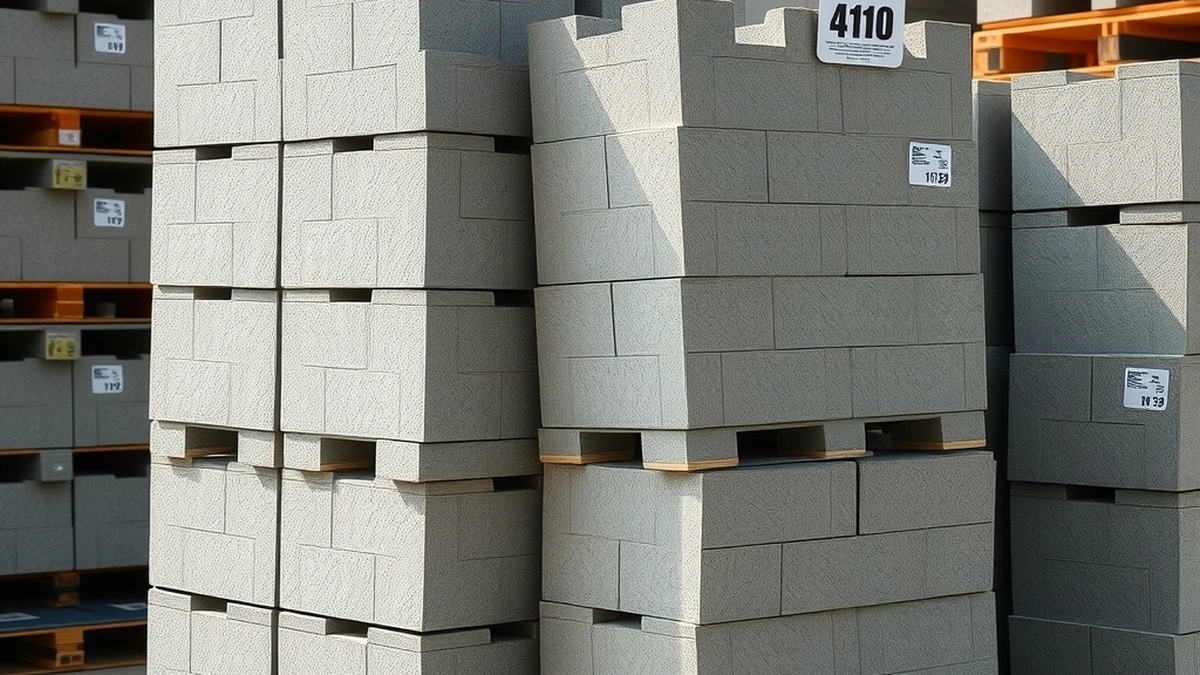
Retaining wall blocks cost $2 to $6 each, and a standard 6 by 16 inch block covers about two-thirds of a square foot, so a square foot needs 1.5 blocks. Material lands at $3 to $9 per square foot, and the installed wall runs $15 to $35 with base, drainage, and labor.
- Block unit price
- $2 - $6 each
- Coverage per block
- About 0.67 square feet
- Blocks per square foot
- 1.5
- Material per square foot
- $3 - $9
- Installed wall
- $15 - $35 per square foot
Some links on this page are affiliate links.If you buy through them we may earn a commission at no extra cost to you. We do not accept payment for rankings. Read the full disclosure.
Retaining wall blocks cost $2 to $6 each, and the number that matters is not the unit price but the coverage. A standard 6 by 16 inch block has a 96-square-inch face, which is 0.67 square feet, so one square foot of wall needs 1.5 blocks. That puts the material at $3 to $9 per square foot, and the finished wall at $15 to $35 once base, drainage, caps, and labor are added.
What the Block Price Actually Buys
A retaining wall block is a dry-cast concrete unit with a lip, pin, or keyway that locks it to the course below. The price reflects the concrete, the mould, the curing, and the finish. A split-face unit costs more than a smooth one because it goes through an extra step, and a tumbled unit costs more again.
The unit price does not include the parts that make the wall work. Base gravel, drainage stone, filter fabric, caps, construction adhesive, and geogrid are all separate lines, and on a small wall they can equal the block cost. Budget them from the start rather than discovering them at the register.
Coverage Math
Coverage is face area per block, and it is the only reliable way to convert a unit price into a wall price.
A 6 by 16 inch face is 96 square inches. One square foot is 144 square inches.
96 ÷ 144 = 0.67 square feet per block.
1 ÷ 0.67 = 1.5 blocks per square foot.
For a 30-foot wall at 4 feet high, the face area is 30 × 4 = 120 square feet, so the block count is 120 × 1.5 = 180 blocks. Add 5 to 10 percent for cuts at the ends and breakage: 180 × 1.05 = 189 blocks, or 180 × 1.10 = 198.
Larger format blocks cover more per unit but cost more each, and the material cost per square foot usually lands in the same band. What changes is the labor: bigger units go up faster, which is why they dominate taller walls.
Block Types and Unit Prices
| Block type | Face size | Price each | Material per sq ft |
|---|---|---|---|
| Standard garden block | 6 x 16 in | $2–$4 | $3–$6 |
| Split-face structural block | 6 x 16 in | $3–$5 | $4.50–$7.50 |
| Large format block | 8 x 18 in | $5–$9 | $5–$9 |
| Cap unit | 3 x 16 in | $4–$8 | Priced per linear foot |
| Corner block | 6 x 16 in | $5–$9 | Premium over standard |
The last two rows are why a block estimate built only from face blocks comes up short. Corners use dedicated units, and every wall that will be seen from above needs caps.
A Full Material Estimate for 120 Square Feet
Take the 30-foot by 4-foot wall. Face area is 120 square feet.
Blocks. 120 × 1.5 = 180 blocks at $4 = $720.
Caps. 30 feet of wall, cap length 16 inches: 360 ÷ 16 = 22.5, round to 23 caps at $6 = $138.
Base gravel. A trench 12 inches deep by 18 inches wide by 30 feet long: 1 × 1.5 × 30 = 45 cubic feet. Divide by 27 for cubic yards: 45 ÷ 27 = 1.67 cubic yards at $45 = $75.
Drainage stone behind the wall. 12 inches thick by 4 feet high by 30 feet long: 1 × 4 × 30 = 120 cubic feet, or 4.44 cubic yards at $45 = $200.
Adhesive and filter fabric. About 3 tubes at $8 = $24, plus fabric at $30.
Material total: 720 + 138 + 75 + 200 + 24 + 30 = $1,187, or $9.89 per square foot. Labor at $12 to $20 per square foot brings the installed total to roughly $22 to $30 per square foot, which sits inside the $15 to $35 installed range for a block wall.
Where the Money Goes on an Installed Wall
| Line | Share of installed cost | Notes |
|---|---|---|
| Block and caps | 20–30 percent | The visible material |
| Base and drainage stone | 10–15 percent | Often underestimated |
| Labor | 40–55 percent | Setting, cutting, compacting |
| Geogrid and engineering | 0–15 percent | Rises with height |
The material is not the expensive part. Labor and the buried work are, which is why a bid that looks high on block price can still be the cheaper wall.
Buying Blocks Without Wasting Money
Order by the pallet and confirm the count. A pallet typically holds 60 to 90 units, and the per-pallet price is what the yard quotes. Two suppliers at the same per-block rate can differ by 15 percent once pallet counts and delivery are included.
Buy all the block for one wall at once. Colour varies by production run, and a second order six weeks later may not match. If the wall is long enough to need multiple pallets, ask the yard to pull them from the same lot.
Delivery is worth pricing against pickup. A pallet can weigh over 2,000 pounds, and unloading by hand is slow and hard on backs. A flatbed with a forklift drops the pallet where the crew needs it, which saves hours of staging.
How to Estimate Your Block Order
- Measure length and height at the tallest point, and multiply for face area.
- Divide the face area by 0.67, or multiply by 1.5, to get the block count.
- Add 10 percent for cuts, corners, and breakage.
- Count caps separately by linear feet of wall, dividing by the cap length.
- Calculate base and drainage stone by volume, then convert cubic feet to cubic yards by dividing by 27.
- Price the whole list at two suppliers, including delivery, before choosing.
For the installed rate this material feeds into, see block retaining wall cost. For the engineered version with geogrid and a designed base, read segmental block cost, and for drainage stone sizing, retaining wall drainage.
Frequently asked questions
How much does a retaining wall block cost?
Two to six dollars per unit for a standard 6 by 16 inch block, with caps and larger format units priced higher. Colour, texture, and the manufacturer move the number more than the size does, and delivery adds a separate charge per pallet.
How many blocks do I need per square foot?
A standard block with a 6 by 16 inch face covers 96 square inches, or 0.67 square feet. One square foot therefore needs 1.5 blocks. For 120 square feet, multiply 120 by 1.5 to get 180 blocks, then add 5 to 10 percent for cuts and breakage.
How much does a pallet of retaining wall blocks cost?
A pallet usually holds 60 to 90 blocks and costs roughly $150 to $500 depending on the unit. Confirm the count per pallet before comparing prices, because two quotes at the same per-block rate can differ once pallet quantities and delivery are included.
Are retaining wall caps expensive?
Caps run about $4 to $8 each and cover the same face width as the block, so a 30-foot wall needs roughly 23 caps. That is $92 to $184 on a 120-square-foot wall, plus adhesive. Caps are not optional on a wall that will be seen from above.
Can I buy retaining wall blocks without delivery?
Yes, and pickup saves $75 to $200 per delivery in many markets. The catch is weight: a pallet of block can exceed 2,000 pounds, which rules out most half-ton pickups and requires a trailer rated for the load.
Why do block prices vary so much between stores?
Face texture, colour, unit size, and compressive strength all differ, and big-box blocks are often a lighter duty unit than a manufacturer's structural block. Compare the face area, weight, and any stated retaining height limit, not just the price tag.
Sources
Some links are affiliate links.If you buy through them we may earn a commission at no extra cost to you. We do not accept payment for rankings. Read the full disclosure.