Retaining Wall Replacement Cost: What a Rebuild Runs
Replacement cost by material, demolition and haul-off charges, three worked budgets, and when repair is the cheaper call than a full rebuild.
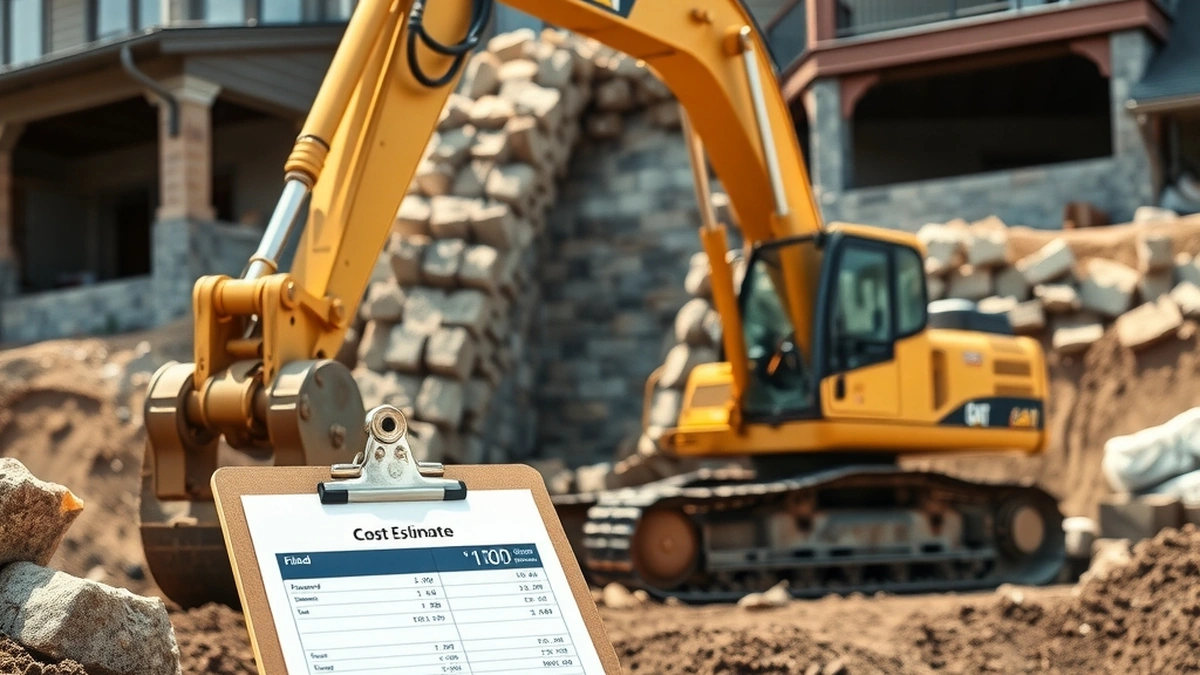
Replacing a retaining wall costs $15 to $60 per square foot for the new wall plus $5 to $15 for drainage, and demolition and haul-off usually add $5 to $12. A failing 120-square-foot block wall lands near $6,000, which is why repair is worth pricing first.
- New wall, block
- $15 - $35 per square foot
- New wall, poured concrete
- $25 - $60 per square foot
- Drainage and backfill
- $5 - $15 per square foot
- Demolition and haul-off
- $5 - $12 per square foot, estimated
- Typical 120 sq ft rebuild
- About $6,000
Some links on this page are affiliate links.If you buy through them we may earn a commission at no extra cost to you. We do not accept payment for rankings. Read the full disclosure.
Retaining wall replacement cost is the price to demolish a failed wall, haul the material away, and build a new one in the same place, and it runs $25 to $85 per square foot of wall face. The new wall accounts for most of that at $15 to $60 per square foot, drainage adds $5 to $15, and demolition with disposal adds roughly $5 to $12. The premium over a new build on open ground is access: the crew works in a hole beside a house, not on a cleared lot.
What Replacement Includes That a New Build Does Not
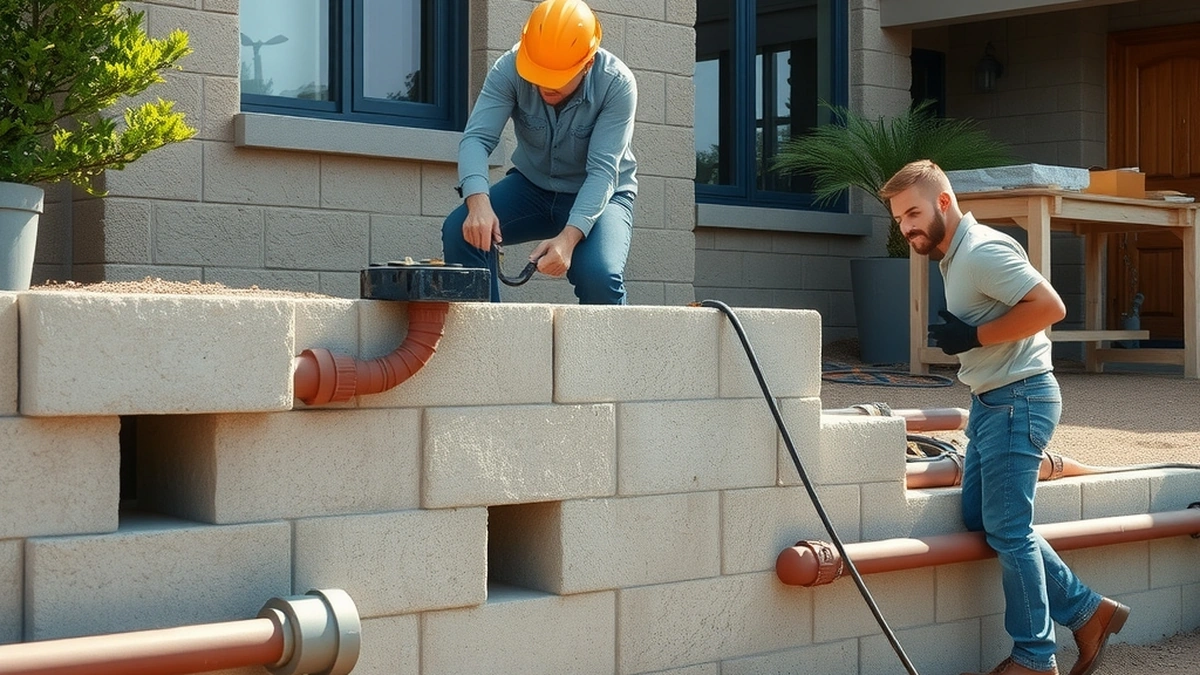
A new wall starts with bare soil. A replacement starts with a structure in the way. That difference adds four line items: demolition of the existing face and footing, loading and hauling the debris, temporary protection of anything the wall was holding up, and often a revised design, because the original wall failed for a reason that still exists on the site.
The last item is the one homeowners underestimate. If the old wall bulged because the drainage was wrong, rebuilding it the same way reproduces the failure. The replacement budget needs to carry the drainage correction, and sometimes a geogrid design or a deeper base that the first wall never had.
Replacement Cost by Material
Rates are per square foot of wall face, installed, for the new wall alone. Add demolition and drainage on top.
| Material | New wall rate | With drainage | With demo, typical total |
|---|---|---|---|
| Timber | $10–$25 | $15–$40 | $20–$52 |
| Segmental block | $15–$35 | $20–$50 | $25–$62 |
| Gabion | $20–$40 | $25–$55 | $30–$67 |
| Boulder | $20–$45 | $25–$60 | $30–$72 |
| Poured concrete | $25–$60 | $30–$75 | $35–$87 |
The totals use $5 to $12 for demolition and assume the new wall is the same height and length as the old one. A taller replacement, or one that needs a new footing, moves up a row rather than staying in place.
Three Worked Budgets
Small garden wall, 40 square feet. Block, 2 feet high by 20 feet long.
Demo at $7: 40 × $7 = $280. New block at $28: 40 × $28 = $1,120. Drainage at $10: 40 × $10 = $400. Total: $1,800. At this size the minimum crew charge often sets the price, so expect quotes clustered near $2,000.
Typical residential wall, 120 square feet. Block, 4 feet high by 30 feet long.
Demo at $8: 120 × $8 = $960. New block at $30: 120 × $30 = $3,600. Drainage at $12: 120 × $12 = $1,440. Total: $6,000, or $50 per square foot.
Larger terraced wall, 200 square feet. Poured concrete, 5 feet high by 40 feet long.
Demo at $10: 200 × $10 = $2,000. New concrete at $45: 200 × $45 = $9,000. Drainage at $12: 200 × $12 = $2,400. Total: $13,400, or $67 per square foot, before engineering.
The per-square-foot number is what you compare between bids. Divide each quote by the face area you measured, not by the area the contractor lists.
Partial Versus Full Replacement
Not every failure condemns the whole wall. The decision turns on whether the problem is in the structure or at its edges.
| Situation | Usual call | Why |
|---|---|---|
| One settled section, rest plumb | Partial rebuild | Cut and rebuild the affected run |
| Bulging over 2 inches across 20 feet | Full replacement | The base and reinforcement have failed |
| Blocked drains, stained face | Repair and clean | Water management, not structure |
| Cracked caps and missing joint sand | Repair | Surface work only |
| Leaning wall with a cracked footing | Full replacement | The foundation has rotated |
| Tree roots lifting a 15-foot run | Partial plus root barrier | Localized damage |
A partial rebuild of 30 linear feet inside a 30-foot wall is not partial at all. Price the section that has to come out, then add the cost of tying the new work into the old wall, which is where partial jobs quietly become full ones.
The Costs People Forget
Shoring and temporary support. If the wall holds a driveway, a pool deck, or a slope above a structure, the load has to be held during demolition. That is a separate trade and a separate line, often $1,000 to $4,000.
Haul-off. Concrete and block are heavy. Disposal is billed by load, and a long drive to the landfill adds fuel and time. Ask whether the demo rate includes dump fees.
Utility locating and protection. Irrigation, gas, electrical, and sewer lines run behind walls more often than owners realize. A locate is cheap; a severed line is not.
Permit and engineering. A rebuild at or above the local height threshold usually needs both. Budget $100 to $500 for the permit and $500 to $2,000 for engineering on a tall or loaded wall.
Restoration. The wall supported a patio, a fence, or plantings. Putting those back is not in the wall quote.
When Repair Beats Replacement
Use a simple ratio. Get a repair bid and a replacement bid, then compare the repair to the replacement. If the repair is under 30 percent of replacement and addresses the actual cause, repair it. Between 30 and 60 percent, the decision depends on the wall’s age: a 40-year-old wall at 50 percent is a poor bet, while a 6-year-old wall with a construction defect may be worth fixing.
Above 60 percent, replace. At that point you are paying most of a new wall’s price for a structure that keeps its old footing, old base, and old drainage. The repair guide covers which failures fall on each side of that line, and the failure guide explains how to tell structural movement from cosmetic wear.
How to Get an Accurate Quote
- Photograph the wall from both ends and measure height at the tallest point and length along the face.
- Multiply to get face area, then multiply by the material rate to get a sanity-check number before any bid arrives.
- Ask each bidder to itemize demolition, dump fees, the new wall, drainage, permit, engineering, and restoration separately.
- Require a drainage detail in writing, because a replacement that reuses the failed drainage will fail again.
- Confirm whether the quote assumes the same height, or includes a taller wall to match the corrected grade.
- Compare bids per square foot, and treat any bid more than 25 percent below the others as a scope difference until proven otherwise.
For the material rates behind these totals, see retaining wall cost. For the drainage line that decides whether the replacement lasts, read retaining wall drainage.
Frequently asked questions
How much does it cost to replace a retaining wall?
Budget $25 to $85 per square foot of wall face. That combines the new wall at $15 to $60 per square foot, drainage at $5 to $15, and demolition with haul-off at roughly $5 to $12. A 120-square-foot block wall therefore runs about $6,000.
Is replacing a retaining wall cheaper than repairing it?
Only when the failure is structural. A wall that is bulging, leaning, or has lost its base usually costs 60 to 100 percent of replacement to repair properly, so replacement wins. A wall with cracked caps, blocked weep holes, or one settled section is often repairable for 10 to 30 percent.
Does insurance cover retaining wall replacement?
Rarely, and almost never for gradual failure. Homeowners policies typically exclude earth movement, settlement, and deterioration, which are the usual causes. Sudden events such as a vehicle impact or a burst pipe may be covered; read the exclusions before filing.
Can I reuse the existing blocks?
Sometimes, if the units are undamaged and the same profile is still available. Salvage typically saves 20 to 40 percent of the block material line, not the labor, and labor is the larger share. Chipped faces and salt damage usually rule it out.
How long does a retaining wall replacement take?
A 120-square-foot wall is usually a three to five day job for a crew, plus a week or more if engineering, permitting, or a new footing is involved. Access and haul-off distance move that number more than the wall length does.
Do I need a permit to replace a retaining wall?
Usually yes if the wall is at or above the local height threshold, even when the footprint is unchanged. Many jurisdictions treat a rebuild as new construction and want current engineering, especially where the original wall failed.
Sources
Some links are affiliate links.If you buy through them we may earn a commission at no extra cost to you. We do not accept payment for rankings. Read the full disclosure.