Gabion Problems: Bulges, Corrosion, Stone Loss
Gabion problems: bulging baskets, corroded wire, stone loss, and settlement, how to diagnose each one, and what a repair actually costs.
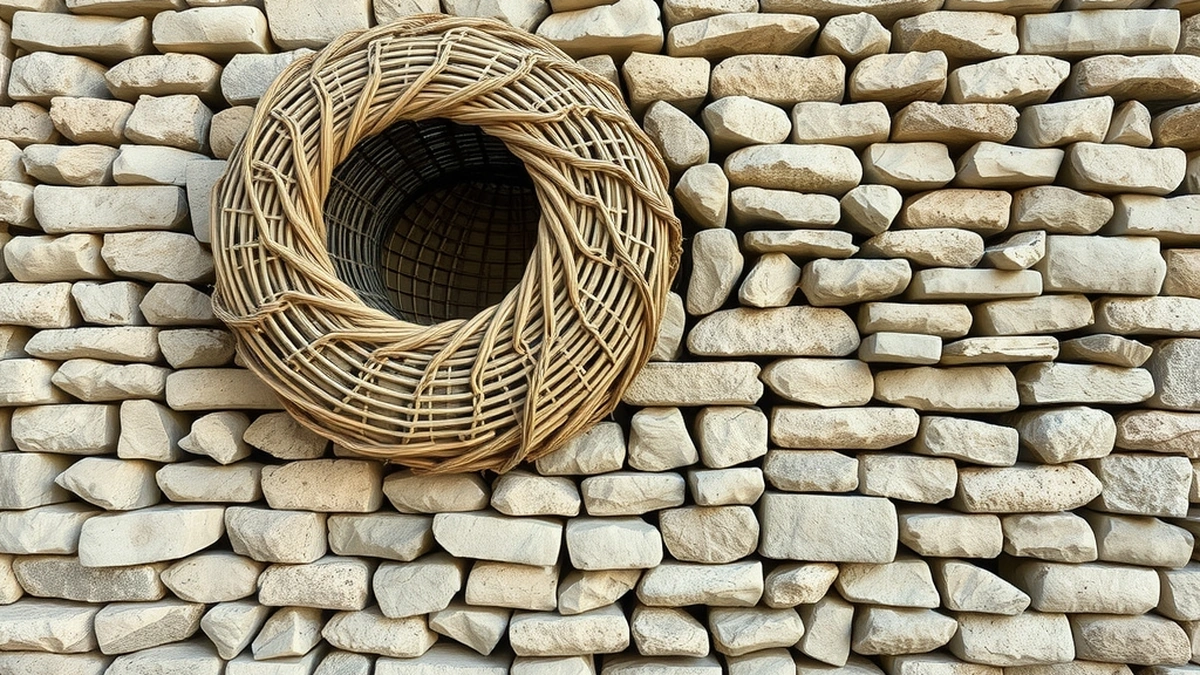
Gabion problems are fill and wire issues: rounded stone that will not lock, bulging baskets, corroded mesh at the base, and stone loss. A bulge over 2 inches means real repair.
- Most common issue
- Bulging basket faces
- Second most common
- Wire corrosion at base
- Bulge threshold
- About 2 inches
- Repair rate
- $20-$40 per sq ft
Some links on this page are affiliate links.If you buy through them we may earn a commission at no extra cost to you. We do not accept payment for rankings. Read the full disclosure.
Gabion wall problems are almost always about the fill and the wire, not the design concept. Baskets bulge when the stone will not lock, mesh corrodes where it stays wet, and stone disappears when a basket ruptures or the fill is too small for the mesh. The good news is that gabion failures are visible early and local repairs are possible, which is not true of a cracked concrete wall.
Bulging baskets
A bulge is the signature gabion failure. The face deflects outward because the stone behind it can move, and the usual causes are rounded river rock, single-size stone, fill placed in one lift, and brace wires that were never tensioned.
Measure the bulge against a straight edge held across the face. Under about 1 inch is cosmetic and worth monitoring. At 2 inches or more, the basket has lost its shape and the wall is carrying load through the mesh rather than through the stone.
Repair means cutting the lid open, removing the loose fill, re-dressing the face, and refilling with angular stone placed by hand at the front. If the wire is sound, the basket can be reused. If it has fatigued at the bulge, replace the basket.
Wire corrosion and breakage
Galvanized mesh fails first at the base, where it sits closest to soil moisture and where road salt, fertilizer, and runoff collect. Look for rust bloom on the wire, thinning at the twists, and broken strands at the corners.
PVC coating extends life in coastal and salt-exposed sites, but coating damage during installation is common and a nick becomes a corrosion start point. Any cut wire should be treated as a weak point and monitored.
Broken wire at the base is a structural problem. The mesh is what keeps the stone mass together, and once it opens, stone migrates out and the wall loses section. A base course with multiple breaks needs replacement, not patching.
Stone loss and voids
Stone escapes through three routes: mesh rupture, fill smaller than the mesh opening, and an unfilled or under-filled top course. In each case the fix starts with matching stone size to mesh aperture.
Fill should be angular stone in the 4 to 8 inch range for standard baskets. Smaller decorative stone belongs in a smaller-aperture basket or behind a solid face, not in a standard 3 × 3 × 3 gabion.
After a flood or a heavy storm, check the base for scour. Water that runs under a gabion wall removes the base material and the wall drops. That is a base failure, and topping up the stone will not fix it.
Settlement and lean
A gabion wall that leans has lost base support. Causes include an uncompacted base, a base laid on soft clay, a wall built on a slope without stepped benches, and scour under the toe.
Check the lean the same way you check a timber or block wall: a plumb line from the top, measured at the base. Under 2 inches, monitor monthly through a wet season. Over 2 inches, or any lean that is accelerating, stop loading the ground above the wall and get an assessment.
| Symptom | Likely cause | Repair approach |
|---|---|---|
| Face bulging over 2 inches | Rounded or single-size fill, loose brace wires | Open, re-fill with angular stone, re-lace |
| Rust and broken wire at base | Standing moisture, salt, damaged coating | Replace affected baskets |
| Stone spilling from a basket | Mesh rupture or fill too small | Patch mesh, re-fill with graded stone |
| Wall leaning forward | Base settlement or scour | Rebuild base, re-set baskets |
| Water standing behind wall | Missing or torn geotextile, clogged fill | Remove and re-line, replace fill |
| Vegetation growing through face | Seed in fill, soil ingress | Remove roots, check fabric |
Vegetation and roots
Plants in the wall are not automatically a problem; a little growth in the face is part of the look. The problem is woody growth. Roots prise baskets apart, hold moisture against the wire, and eventually displace stone.
Pull woody seedlings while they are small. If a shrub has been in the wall for years, cutting it at the face will not solve the root problem, and pulling it may take a section of basket with it. Remove the plant and inspect the fabric behind it.
Clogging from soil fines
Gabion walls drain through the fill. When soil fines migrate into the stone, the voids fill and the wall stops acting as a drain. The usual cause is missing, torn, or badly overlapped geotextile.
Signs are water standing behind the wall after rain, soil visible in the face stone, and muddy discharge at the toe. The fix is to expose the soil side, remove the contaminated stone, and re-line with fabric properly overlapped, which on a long wall is a rebuild rather than a patch.
Assessing a gabion wall
- Walk the full length and photograph every bulge, rust bloom, and stone spill from a consistent distance so you can compare later.
- Measure the worst bulge and the lean at both ends, and record the date.
- Probe the base with a spade to check for scour and to confirm the gravel base is still there.
- Check the ground above the wall for settlement, cracking, or water ponding.
- Clear any vegetation that has woody stems in the face and inspect the fabric behind it.
- Get a professional opinion if the wall leans, if more than a few baskets have broken wire, or if the wall is above 4 feet and retaining a slope.
Repair cost and the rebuild decision
A local repair is priced like a small installation: the installed rate of $20 to $40 per square foot applies to the area you rebuild. Rebuilding a 20 foot by 3 foot section, or 60 square feet, is 60 × $20 = $1,200 to 60 × $40 = $2,400, including stone and lacing.
Rebuild rather than patch when the base has failed, when corrosion affects a full course, or when the geotextile was never installed. Patching a wall that cannot drain buys a season at most.
Most of what is described here is preventable at the build stage. Gabion installation covers the base, fabric, and fill details that decide whether the wall lasts, gabion maintenance covers the annual checks, and retaining wall repair covers how to shore a wall that has already moved. For what a replacement would cost, see gabion cost.
Frequently asked questions
Why are my gabion baskets bulging?
Bulging comes from fill that does not interlock, usually rounded river rock or single-size stone, combined with baskets that were filled in one lift without tensioned brace wires. The face deflects because the stone behind it can move.
How long do gabion baskets last?
Galvanized baskets in neutral soil commonly last 25 to 50 years, while PVC-coated baskets last longer in salt or acidic conditions. Life drops sharply where the mesh sits in standing water or wet clay.
Is a leaning gabion wall dangerous?
A lean of more than about 2 inches, or a lean that grows after rain, means the base or the retained soil has failed. Keep loads off the ground above it and have the wall assessed before adding backfill or planting.
Can I repair a gabion wall without dismantling it?
Sometimes. Loose stone can be topped up and lids re-laced, but a bulging or leaning basket must be cut open, re-filled, and re-shaped, and a basket with corroded wire at the base usually needs replacement.
Why is stone falling out of my gabion wall?
Stone falls out when the mesh has ruptured, when the stone is smaller than the mesh opening, or when the top course is unfilled. Check for broken wire and for fill sized under about 4 inches.
Do gabion walls clog up over time?
The stone fill can clog if soil fines wash into it, which usually means the geotextile was missing, torn, or overlapped too little. Once the voids fill, the wall stops draining and the retained soil stays saturated.
Sources
Some links are affiliate links.If you buy through them we may earn a commission at no extra cost to you. We do not accept payment for rankings. Read the full disclosure.