Gabion Maintenance: The Twice-Yearly Check
Gabion maintenance: the twice-yearly inspection, re-lacing, stone top-ups, corrosion checks, and vegetation control that keep a wall sound.
Gabion maintenance is inspection twice a year plus small fixes: check for bulges, broken wire, stone loss, and scour, then re-lace and top up. Rebuilds run $20 to $40 per square foot.
- Inspection
- Twice a year
- Rebuild rate
- $20-$40 per sq ft
- Bulge limit
- Under 2 inches
- Main risk
- Corrosion at the base
Some links on this page are affiliate links.If you buy through them we may earn a commission at no extra cost to you. We do not accept payment for rankings. Read the full disclosure.
Gabion maintenance is inspection plus small mechanical repairs, and it takes an hour or two twice a year. There is no sealer, no stain, and no re-pointing. What fails on a gabion wall is the wire, the base, and the fill, and all three are visible from outside if you know where to look. Catching a broken strand or a 1 inch bulge early avoids a rebuild at $20 to $40 per square foot.
What maintenance protects
A gabion wall holds itself together through three things: stone that interlocks, mesh that contains it, and a base that keeps the whole mass level and drained. Maintenance protects those three, plus the geotextile that stops soil washing into the stone.
None of them fail suddenly. Wire corrodes strand by strand, stone migrates out through small openings, and the base scours under the toe during high water. Each gives years of warning if someone looks.
The twice-yearly inspection
Walk the wall in spring and fall, and again after any storm that produces flooding or fast runoff. Bring a straight edge, a notebook, and a camera.
Check the face for bulges by holding a straight edge or a string line along the wall and measuring the gap. Check the base for scour by probing with a spade where the wall meets the ground. Check the mesh for rust bloom, thinning at the twists, and broken strands at corners and along the bottom course.
Then look at the ground behind the wall. Soil that has settled into a dish shape above the baskets is sending water into the fill from the top, which is the one direction a gabion wall does not drain well. Look for standing water and for muddy discharge at the toe, both of which point to clogged stone or failed fabric.
Re-lacing, patching, and stone top-ups
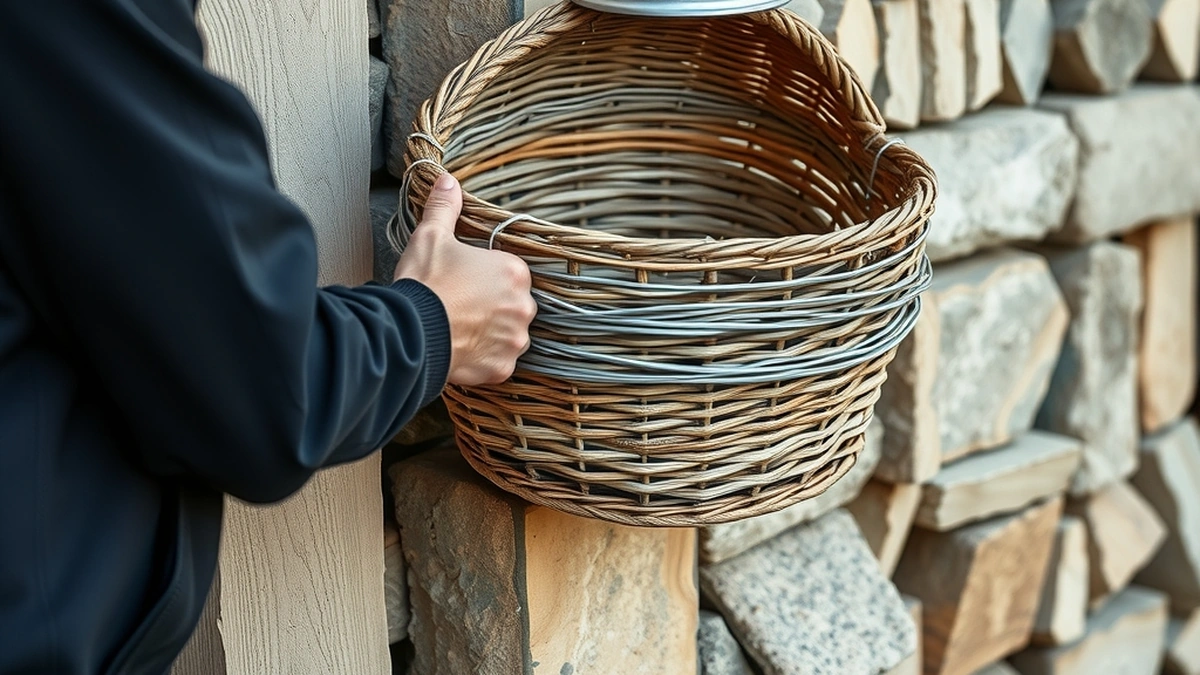
Loose lids and open edges are the easiest fix. Re-lace with galvanized wire on a continuous spiral, matching the original lacing pattern, and tension the internal brace wires if the basket has started to belly.
Use proper wire, not plastic ties. Plastic degrades in ultraviolet light and fails under the load a full basket imposes. A stainless or heavily galvanized tie costs little more and lasts as long as the basket.
For a small hole in the mesh, a patch of matching mesh laced over the opening is adequate, provided the surrounding wire is sound. A patch on corroded wire just moves the failure 2 inches sideways.
Stone loss has a cause, and topping up without fixing it is temporary. Check for a ruptured basket, fill that is smaller than the mesh aperture, and an under-filled top course.
When the basket is sound and the fill is simply settled, open the lid, add angular stone in the 4 to 8 inch range, hand-place the face stones, and close the lid. Keep the stone size matched to the mesh; 2 inch decorative stone in a standard basket will leave through the face.
Corrosion management
Galvanized mesh is the standard, and its life depends on how wet it stays. The base course is the vulnerable one because it sits in the splash zone, and road salt, fertilizer, and runoff all accelerate corrosion.
Keep soil and mulch from piling against the base, and keep sprinklers off the wall. Where the wall is in a coastal setting, PVC-coated baskets are the better specification, and any coating damage found during inspection should be noted and monitored.
A single broken strand is a monitoring item. Multiple breaks along a base course mean the basket has lost containment, and the repair is replacement of that basket rather than a patch.
Vegetation control
| Growth | Action | Why |
|---|---|---|
| Grass and small herbs in face | Leave or trim | Cosmetic, holds a little stone in place |
| Woody seedlings | Pull now | Roots prise baskets apart |
| Shrubs over 2 ft | Remove with roots | Displaces stone, traps moisture |
| Trees within 10 ft | Remove or root barrier | Root pressure and shade damage |
| Soil accumulated on top | Clear and re-grade | Sends water into the fill |
A little green in a gabion face is part of the look and does no harm. Woody growth is different: a 2 inch stem becomes a 4 inch root plate, and the basket does not have 4 inches to give.
Drainage and fabric checks
Water standing behind the wall after rain means the stone fill or the fabric has failed. Check the top surface first, since water running over the top is a grading problem and cheap to fix. Then check the toe for muddy discharge, which indicates fines moving through the fill.
If the fabric is torn or was never installed, the repair is to expose the soil side, remove contaminated stone, and re-line. On a long wall that is a rebuild, which is why the fabric detail at installation matters so much.
A simple calendar
- Spring: measure bulges and lean, probe the base for scour, and photograph the whole wall.
- Late spring: pull woody seedlings, clear soil from the tops of baskets, and re-lace any loose lids.
- Summer: top up settled baskets with matched stone, and check that the ground above the wall still slopes away.
- Fall: clear leaves and debris from the top of the wall and from any swale above it.
- After storms: check the toe for scour, the face for displaced stone, and the discharge for mud.
What maintenance costs
Materials are minimal: a spool of galvanized lacing wire, a few square feet of matching mesh, and a ton or two of stone for top-ups. Call it $100 to $400 for a typical residential wall, plus your time.
Compare that with replacement. A 40 foot by 4 foot wall is 160 square feet, and at $20 to $40 per square foot a rebuild is 160 × $20 = $3,200 to 160 × $40 = $6,400. Ten years of inspection costs a fraction of one rebuild.
When the wall is past maintenance, the decision is whether to rebuild in gabion or change material. Gabion problems describes the symptoms that mean the end is near, gabion installation covers how to build the replacement correctly, and retaining wall maintenance covers the routine for other wall types. Replacement pricing is in gabion cost.
Frequently asked questions
How often does a gabion wall need maintenance?
Inspect in spring and fall, and again after any storm that causes flooding or fast runoff. Stone walls are low maintenance, but the wire and the base are what fail, and both are easy to check visually.
What should I look for when inspecting a gabion wall?
Bulging faces, rust bloom or broken wire, stone spilling from a basket, scour under the toe, woody plants in the face, and water standing behind the wall after rain. Each points to a different repair.
How do I fix a small bulge in a gabion basket?
If the bulge is under about 1 inch and the wire is sound, monitor it. Above that, open the lid, remove loose fill, dress the face stone by hand, and re-fill with angular stone before re-lacing the lid.
Can I just add stone to a gabion wall that has lost fill?
You can top up an open basket, but stone loss usually means the mesh has ruptured or the fill is too small for the aperture. Fix the cause first, or the new stone will leave the same way.
How do I stop weeds growing in my gabion wall?
Pull woody seedlings while they are small and keep soil from accumulating on top of the baskets. Herbaceous growth in the face is mostly cosmetic, but shrubs and tree seedlings prise the baskets apart over time.
Does a gabion wall need re-sealing or coating?
No. There is nothing to seal. The maintenance work is mechanical: re-lacing, replacing damaged baskets, topping up stone, and keeping the base free of scour and the geotextile intact.
Sources
Some links are affiliate links.If you buy through them we may earn a commission at no extra cost to you. We do not accept payment for rankings. Read the full disclosure.