Segmental Block vs Timber: Which Retaining Wall Lasts?
Compare segmental block and timber retaining walls on cost, drainage, soil pressure, and lifespan to pick the right material for your site.
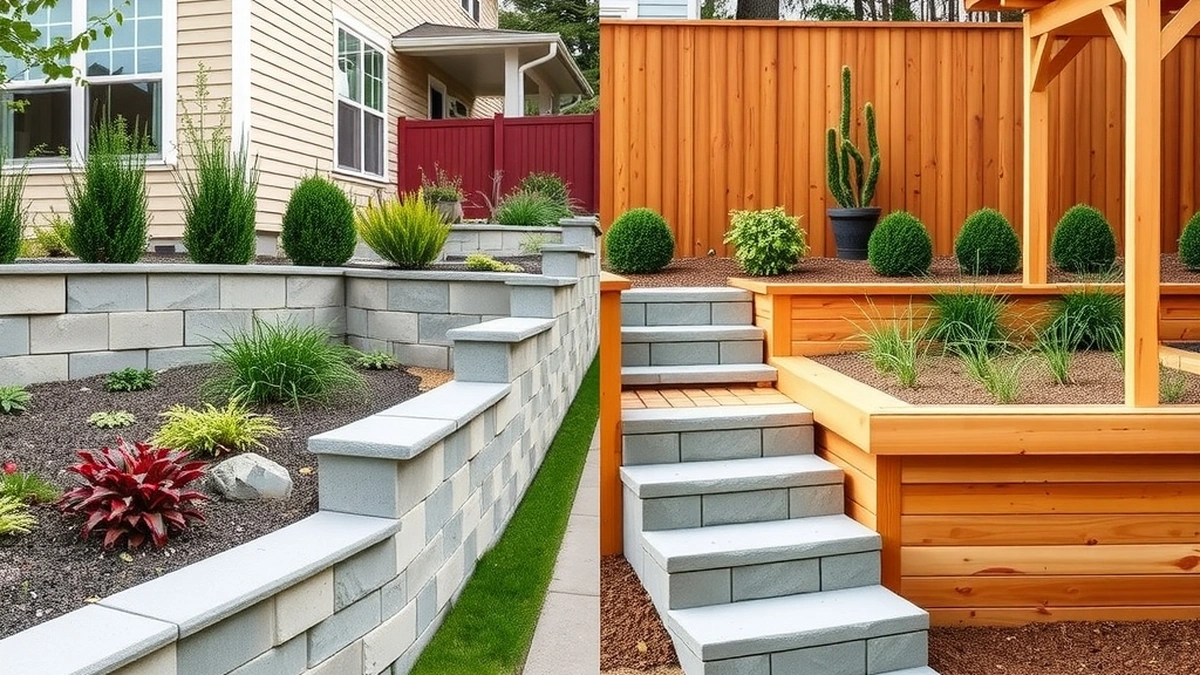
Segmental block walls cost more upfront than timber but last decades longer and handle soil pressure and drainage better on most residential sites.
- Segmental block cost
- $15–$35 per sq ft
- Timber wall cost
- $10–$25 per sq ft
- Drainage and backfill
- $5–$15 per sq ft
- Typical block lifespan
- 30–50 years
- Typical timber lifespan
- 15–25 years
Some links on this page are affiliate links.If you buy through them we may earn a commission at no extra cost to you. We do not accept payment for rankings. Read the full disclosure.
Segmental block walls cost more upfront than timber walls, but they last longer and manage soil pressure and drainage more reliably. Timber walls are cheaper to build and easier to cut into tight sites, yet they rot, warp, and fail sooner under constant moisture. For most residential retaining walls, segmental block is the better long-term choice when drainage and soil pressure are handled first.
Drainage and Soil Pressure Come First
Before choosing block or timber, calculate the loads the wall must carry. Retaining walls resist lateral soil pressure, which increases with wall height and saturates quickly when water collects behind the facing. A 4-foot-tall wall holding back saturated soil can face hundreds of pounds of lateral force per linear foot. If water has nowhere to go, hydrostatic pressure adds to that load and can push any wall out of alignment.
Drainage and backfill typically add $5–$15 per square foot to the project cost. That budget covers wall rock, drainage aggregate, a perforated drain pipe at the base, and outlet details that move water away from the wall. Skipping drainage to save money usually shortens wall life regardless of whether you use block or timber.
Segmental Block Cost and Structure
Segmental block retaining walls cost about $15–$35 per square foot installed, not including drainage and backfill. For a wall 4 feet high and 20 feet long, the face area is 80 square feet. At $25 per square foot, the block portion runs roughly $2,000. Adding drainage and backfill at $10 per square foot adds about $800, for a total near $2,800. These figures are estimates and vary by block style, site access, and local labor rates.
Segmental block walls rely on mass, interlock, and setback to resist soil pressure. Each course steps slightly backward into the retained soil, using gravity and friction to hold the wall together. Because the blocks are modular, damaged units can be removed and replaced without tearing down the whole wall. Properly built segmental walls commonly last 30 to 50 years.
Timber Wall Cost and Structure
Timber retaining walls cost about $10–$25 per square foot installed, excluding drainage and backfill. Using the same 4-foot by 20-foot wall, that is 80 square feet. At $17 per square foot, the timber portion runs roughly $1,360. Add drainage and backfill at $10 per square foot, or $800, and the total lands near $2,160. These figures are estimates.
Timber walls use horizontal pressure-treated beams, often 6 by 6 inches, stacked and spiked or rebar-pinned into the soil. Deadmen—timber anchors extending back into the fill—help resist overturning on taller runs. Timber is easier to cut and fit on irregular sites, and the material is familiar to many DIY builders. However, pressure-treated wood still faces rot, insect damage, and freeze-thaw cycling. A typical timber wall lasts 15 to 25 years, though poor drainage can cut that life in half.
Cost Comparison Table
| Wall type | Material cost per sq ft | Drainage and backfill per sq ft | Typical total per sq ft | Typical lifespan |
|---|---|---|---|---|
| Segmental block | $15–$35 | $5–$15 | $20–$50 | 30–50 years |
| Timber | $10–$25 | $5–$15 | $15–$40 | 15–25 years |
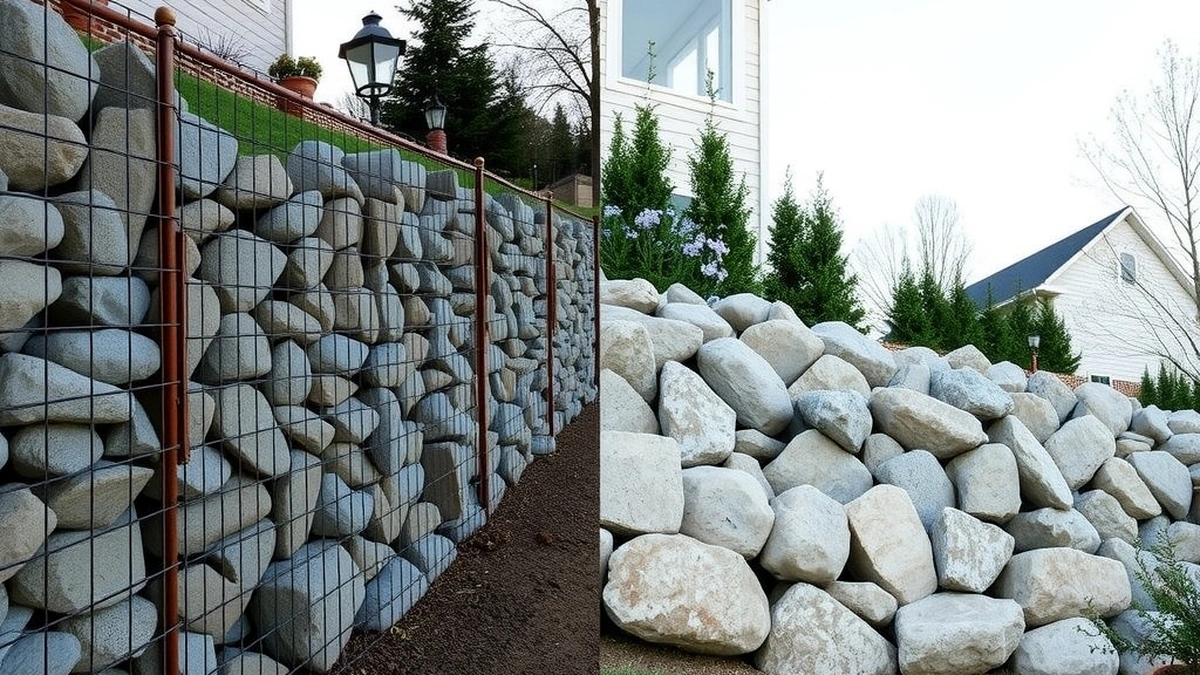
For context, poured concrete runs $25–$60 per square foot, gabion runs $20–$40 per square foot, and boulder walls run $20–$45 per square foot. Segmental block sits in the middle of the installed cost range, while timber is usually the lowest-cost structural option.
Load Arithmetic Example
Soil pressure is not optional math. Assume a wall retaining soil with a unit weight of about 100 pounds per cubic foot. At a depth of 4 feet, the lateral soil pressure at the base can be estimated using a simple lateral pressure factor. For rough planning, a wall may need to resist roughly 50 to 80 pounds per square foot of wall area at the base, increasing with saturation.
On an 80-square-foot wall, that could mean several thousand pounds of force pushing against the base course. Segmental block distributes that load through the full depth of the wall rock zone and the interlocking units. Timber transfers load through spikes and deadmen into the soil, which works well until the timber softens or the soil around the anchors becomes saturated.
If you are unsure about the loads on your site, review our retaining wall installation guide for layout and base preparation details, or consult a local engineer for walls over 4 feet or near buildings.
Maintenance and Repair Expectations
Segmental block walls require little maintenance beyond keeping the drain outlet clear and checking for bulging units after heavy rain. If a block shifts or cracks, you can often lift out the affected unit and replace it. Our retaining wall repair guide covers common failure signs such as leaning, separation at joints, and drainage blockage.
Timber walls demand more attention. Look for soft spots at the base, rust stains around fasteners, and leaning caused by rotting deadmen. Because timber decays from the inside out, a wall can look sound while losing structural capacity. Replacing a rotted timber course often means removing soil and backfill to access the beam, which adds labor and cost. Our retaining wall maintenance guide includes seasonal checklists for drainage outlets, vegetation control, and wall movement.
When Timber Makes Sense
Timber is worth considering when budget is the primary constraint, the wall is under 3 feet, and the site stays relatively dry. Short garden terraces and low landscape borders can perform well in timber for a decade or more. Timber is also easier to remove later if the landscape design changes.
Timber is a weaker fit for tall walls, wet sites, clay soils, or walls supporting driveways and structures. In those conditions, the lower upfront price is usually outweighed by a shorter lifespan and higher risk of sudden failure.
When Segmental Block Makes Sense
Segmental block is the better default for walls over 3 feet, walls holding back driveways or patios, and any site where drainage cannot be guaranteed. The modular system tolerates minor settlement, and the drainage details are built into the wall design rather than added as an afterthought. Over a 30-year horizon, segmental block often costs less per year of service than timber, even though the initial invoice is higher.
For help weighing materials across all wall types, see our best retaining wall overview. If you are deciding whether a wall or a fence suits your property line, our retaining wall vs fence comparison covers setbacks and load differences. Homeowners tackling small projects themselves should start with our DIY retaining wall guide for height limits and safety basics.
Choose segmental block when you want a wall that outlasts the landscaping around it. Choose timber only when the wall is short, the budget is tight, and you are prepared to replace it within a couple of decades. Either way, budget for drainage and backfill first, then pick the block.
Next, compare how much does retaining wall cost, retaining wall installation, retaining wall repair before you commit.
Frequently asked questions
Is segmental block more expensive than timber?
Yes. Segmental block runs about $15–$35 per square foot installed, while timber runs about $10–$25 per square foot, before drainage and backfill.
How long does a timber retaining wall last?
A pressure-treated timber retaining wall typically lasts 15 to 25 years, depending on soil moisture, insect exposure, and maintenance.
Does a segmental block wall need drainage?
Yes. Every segmental block wall needs a drainage aggregate zone, perforated drain pipe, and wall rock behind the facing to manage hydrostatic pressure.
Can I build either wall as a DIY project?
Small timber walls under about 3 feet can be DIY-friendly, but segmental block walls over 3 feet or near structures usually need engineering and permits.
Which wall handles soil pressure better?
Segmental block walls handle soil pressure better because their mass, interlock, and engineered drainage system resist lateral loads over time.
Where can I learn about retaining wall repair?
Read our retaining wall repair guide for common failure signs, drainage fixes, and when to replace versus patch a wall.
Sources
Some links are affiliate links.If you buy through them we may earn a commission at no extra cost to you. We do not accept payment for rankings. Read the full disclosure.