Boulder vs Segmental block
Boulder walls and segmental block walls compared on cost, height limits, engineering, drainage and the equipment each one needs.
Boulder walls cost $20 to $45 per square foot and segmental block walls $15 to $35. Block is engineered, predictable and can be built taller with geogrid; boulder is natural, heavier to handle, and usually limited to lower walls without an engineered design.
- Boulder wall
- $20 - $45 per square foot
- Segmental block
- $15 - $35 per square foot
- Drainage and backfill
- $5 - $15 per square foot
- Height limit
- Engineered above about 4 feet
Some links on this page are affiliate links.If you buy through them we may earn a commission at no extra cost to you. We do not accept payment for rankings. Read the full disclosure.
Boulder and segmental block are both gravity retaining walls, and both fail for the same reason: water behind them. The choice comes down to cost, height and appearance. Block costs $15 to $35 per square foot and can be engineered taller with geogrid; boulder costs $20 to $45 and is usually limited to lower walls without a design.
What each wall is
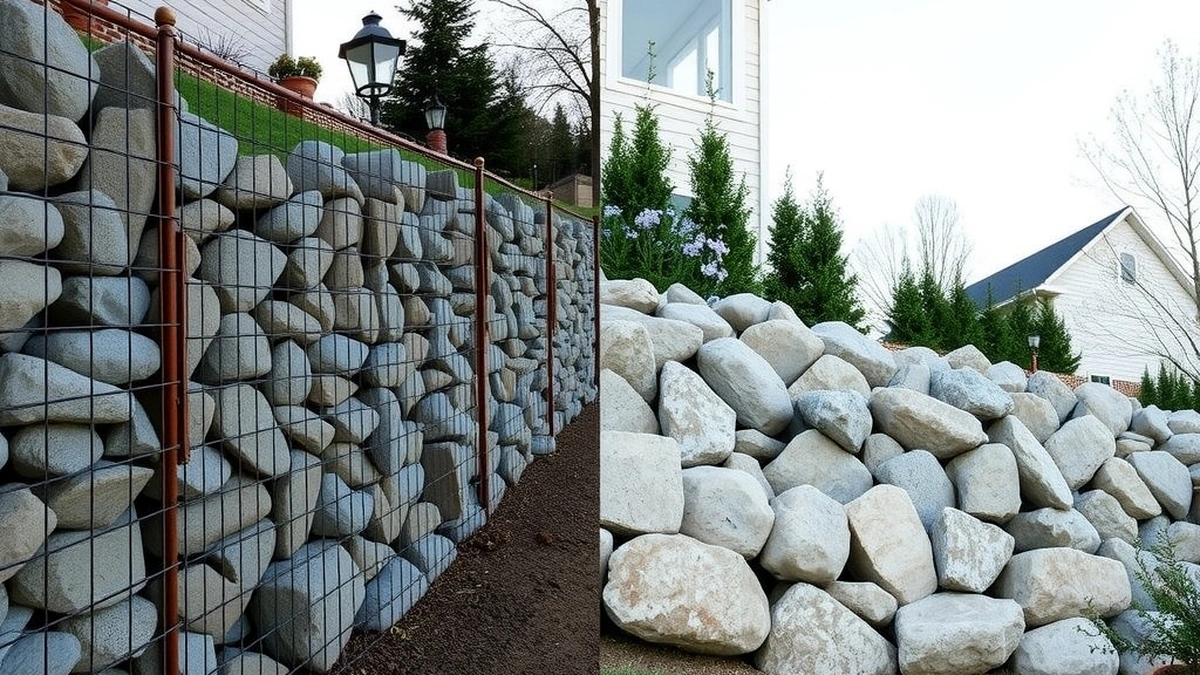
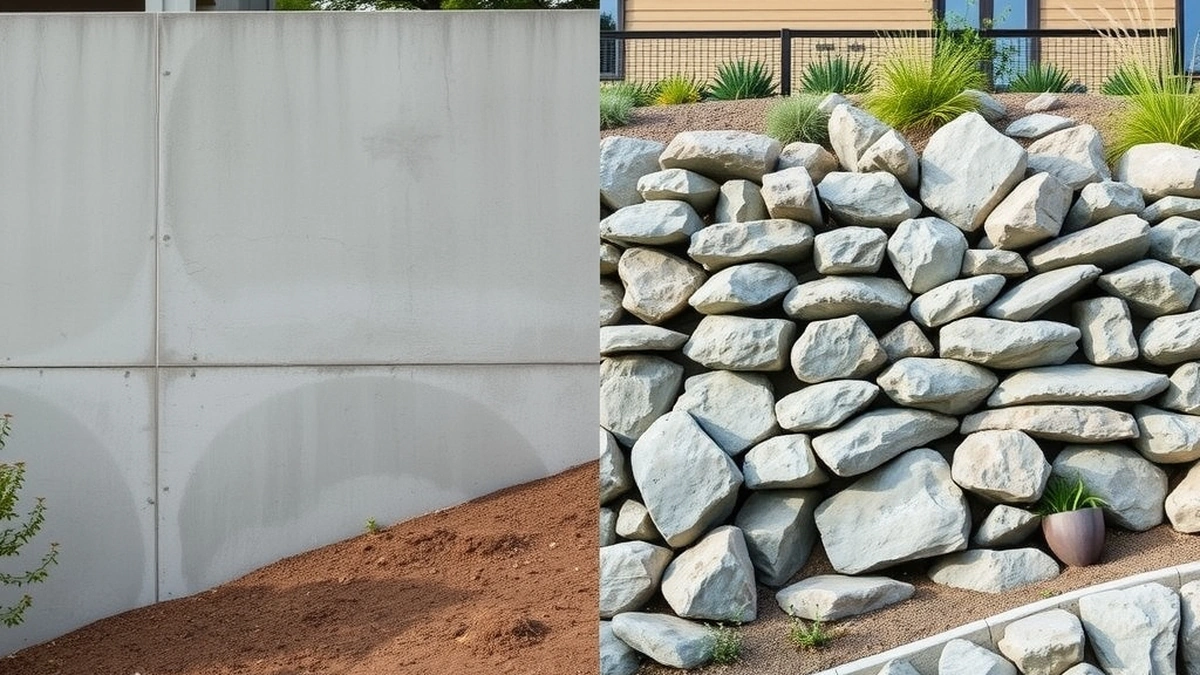
A boulder wall is built from large natural stones, set partly buried on a compacted base and stacked with a backward lean. It relies on the weight of the stone and the friction between irregular faces.
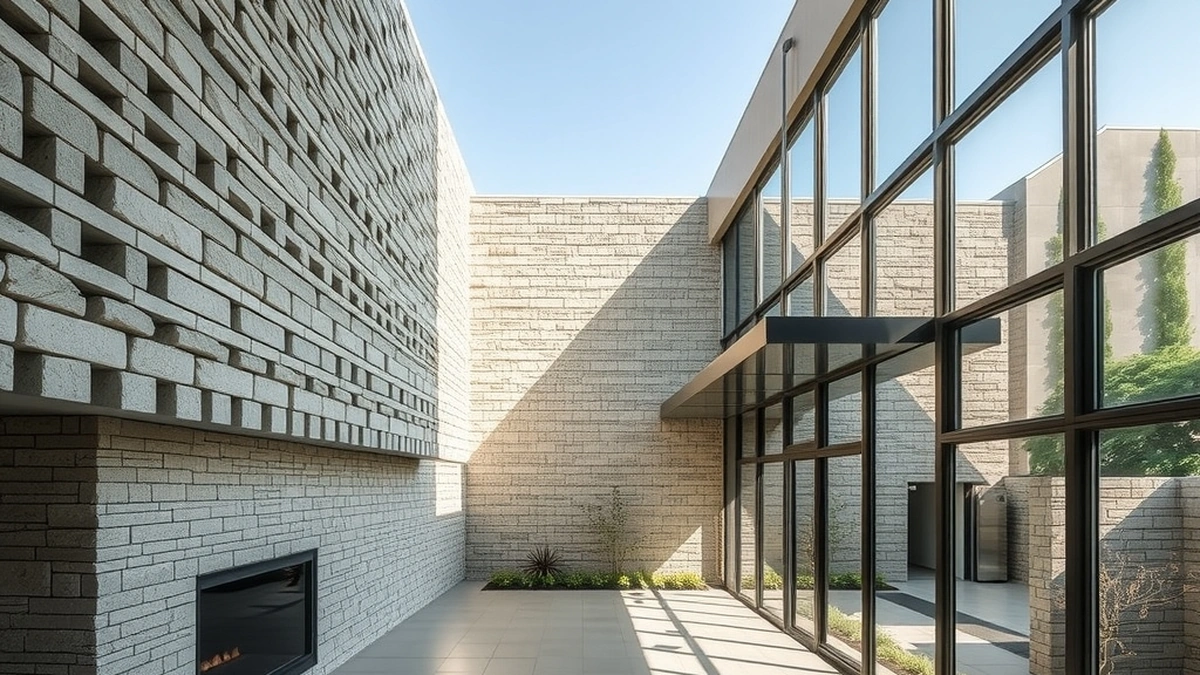
A segmental block wall is built from manufactured concrete units that interlock and often include a geogrid grid extending into the backfill. The geogrid lets the wall behave as a reinforced soil mass rather than a simple gravity wall.
Both need gravel backfill and a drain at the base. Neither works without drainage, regardless of the material.
Side by side
| Trait | Boulder | Segmental block |
|---|---|---|
| Cost | $20 - $45 / sq ft | $15 - $35 / sq ft |
| Unit consistency | Low | High |
| Equipment needed | Heavy lifting | Moderate |
| Height potential | Lower without design | Higher with geogrid |
| Appearance | Natural, informal | Built, formal |
| Repair | Reset individual stones | Replace individual blocks |
| Engineering | Required above about 4 ft | Required above about 4 ft |
| Drainage | Gravel and pipe | Gravel and pipe |
The height row is the practical dividing line. A block wall with geogrid can be designed to heights that a boulder wall cannot reach economically.
The arithmetic on a 120 square foot face
A 40 foot long, 3 foot high wall has 120 square feet of face.
Boulder at $30 per square foot: 120 × $30 = $3,600. Drainage and backfill at $10: 120 × $10 = $1,200. Total: $4,800.
Segmental block at $25 per square foot: 120 × $25 = $3,000. Drainage and backfill at $10: 120 × $10 = $1,200. Total: $4,200.
The block wall is $600 cheaper on this example, before any difference in equipment or access. On a taller wall, the gap widens because the block system can be engineered with geogrid rather than built from heavier stone.
What the base costs and where boulder wins
Both walls need a compacted gravel base and a footing that suits the height. The base is where the money is hidden: excavation, gravel, compaction and disposal.
On a 3 foot wall, the base is a modest line. On a 6 foot wall, the base and the excavation can be a third of the project cost, and the equipment needed to place the units adds more.
That is why the per-square-foot rates for both materials rise with height. The material cost per square foot of face stays similar, but the base, the drainage and the handling all scale up.
Appearance is the main advantage of boulder. Boulders read as natural and suit a landscape setting where a manufactured block would look out of place.
Durability is the second. Stone does not fade, chip or spall the way concrete can, and a boulder wall can last for generations. A boulder wall also looks better as it weathers, with moss and lichen settling into the joints.
Repair is the third. A single stone can be reset without replacing a manufactured unit, provided the cause of the movement is addressed. That is an advantage on a wall that has settled rather than failed.
Where block wins
Cost is the first advantage on most sites, and the gap widens on taller walls where boulder handling becomes expensive.
Predictability is the second. Uniform units stack to a known line and height, and the engineering is well documented. That matters when the wall has to meet a permit condition or support a surcharge load.
Height is the third. Geogrid reinforcement lets a block wall retain soil at heights that a gravity boulder wall cannot match without a much larger base. That is why tall engineered walls are almost always block or poured concrete.
Installation and equipment
A boulder wall needs a machine to place the stones. A 500 pound boulder is not a two-person lift, and the equipment has to reach the wall line.
A block wall can be built with smaller equipment and hand labor, which matters on a tight site where a machine cannot get in.
Both need the same base preparation and the same drainage detail. The difference is in the handling, not the principle.
Drainage is the same for both
Gravel backfill, filter fabric and a perforated drain at the base are standard for both systems. The drain needs an outlet, and the outlet needs to be clear.
Water pressure is the dominant load on a retaining wall, and saturated soil can double it. A wall with perfect units and no drainage will fail before a wall with rough stones and good drainage. That is why the drainage detail belongs in every quote, whichever material is chosen.
Choosing between them
- Check the local height limit and permit requirement for either type.
- Confirm whether an engineered design is needed.
- Decide how the wall should look against the landscape.
- Check site access for the equipment each type needs.
- Price drainage and backfill as a separate line for both.
- Get a geotechnical view if the slope above the wall is steep.
For boulder costs, see boulder cost. For the block side, read segmental block cost, and for the drainage detail both need, check retaining wall drainage.
Frequently asked questions
Which is cheaper, boulder or segmental block?
Segmental block is usually cheaper at $15 to $35 per square foot against $20 to $45 for boulder, though access and stone size can flip the comparison.
Can a boulder wall be built as tall as a block wall?
Block walls can be engineered taller with geogrid reinforcement. Boulder walls are usually limited to lower heights without a designed system.
Which is easier to install?
Segmental block, because the units are uniform and stack predictably. Boulders require equipment and careful fitting of irregular stones.
Do both need drainage?
Yes. Both rely on gravel backfill and a perforated drain at the base. Water pressure is the main cause of failure in either system.
Which looks better?
That is a matter of taste. Boulders read as natural and informal, while block reads as a built structure and comes in a wide range of finishes.
Do both need a permit?
Rules vary, but many jurisdictions require a permit and an engineered design above about 4 feet for either type. Check before building.
Sources
Some links are affiliate links.If you buy through them we may earn a commission at no extra cost to you. We do not accept payment for rankings. Read the full disclosure.