Segmental Block vs Gabion: Which Retaining Wall Wins
Compare segmental block and gabion retaining walls by cost, drainage, soil pressure, and best use cases for US residential sites.
Choose segmental block for vertical, load-bearing walls with tight drainage; choose gabion for porous, sloped sites where water flow matters more than wall height.
- Best for segmental block
- Vertical walls, tight spaces, structural loads
- Best for gabion
- Sloped sites, drainage-heavy areas, rustic look
- Segmental block cost
- $15–$35 per sq ft
- Gabion cost
- $20–$40 per sq ft
- Drainage and backfill
- $5–$15 per sq ft
Some links on this page are affiliate links.If you buy through them we may earn a commission at no extra cost to you. We do not accept payment for rankings. Read the full disclosure.
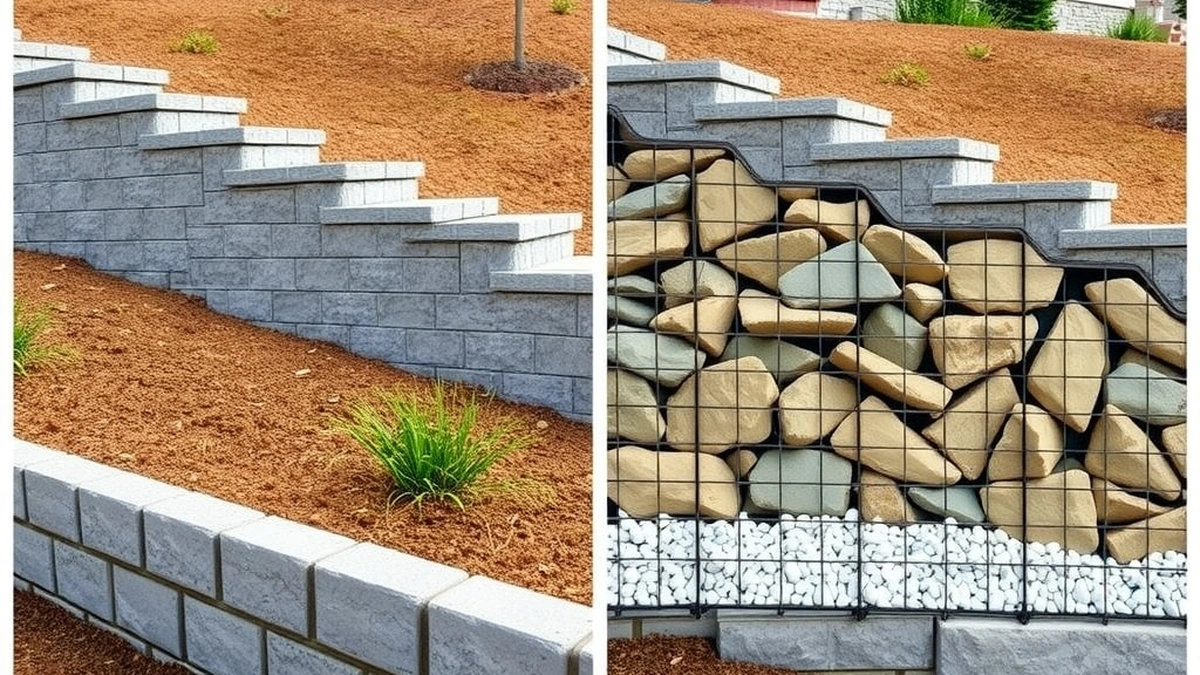
Segmental block and gabion walls solve the same problem—holding back soil—but they do it differently. Segmental block relies on interlocking concrete units and gravity to resist soil pressure. Gabion relies on wire cages filled with stone that let water pass through while the mass of the fill resists movement.
How Each Wall Type Works
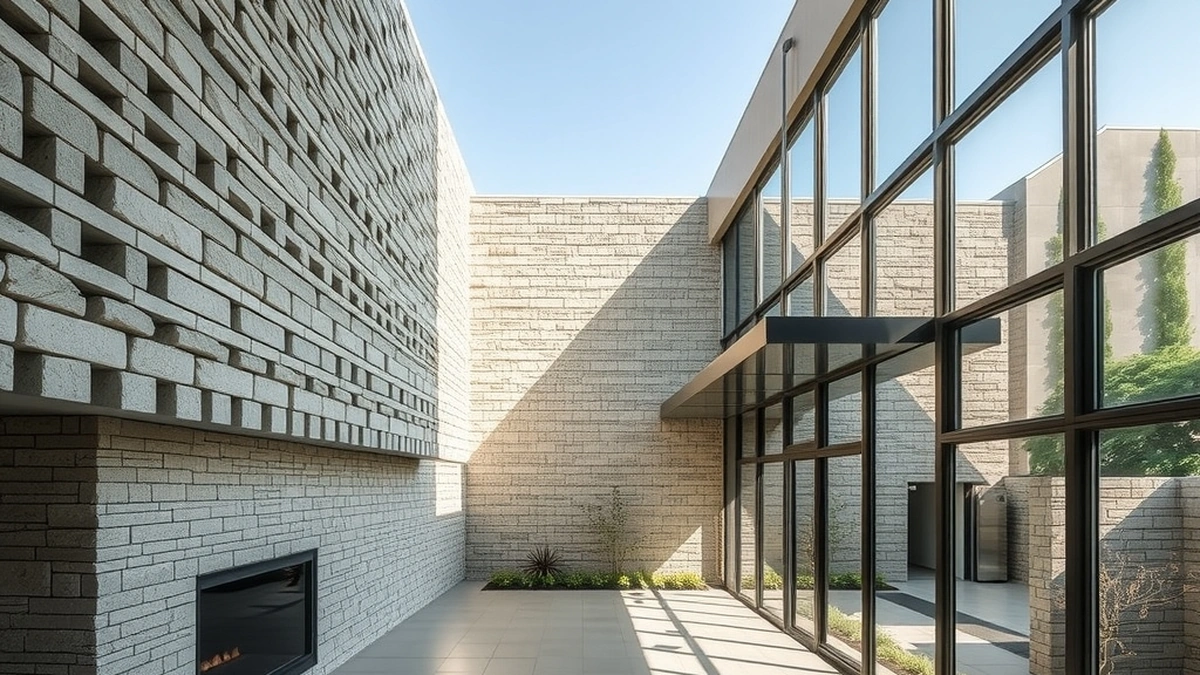
Segmental block walls are made of dry-stacked concrete units that lock together with pins, lips, or friction. The wall leans slightly back into the soil, using its own weight and the weight of retained earth to stay stable. For taller walls, geogrid reinforcement extends into the backfill to tie the wall to the soil mass.
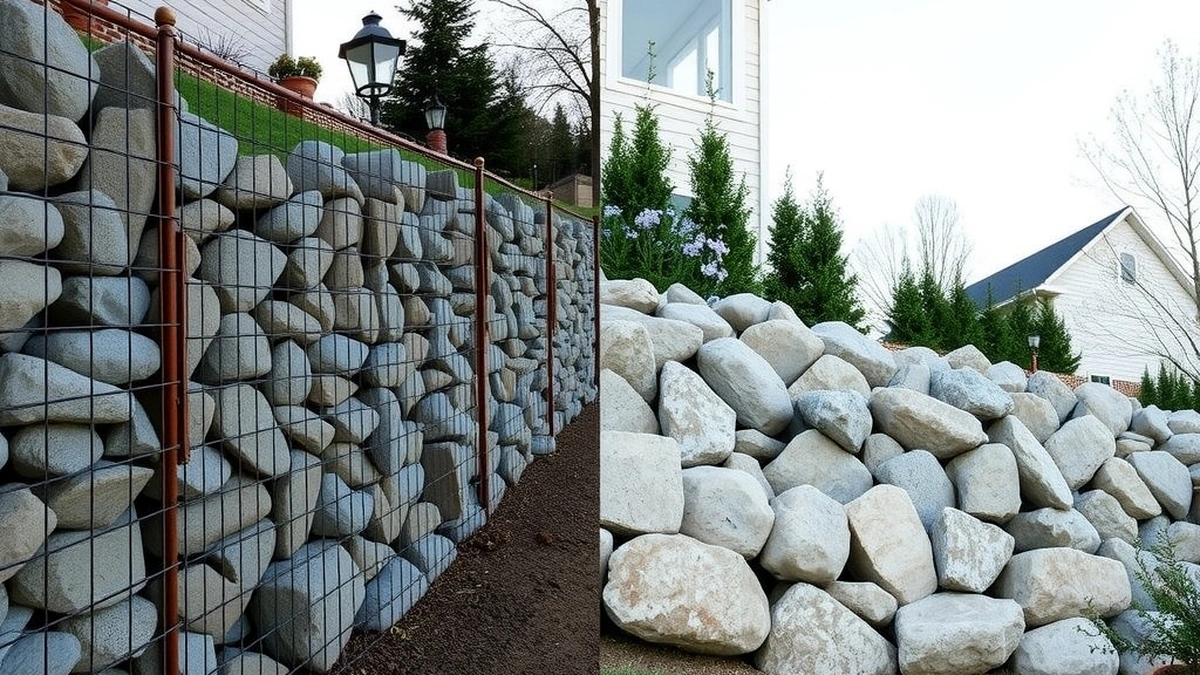
Gabion walls are rectangular wire mesh cages filled with rock or recycled concrete. The cages sit in a stepped or vertical arrangement. Water flows through the voids between stones, which reduces hydrostatic pressure behind the wall. Because the wire can flex slightly, gabion tolerates some settlement without cracking.
Cost Comparison
Material and installation estimates vary by site, wall height, and local labor rates. The figures below are estimates, not quotes.
| Wall type | Installed cost per sq ft |
|---|---|
| Segmental block | $15–$35 |
| Gabion | $20–$40 |
| Timber | $10–$25 |
| Poured concrete | $25–$60 |
| Boulder | $20–$45 |
| Drainage and backfill | $5–$15 |
For a 40-square-foot wall, segmental block at $25 per sq ft costs about $1,000 for the wall face. Gabion at $30 per sq ft costs about $1,200. Add drainage and backfill at $10 per sq ft, or $400, and the totals land near $1,400 for block and $1,600 for gabion. These are rough estimates; actual bids depend on access, excavation, and stone prices.
Drainage and Soil Pressure First
Drainage controls how long any retaining wall lasts. Water trapped behind a wall creates hydrostatic pressure that can push even a well-built wall over. Segmental block walls are relatively impervious at the face, so they need a drainage aggregate layer behind the units, a perforated drain pipe at the base, and weep holes or outlets to move water away.
Gabion walls drain through the wall itself, which is an advantage on wet sites. However, the soil behind the cages still needs drainage and backfill. Without it, fine soil can migrate into the cage voids and clog the system, reducing the benefit of permeability.
Soil pressure increases with wall height and soil saturation. A 4-foot wall holding back saturated clay faces far more lateral force than a 2-foot wall in sandy soil. Segmental block is generally the stronger choice for tall, vertical applications where space is limited. Gabion works well on lower slopes where a battered or stepped face is acceptable and water movement is a priority.
Block Choice Comes Second
Once drainage and soil pressure are addressed, choose the block or cage style. Segmental block comes in many colors, textures, and sizes. Some units have a natural stone face; others are smooth concrete. The choice affects appearance and price, but not the basic mechanics of the wall.
Gabion cages are usually galvanized or PVC-coated wire. The fill stone can be local quarry rock, which helps the wall blend into the landscape. Wire coating matters for longevity, especially in coastal or high-moisture areas where corrosion is a concern.
When to Choose Segmental Block
Segmental block fits best when you need a vertical wall in a tight space, such as alongside a driveway, patio, or foundation. It handles structural loads well and can be built taller with engineered geogrid reinforcement. If the wall must support a surcharge, like a vehicle or structure above it, segmental block is usually the safer starting point.
It also works when appearance matters. The uniform face looks finished and can match hardscape pavers or steps. Maintenance is straightforward: inspect for bulging, check drain outlets, and re-level any units that shift.
When to Choose Gabion
Gabion fits sloped sites where water runs through the soil and a stepped wall face is acceptable. It is a good choice for erosion control along drainage channels or shorelines, and for projects where a rugged, natural look is preferred over a clean masonry face.
Gabion can be more forgiving of minor settlement because the cages flex. However, tall gabion walls still need engineering review, and the wire cages can be damaged by impact or corrosion over time. Inspect the wire coating regularly and replace any broken cages promptly.
Installation and Maintenance Notes
Both wall types need a compacted gravel base and proper drainage and backfill. Segmental block installation requires careful leveling of the first course, because errors compound as the wall rises. Gabion installation requires filling the cages evenly and lacing the wire panels securely.
For either system, walls over about 4 feet often require a permit and may need design by a qualified professional. Check local building codes before starting. If a wall shows leaning, cracking, or drainage failure, address it quickly. Small repairs are cheaper than rebuilding. More guidance on installation and upkeep is available in our retaining wall installation and retaining wall maintenance articles.
For help deciding among all wall types, see our best retaining wall overview. If you are weighing a wall against a boundary fence, our retaining wall vs fence comparison covers the trade-offs. Homeowners considering their own labor should read the DIY retaining wall guide before starting excavation.
Bottom Line
Segmental block is the better choice for vertical, space-constrained walls that must carry structural loads. Gabion is the better choice for porous, sloped sites where drainage is the primary concern and a stepped face works aesthetically. Both need drainage and backfill, and both cost more when water management is done correctly. Get a site-specific estimate before ordering material.
Next, compare how much does retaining wall cost, retaining wall installation, retaining wall repair before you commit.
Frequently asked questions
What is the main difference between segmental block and gabion?
Segmental block is a stacked concrete masonry unit that relies on interlock and gravity for stability, while gabion uses wire cages filled with stone that drain freely and flex with soil movement.
Which wall costs more to install?
Segmental block typically runs $15–$35 per sq ft, while gabion runs $20–$40 per sq ft, so gabion is usually the higher-cost option by a small margin.
Do gabion walls need drainage behind them?
Yes. Even though gabion is permeable, the retained soil still needs drainage and backfill, which adds roughly $5–$15 per sq ft to the project.
Can segmental block hold more soil pressure than gabion?
Generally yes. Segmental block walls are engineered for vertical loads and taller heights, whereas gabion walls are better suited to lower heights and flexible, draining conditions.
Are gabion walls good for DIY?
Small gabion walls can be a DIY project, but taller walls over about 4 feet usually need engineering review and professional installation.
How long do these walls last?
Both can last decades when built with proper drainage and backfill; segmental block depends on unit quality and installation, while gabion depends on wire coating and stone durability.
Sources
Some links are affiliate links.If you buy through them we may earn a commission at no extra cost to you. We do not accept payment for rankings. Read the full disclosure.