Segmental Block vs Boulder: Which Retaining Wall Wins?
Compare segmental block and boulder retaining walls by cost, drainage, soil pressure, and lifespan to pick the right wall for your site.
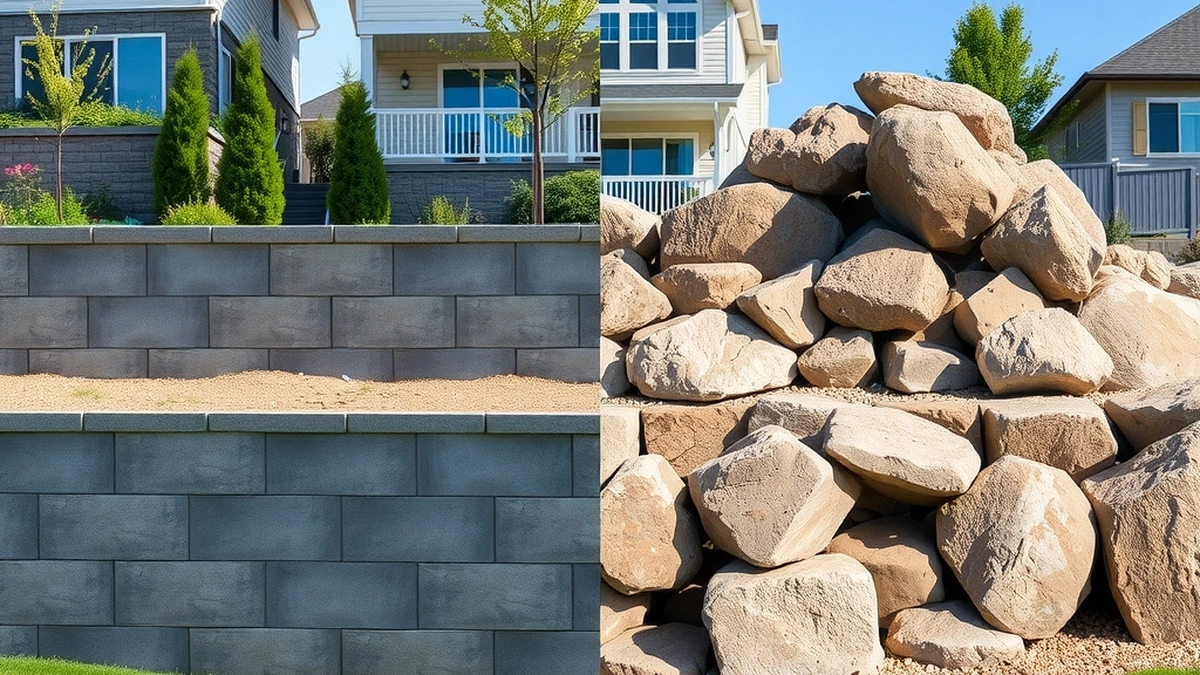
Choose segmental block for engineered drainage and predictable cost under $35 per sq ft; choose boulder for natural looks and heavy mass where equipment can reach the site.
- Best for engineered drainage
- Segmental block
- Best for natural aesthetics
- Boulder
- Installed cost range
- $15–$45 per sq ft
- Typical wall height
- 3–10 ft
Some links on this page are affiliate links.If you buy through them we may earn a commission at no extra cost to you. We do not accept payment for rankings. Read the full disclosure.
Segmental block and boulder walls both hold back soil, but they do it differently. Segmental block relies on interlocking units, compacted gravel, and engineered drainage to manage soil pressure. Boulder walls rely on mass, rock weight, and friction, with drainage often built around the stones rather than through them.
How Segmental Block Walls Work
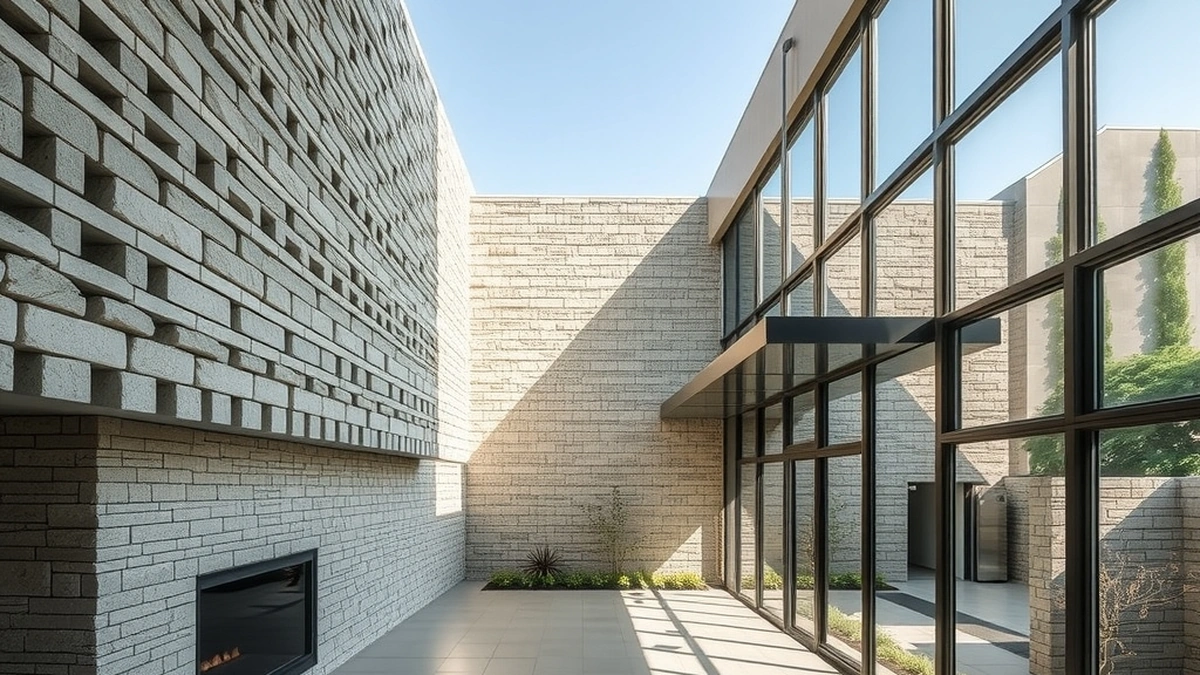
Segmental retaining walls use dry-stacked concrete units that interlock with pins, lips, or friction. Each course sets back slightly from the one below, creating a batter that redirects soil pressure into the wall mass. Behind the wall, a drainage zone of clean crushed stone collects groundwater and moves it toward weep holes or a perforated drain pipe at the base.
For a typical 4 ft tall wall running 20 ft long, the face area is 80 sq ft. At $15 to $35 per sq ft, the wall itself costs $1,200 to $2,800. Add drainage and backfill at $5 to $15 per sq ft, or $400 to $1,200, and the installed total lands between $1,600 and $4,000. These are estimates; actual pricing depends on site access, block style, and local labor rates.
Segmental block works well when you need a predictable, near-vertical face. It also suits tight property lines because the wall can be built close to the boundary without large equipment swinging boulders into place. For more on what drives these numbers, see our breakdown at /retaining-wall-cost-per-square-foot/.
How Boulder Walls Work
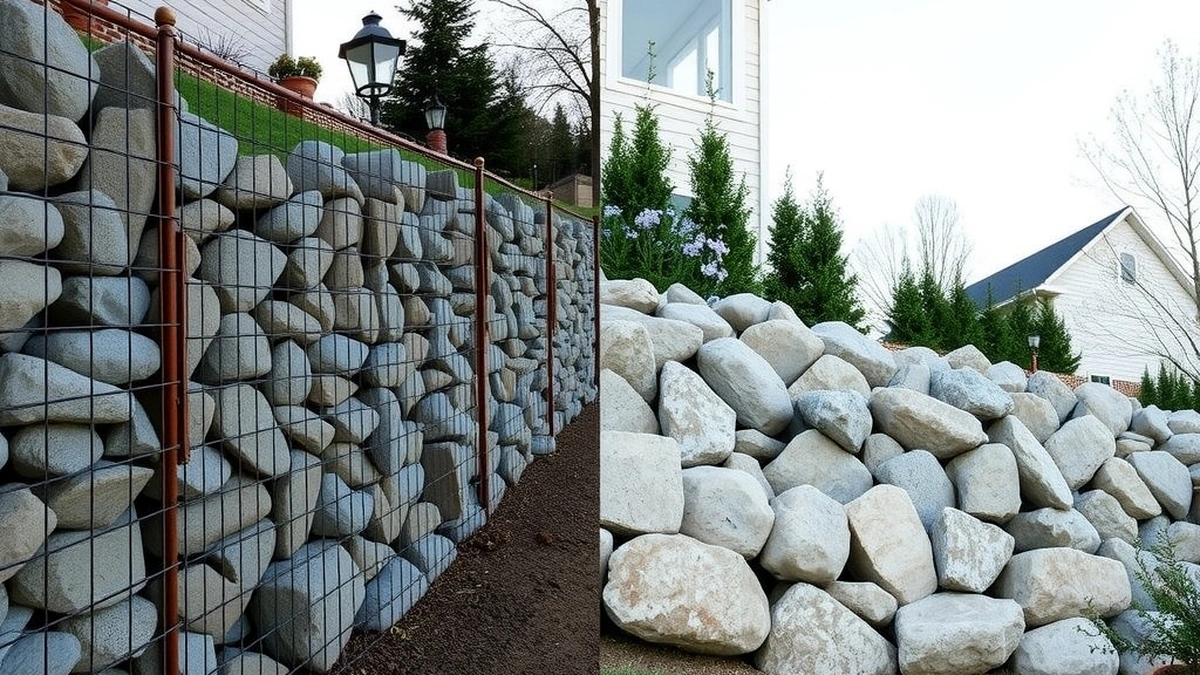
Boulder walls use large, irregular fieldstone or quarried rock stacked by excavator or crane. Stability comes from the weight of individual stones and the way they nest against each other. There is no mortar in a typical dry boulder wall, so water must be able to move through gaps between rocks or around a separate drainage layer installed behind the wall.
Costs run $20 to $45 per sq ft for the wall, plus $5 to $15 per sq ft for drainage and backfill. For that same 80 sq ft wall, the boulder wall costs $1,600 to $3,600, with another $400 to $1,200 for drainage, for a total range of $2,000 to $4,800. These figures are estimates and can rise sharply if the site requires a crane or long rock-hauling distances.
Boulder walls suit rural or naturalistic landscapes where a manufactured look would stand out. They also handle tall, heavy masses well, but they need room for equipment and a stable foundation that will not settle unevenly under concentrated point loads.
Soil Pressure and Drainage First
Soil pressure increases with wall height and with the weight of the soil behind it. A 6 ft wall holding back saturated clay faces far more lateral force than a 3 ft wall in sandy loam. Water is the main variable: saturated soil can weigh 110 to 130 pounds per cubic foot, compared with 90 to 110 pounds per cubic foot when dry.
Segmental block walls are designed around this. The drainage core behind the facing keeps hydrostatic pressure from building up, and the interlocking system distributes load across multiple units. For walls above roughly 4 ft, engineers often specify geogrid layers that extend back into the soil, tying the wall mass to the retained earth.
Boulder walls resist pressure through mass and friction, but water trapped behind large rocks can create hidden pressure points. Because the surface is irregular, it is harder to install a continuous drainage plane. If you choose boulder, plan for a free-draining backfill zone and an outlet at the lowest point so water does not pond behind the rock.
Cost Comparison by Wall Type
Here is how segmental block and boulder compare with other common retaining wall systems, all figures in USD per sq ft and labeled as estimates:
| Wall type | Wall only | Drainage and backfill | Total estimated range |
|---|---|---|---|
| Timber | $10–$25 | $5–$15 | $15–$40 |
| Segmental block | $15–$35 | $5–$15 | $20–$50 |
| Gabion | $20–$40 | $5–$15 | $25–$55 |
| Boulder | $20–$45 | $5–$15 | $25–$60 |
| Poured concrete | $25–$60 | $5–$15 | $30–$75 |
Segmental block sits in the middle of the pack. It costs more than timber but usually less than poured concrete. Boulder overlaps with gabion and poured concrete at the high end, mostly because placement labor and equipment time are unpredictable.
If you are budgeting a full project, remember that permits, engineering, and site grading are separate from the square-foot wall price. Our full installation guide at /retaining-wall-installation/ covers what to expect before the first block or boulder is set.
When to Choose Segmental Block
Pick segmental block when drainage control matters more than a natural look. The system is ideal for suburban lots, driveways, and any site where you want a clean, uniform face and a predictable maintenance cycle. Because the units are modular, damaged units can be removed and replaced without taking down the whole wall. That makes long-term upkeep simpler than with boulder, where shifting one stone can destabilize its neighbors.
Segmental block also fits narrow sites. A small skid-steer can deliver pallets of block, and crews can place units by hand. You do not need a crane swing radius or a wide staging area for sorting rocks.
When to Choose Boulder
Pick boulder when the wall should look like it has always been there. Large rock works well on wooded lots, park edges, and properties where the landscape design calls for natural materials. Boulder walls can also be built taller without geogrid in some situations, provided the foundation rock or compacted base can support the concentrated weight.
The trade-off is access. You need room for an excavator or crane, and you need a source of suitable rock nearby. Hauling boulders long distances adds cost fast. Boulder walls are also harder to modify later; if a stone shifts, resetting it safely often requires equipment and an experienced operator.
Maintenance and Repair
Segmental block walls need occasional inspection of weep holes and drain outlets. If a unit cracks or settles, a contractor can remove the affected blocks, re-level the base, and replace the unit. This is a straightforward repair compared with reconstructing part of a boulder wall.
Boulder walls require checking for rock movement after heavy rain or freeze-thaw cycles. Vegetation growing between stones can widen gaps and direct water into the backfill. If a large boulder shifts, the repair may involve excavating around it and resetting it with equipment. For guidance on common issues, see our repair overview at /retaining-wall-repair/.
Both wall types benefit from keeping surface water away from the top of the wall. Grade the soil above so runoff flows away from the wall face, not over it.
Making the Choice
Start with the site, not the material. If you have limited access, tight boundaries, or a need for engineered drainage, segmental block is usually the safer, more predictable option. If you have room for heavy equipment, a naturalistic setting, and a budget that can absorb placement variability, boulder can deliver a durable, attractive wall.
Either way, drainage and backfill are not optional extras. They are part of the structure. Budget $5 to $15 per sq ft for them, and build the wall to move water away from the soil it is holding back. For help choosing among all wall types, see our guide at /best-retaining-wall/.
Next, compare how much does retaining wall cost, retaining wall installation, retaining wall repair before you commit.
Frequently asked questions
What is the installed cost of segmental block?
Segmental block walls typically run $15 to $35 per sq ft installed, not including drainage and backfill, which adds another $5 to $15 per sq ft.
What is the installed cost of a boulder wall?
Boulder walls usually cost $20 to $45 per sq ft installed, with drainage and backfill adding $5 to $15 per sq ft on top.
Which wall handles water better?
Segmental block walls are built with a drainage core, gravel backfill, and weep holes, making water management more predictable than with boulders.
Can a boulder wall be built on a steep slope?
Yes, but it requires heavy equipment to place large rocks and careful grading to keep soil pressure from pushing individual boulders out of alignment.
Do segmental block walls need geogrid?
Walls over about 4 ft, or walls carrying surcharge loads like driveways, often need geogrid reinforcement embedded in the backfill.
How long do these walls last?
Both can last decades; segmental block depends on unit and drainage quality, while boulder walls depend on rock durability and foundation stability.
Sources
Some links are affiliate links.If you buy through them we may earn a commission at no extra cost to you. We do not accept payment for rankings. Read the full disclosure.