Root Damage: Repair Options for Retaining Walls
Learn how tree roots damage retaining walls and which repair options work best, from root barriers to full replacement.
Cut exposed roots, install a root barrier, improve drainage, and rebuild the affected wall section if soil pressure has shifted blocks or cracks exceed 1/4 inch.
- Primary cause
- Tree roots growing behind or under the wall
- Minor repair
- Root pruning and barrier installation
- Major repair
- Partial or full wall rebuild with drainage
- Cost range
- $10–$60 per sq ft depending on wall type
Some links on this page are affiliate links.If you buy through them we may earn a commission at no extra cost to you. We do not accept payment for rankings. Read the full disclosure.
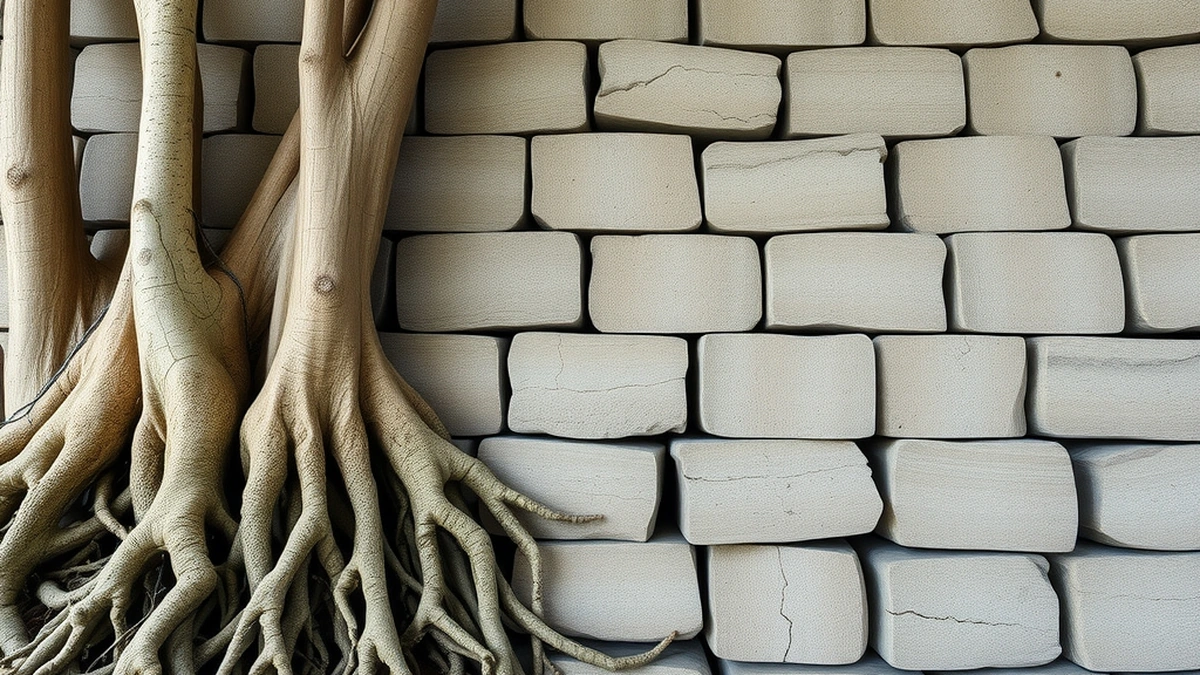
Tree roots are a common cause of retaining wall failure. As roots thicken, they push against the wall face and the backfill behind it, increasing lateral soil pressure beyond what the wall was designed to hold. Repair options range from root pruning and barrier installation to partial or full wall replacement, depending on how far the damage has progressed.
How Roots Damage Retaining Walls
Roots grow toward water and loose, aerated soil. The area behind a retaining wall often fits both conditions, especially if drainage is poor and backfill has settled into uneven pockets. When a large root reaches the wall, it can grow between blocks, behind a concrete footing, or under a timber wall. As the root expands in diameter, it acts like a slow hydraulic jack.
The pressure is not trivial. A mature tree root can exert hundreds of pounds of force per square inch as it thickens. Over several years, that force can shift a block wall out of level, crack a poured concrete stem, or push timber posts out of plumb. Roots also create channels for water to travel along the back of the wall, which saturates soil and further increases hydrostatic pressure.
Signs of root-related damage include:
- New cracks radiating from the base of the wall
- Blocks or timbers that have shifted outward at the bottom
- Bulging or leaning wall sections near mature trees
- Pooled water or soggy soil behind the wall after rain
- Exposed roots visible at the wall base or through joints
If you see more than one of these signs, the wall needs a structural assessment, not just cosmetic patching.
Repair Option 1: Root Pruning and Barrier Installation
For minor damage where the wall is still structurally sound, root pruning combined with a root barrier is often the first step. A certified arborist should cut roots that are pressing against the wall. Removing too many structural roots can destabilize the tree, so cuts should be made conservatively and, for large trees, under professional guidance.
After pruning, install a root barrier between the tree and the wall. Barriers are typically made of high-density polyethylene or similar rigid plastic and run vertically down to at least 18 to 24 inches below grade. The barrier forces roots to grow downward or away from the wall rather than laterally toward it.
This option works best when:
- The wall is level and shows no more than hairline cracking
- Drainage behind the wall is functioning
- The offending roots are accessible without compromising tree health
Root barriers do not fix existing wall movement. They prevent future root intrusion but will not straighten a leaning wall or close a 1/2-inch crack.
Repair Option 2: Drainage and Backfill Repair
Water and roots often work together. Saturated backfill weighs more than dry soil, and wet soil encourages roots to congregate near the wall where aeration is better. Improving drainage reduces the total lateral load and makes the environment less attractive to root growth near the wall face.
A standard drainage retrofit includes:
- Removing the top 12 to 18 inches of backfill behind the wall
- Installing a 4-inch perforated drain pipe at the base, sloped to daylight
- Backfilling with clean 3/4-inch crushed stone to within 6 inches of the top
- Capping with soil and grading away from the wall
Drainage and backfill work typically costs $5–$15 per sq ft. For a 50-square-foot wall section, that is $250–$750 in materials and labor, not including wall repair itself.
This step should accompany almost every root damage repair. Even if you replace the wall, poor drainage will invite the same conditions that allowed roots to become a problem in the first place.
Repair Option 3: Partial Wall Rebuild
When roots have displaced blocks, cracked a concrete stem, or rotted timber posts, a partial rebuild may be necessary. This means removing the damaged section, excavating the affected backfill, cutting problem roots, and rebuilding with new drainage.
Cost depends on the wall material. Using the standard installed price ranges:
- Block wall: $15–$35 per sq ft
- Poured concrete: $25–$60 per sq ft
- Timber wall: $10–$25 per sq ft
For example, rebuilding a 40-square-foot section of block wall at $25 per sq ft costs approximately $1,000. If the wall requires poured concrete at $40 per sq ft, the same section costs about $1,600. These figures include labor and materials but not tree removal or arborist fees.
A partial rebuild is appropriate when damage is localized to one section and the rest of the wall remains stable. If more than 30 percent of the wall shows root-related movement, full replacement is usually more cost-effective.
Repair Option 4: Full Wall Replacement
Full replacement is the right choice when the wall has lost structural integrity. Signs include leaning greater than 1 inch per foot of height, widespread cracking, failed footings, or timber posts that are rotted at grade. Rebuilding the entire wall allows you to address drainage, backfill, and foundation depth all at once.
Installed cost ranges by material:
| Wall Type | Cost per Sq Ft |
|---|---|
| Timber | $10–$25 |
| Block | $15–$35 |
| Gabion | $20–$40 |
| Boulder | $20–$45 |
| Poured Concrete | $25–$60 |
For a 100-square-foot block wall at $25 per sq ft, the replacement cost is roughly $2,500. Adding drainage and backfill at $10 per sq ft adds another $1,000, for a total near $3,500.
Replacement also gives you the opportunity to move the wall farther from the tree if site conditions allow. Increasing the setback even by 2 to 3 feet can significantly reduce future root pressure.
Choosing Wall Material After Root Damage
If you are rebuilding, wall material matters for long-term root resistance. Block and poured concrete walls handle soil pressure well but can crack if roots get behind them. Timber walls are less expensive at $10–$25 per sq ft but are vulnerable to moisture and root contact at grade. Gabion and boulder walls at $20–$45 per sq ft are more permeable and can tolerate minor movement, but they are not suitable for every site or load condition.
No wall material is root-proof. The defense is a combination of distance from the tree, a physical barrier, and drainage that keeps backfill stable and dry.
Prevention After Repair
Once the wall is repaired or rebuilt, take steps to reduce the chance of repeat damage:
- Keep large trees at least 10 to 15 feet from the wall, or farther for species with aggressive root systems.
- Install root barriers during any new planting near the wall.
- Inspect the wall annually after spring growth and after heavy rain.
- Keep drain outlets clear and make sure downspouts direct water away from the wall base.
- Address small cracks or shifts immediately before roots can widen them.
For guidance on wall selection and installation, see our retaining wall installation guide. If you are comparing repair versus replacement costs, our retaining wall repair page breaks down common failure modes. For ongoing care, the retaining wall maintenance article covers inspection schedules and drainage upkeep.
Root damage to retaining walls develops slowly, but the repair should not wait. Once roots have moved the wall, the structural risk only increases with each growing season. Start with drainage and root barriers for minor issues, and move to partial or full replacement when the wall can no longer hold back the soil safely.
Next, compare how much does retaining wall cost, retaining wall installation, retaining wall repair before you commit.
Frequently asked questions
Can tree roots collapse a retaining wall?
Yes. Roots exert pressure as they thicken, and they can displace blocks, crack concrete, or shift timber walls over time.
Should I cut roots near my retaining wall?
Only cut roots that are actively pressing against the wall, and consult an arborist for large structural roots to avoid killing the tree.
How much does retaining wall repair cost?
Repairs typically fall within the wall's original cost range, such as $15–$35 per sq ft for block walls or $10–$25 per sq ft for timber.
Do root barriers stop all root damage?
No. Barriers redirect roots but do not replace proper drainage, compacted backfill, or a structurally sound wall.
When should I replace instead of repair?
Replace the wall if it leans more than 1 inch per foot of height, has widespread cracking, or has failed drainage behind it.
Does drainage affect root damage?
Yes. Saturated soil increases lateral pressure and encourages roots to grow toward the wall in search of stable, aerated ground.
Sources
Some links are affiliate links.If you buy through them we may earn a commission at no extra cost to you. We do not accept payment for rankings. Read the full disclosure.