Root Damage: How to Prevent It Effectively
Learn why tree roots threaten your retaining wall and how proper drainage and soil management prevent structural failure.
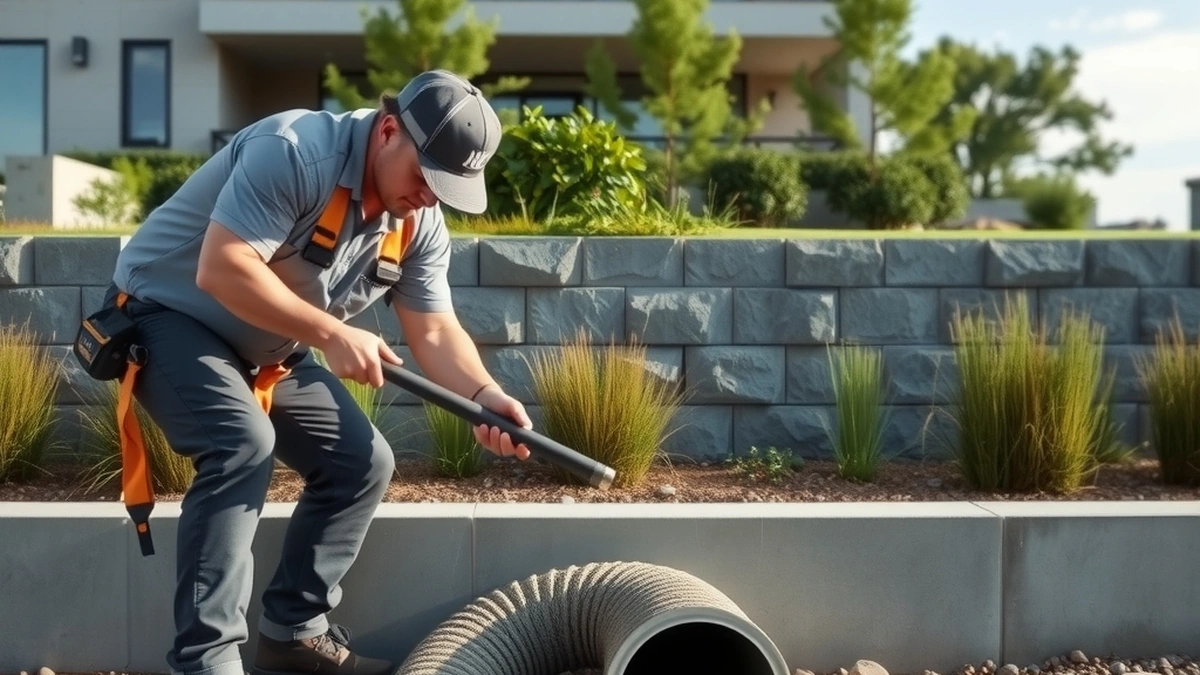
Prevent root damage by installing a perforated drainage pipe at the base of the wall, using compacted backfill, and selecting blocks rated for root penetration. This stops soil hydrostatic pressure from pushing against the wall.
- Typical range
- Varies by system and site
- First step
- Measure the space and confirm the load
- Professional help
- Recommended for structural or electrical work
Some links on this page are affiliate links.If you buy through them we may earn a commission at no extra cost to you. We do not accept payment for rankings. Read the full disclosure.
Tree roots damage retaining walls by following the water draining through the backfill, then growing into the gravel envelope and the joints until root mass and water pressure move the wall. Preventing it is cheaper than repairing it: a root barrier and a proper drainage detail cost a fraction of a rebuild. The order is drainage first, barrier second, then species and planting.
What root damage to a wall is
Root damage to a retaining wall is the combination of direct root intrusion into the wall structure and indirect damage caused by roots blocking the drainage that keeps water pressure off the wall.
The direct damage is visible: roots through a joint, a cracked unit, a bulge where a root mass has pushed the face out. The indirect damage is the one that takes walls down, because a root mat in the gravel envelope turns a drain into a dam.
The mechanism: water first, roots second
Roots grow toward water and oxygen, not toward concrete. A retaining wall’s backfill is usually the wettest, airiest soil on the site, because the gravel envelope is designed to collect water and the pipe is designed to move it. That is exactly the environment roots are looking for.
So the sequence is predictable. Water collects behind the wall. Roots colonise the gravel. The roots and the fine soil they trap reduce the drain’s capacity. Water pressure behind the wall rises. The wall moves, and the movement opens joints that let more roots in.
That is why a root problem is a drainage problem with a plant attached. Cutting the tree without fixing the drain leaves the water; fixing the drain without managing the roots leaves the roots.
Which trees cause the trouble
| Tree type | Root habit | Risk at a wall | Planning note |
|---|---|---|---|
| Willow, poplar, cottonwood | Aggressive, shallow, water-seeking | High | Keep well away or barrier the wall |
| Maple | Shallow, spreading | High near walls | Barrier plus canopy setback |
| Conifer and evergreen | Dense, fibrous, shallow | Moderate to high | Barrier, and expect a root mat |
| Oak | Deeper, slower | Lower for the drain, high at maturity | Plant at canopy distance |
| Ornamental and columnar | Compact | Lower | Still allow canopy space |
The useful rule is canopy distance, not trunk distance. Roots extend well beyond the drip line on most species, so a tree whose branches overhang the wall is already close enough to matter.
Root barrier vs root pruning
A root barrier is a physical membrane set in the soil between the tree and the wall, deep enough to deflect roots rather than let them pass under. It is installed before the problem or during a rebuild, and it works continuously.
Root pruning cuts the roots that have reached the wall. It is a one-time intervention, it stresses the tree, and it can destabilise a mature tree if too much root is removed. It also does nothing about the water that attracted the roots in the first place.
The comparison is straightforward. A barrier is prevention; pruning is a response. If the wall is being rebuilt, install the barrier as part of the work, because digging behind a finished wall later costs more than the barrier.
Drainage details that remove the attraction
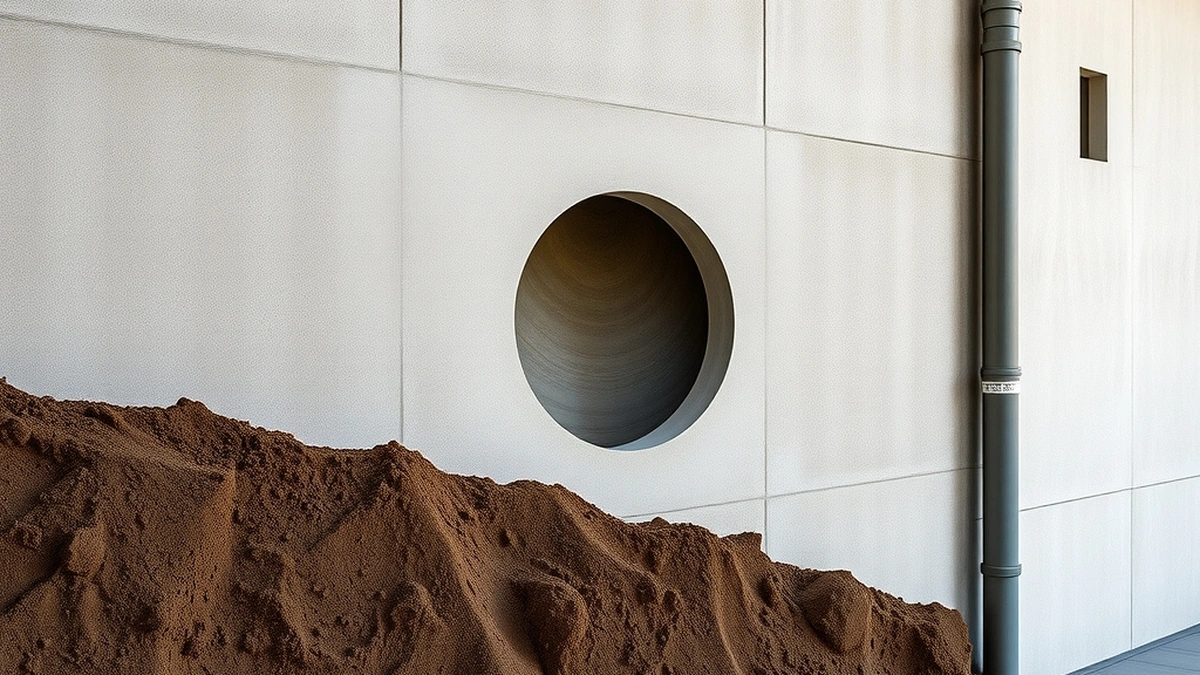
The drainage detail is the same one that keeps any wall standing: a gravel envelope against the back of the wall, filter fabric between the gravel and the soil, a perforated pipe at the footing, and an outlet that daylight.
Filter fabric is the part that matters most for roots. It keeps fines out of the gravel, so the envelope stays open, and an open envelope drains instead of turning into a wet root mat. Without it, the gravel silts up within a few seasons and the wall starts carrying water it was never designed for.
The outlet matters as much. A drain that ends in a soggy patch at the wall’s end is a drain that is not draining. Route it to a daylight, a dry well, or a storm connection that the jurisdiction allows.
Protecting an existing wall
- Watch where water goes in a storm. If it ponds behind the wall, the drainage is already failing.
- Find the outlet and confirm water actually leaves it.
- Inspect the joints and the top of the wall for roots and for soil washing out.
- Do not cut large structural roots without an arborist’s assessment; a destabilised tree is a bigger problem than a cracked wall.
- Install a barrier on the wall side of the root zone, not through the wall, and tie it into the footing depth.
- Record any movement with photographs and measurements, and call an engineer if the wall is above 4 ft or moving.
Planning a new wall near trees
The cheapest time to solve this is before the wall is built. Set the wall line as far from the trunks as the site allows, specify the drainage detail in the drawing, and install the barrier in the same excavation.
For a wall above 4 ft, the design needs engineering review and a permit check in most jurisdictions. Tell the engineer where the trees are, because root zones affect the soil assumptions and the excavation method. A design that ignores the trees is a design that will be repaired.
When the wall has already moved
A wall that has bulged or leaned is no longer a maintenance item. The options are a rebuild of the affected section with new drainage and a barrier, or an engineered support system. On a low wall, the rebuild is usually the cheaper and more reliable answer.
Cost it against the rates rather than guessing. Block is $15 to $35 per square foot, drainage and backfill $5 to $15. For a 160 sq ft wall, a block rebuild is 160 × $15 = $2,400 to 160 × $35 = $5,600, plus 160 × $5 = $800 to 160 × $15 = $2,400 for drainage. A root barrier is part of that scope, not an extra afterwards.
For the drainage detail in full, see retaining wall drainage. For what root damage costs once it has happened, see root damage cost and root damage repair. For the failure modes roots cause, see retaining wall failure.
Frequently asked questions
How do tree roots cause retaining wall damage?
Tree roots seek water and expand soil moisture, creating hydrostatic pressure that pushes against the wall, causing cracks and bulging.
What is the best way to stop roots from damaging my wall?
Install a perforated pipe at the base of the wall with gravel, which redirects water before roots can exploit the moisture.
Does block type matter when dealing with root damage?
Yes, concrete and large stone blocks resist root penetration better than timber or thin veneer, providing a sturdier barrier.
How much does drainage and backfill cost for a standard wall?
Expect to pay $5 to $15 per square foot for professional drainage and backfill installation.
Can DIY fix root damage on a timber wall?
DIY is risky for root damage because improperly installed drainage can worsen the issue; hire a pro for the base layer.
Will removing the tree eliminate the root pressure?
Removing the tree reduces pressure but doesn't guarantee the roots are gone; ongoing drainage maintenance is still required.
Sources
Some links are affiliate links.If you buy through them we may earn a commission at no extra cost to you. We do not accept payment for rankings. Read the full disclosure.