Retaining wall installation cost: labor and scope
What retaining wall installation costs include, how labor and materials split, and what raises the price on a real site.
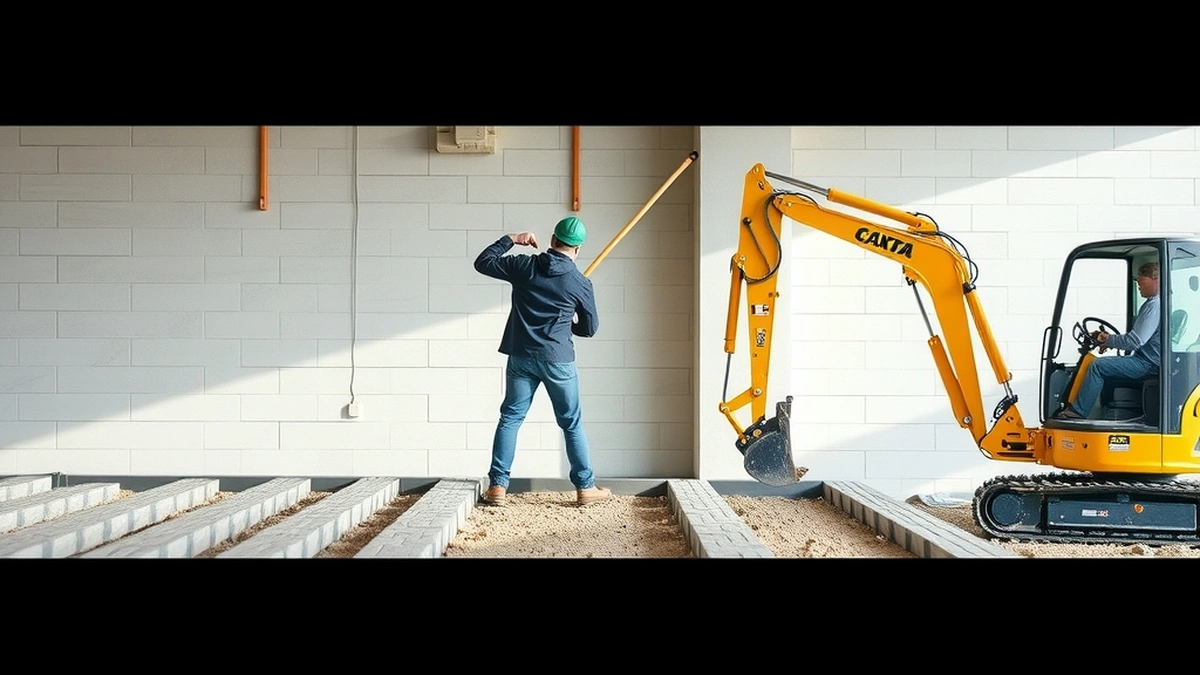
Retaining wall installation costs $10 to $60 per square foot of face, with labor typically about half of that for block and less for boulder. Drainage and backfill add $5 to $15 per square foot.
- Timber installed
- $10–$25 per sq ft
- Block installed
- $15–$35 per sq ft
- Concrete installed
- $25–$60 per sq ft
- Drainage and backfill
- $5–$15 per sq ft
Some links on this page are affiliate links.If you buy through them we may earn a commission at no extra cost to you. We do not accept payment for rankings. Read the full disclosure.
Retaining wall installation costs $10 to $60 per square foot of wall face, and labor is roughly half of that on a block wall. The number moves more with site access than with material choice. A wall a machine can reach costs less to install than an identical wall a crew has to build by hand through a side gate.
What “Installation” Actually Covers
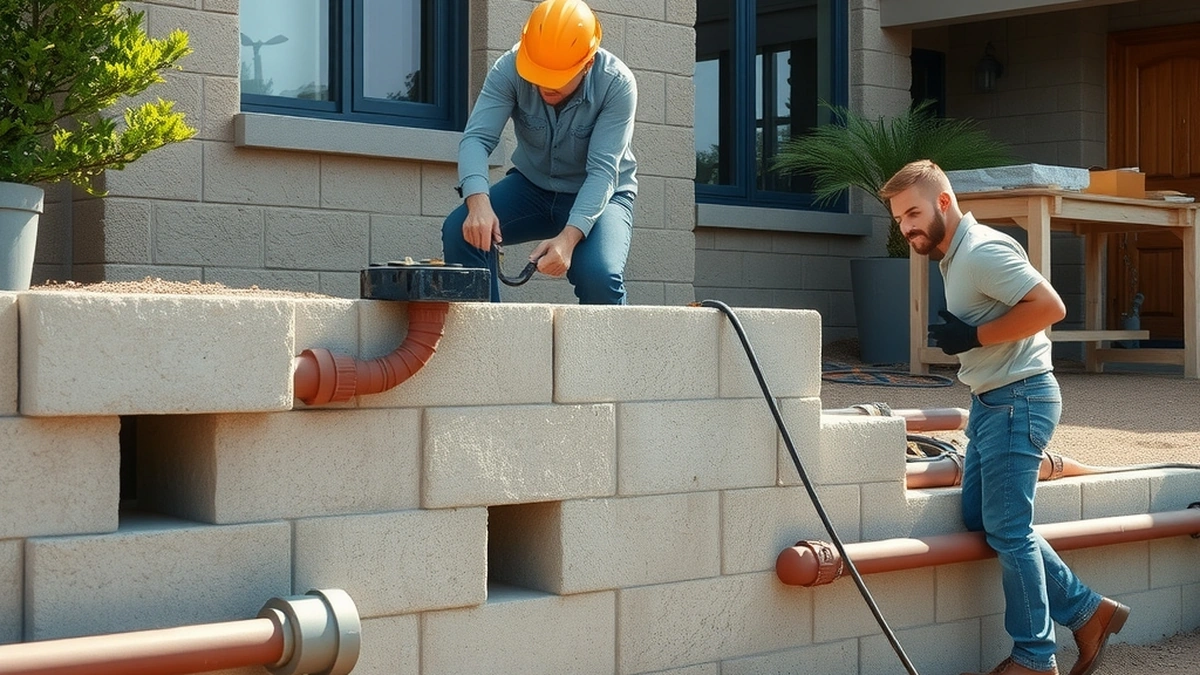
A retaining wall is a structure that holds soil at two elevations, and installing one means more than stacking units. A complete installation includes layout, excavation, haul-off, base preparation and compaction, the wall units themselves, drainage, backfill and compaction in lifts, caps, and cleanup.
Any bid that lists only “supply and install block” is pricing a fraction of the job. The rest arrives later.
Material and Labor Split
For segmental block at $25 per square foot, a rough split looks like this: units and base stone around $10 to $12, drain materials $3 to $5, and labor and equipment the remaining $8 to $12. Those proportions are estimates that vary by market, but the pattern holds — labor is about half.
Poured concrete is different. Formwork, rebar, and the concrete itself take a larger share, and the labor is concentrated in carpentry and placement rather than repetition. That is why concrete at $25 to $60 per square foot can cost twice block at the same height.
Boulder is the outlier in the other direction. The material is heavy and the labor is skilled, but there are fewer manufactured components, so the split leans hard toward equipment and setting time. On a site with machine access, that can make boulder competitive with block despite its higher unit price.
Installed Cost by Material
| Material | Installed cost | Typical labor share | Install time for 120 sq ft |
|---|---|---|---|
| Timber | $10–$25 / sq ft | Higher, short job | 1–2 days |
| Segmental block | $15–$35 / sq ft | About half | 3–5 days |
| Gabion | $20–$40 / sq ft | High, stone filling | 3–5 days |
| Boulder | $20–$45 / sq ft | High, machine-assisted | 2–4 days |
| Poured concrete | $25–$60 / sq ft | Forms and steel | 5–10 days with curing |
Add drainage and backfill at $5 to $15 per square foot to every row.
A Worked Installation, Line by Line
Take a block wall 30 feet long and 4 feet high. Face area:
30 × 4 = 120 square feet.
At $25 per square foot installed:
120 × $25 = $3,000.
A plausible internal breakdown of that $3,000 — an estimate, since rates vary by region:
| Component | Share | Amount |
|---|---|---|
| Block units | 40% | $1,200 |
| Base stone and compaction | 12% | $360 |
| Labor and equipment | 40% | $1,200 |
| Cap units and adhesive | 8% | $240 |
Drainage is separate:
120 × $10 = $1,200.
Total: $4,200.
When a bid comes in at $2,400 for the same wall, the missing $1,800 is usually drainage, base stone, haul-off, and compaction, not a discount on labor.
What Raises Installation Cost
Access. If a machine cannot reach the wall line, every pallet and every bucket of gravel is carried. This is the largest single multiplier on a residential site.
Excavation depth and soil. Soft fill or clay means over-excavation and replacement with suitable material. Rock means breaking, and that is a change order.
Height. Above 4 feet, expect geogrid, a wider base, and possibly engineered drawings, all of which raise both material and labor.
Haul distance. Spoil and surplus soil have to go somewhere, and disposal fees plus trucking can add hundreds on a small job.
Season. Crews are booked in spring and early summer. Late-fall scheduling often gets better attention at the same or lower price.
What Installation Usually Leaves Out
Four items appear on most residential quotes as exclusions rather than line items. Permits and engineering are the first; the contractor may file for you but bill the fee separately, and sealed drawings are almost always extra. Landscaping and paving are the second: restoring a lawn, replacing a fence panel, or laying a patio on the new terrace is a different scope.
Utility work is the third. If a sprinkler line, a downspout drain, or an electrical run has to move, that is a separate trade, and the wall crew will not touch it. Disposal of surplus soil is the fourth; even when haul-off is listed, the fee for clean fill versus contaminated soil differs sharply, and the quote usually assumes the clean case.
Read the exclusions page before you compare totals, then add the missing items back in. Once every bid reflects the same scope, the number that looked expensive often turns out to be the only complete one. If the wall is replacing a failing structure rather than adding new space, also price retaining wall repair against a rebuild before you assume replacement is cheaper.
What Should Be in the Contract
- Scope list naming excavation, haul-off, base, drainage, backfill, compaction, caps, and cleanup separately.
- Quantities, not just totals: square feet of face, cubic yards of gravel, linear feet of pipe.
- Compaction specification, including lift thickness and equipment.
- Drainage outlet location and who is responsible for the connection.
- Permit and engineering responsibility, with the cost stated.
- Payment schedule tied to milestones, with a holdback until cleanup.
- Warranty terms in writing, including what movement or settlement is covered and for how long.
Bottom Line
Installation cost is mostly a labor and access story, not a material story. Budget $15 to $35 per square foot for block plus $5 to $15 for drainage, confirm the scope includes excavation and compaction, and treat any bid without a drainage line as incomplete. For the total project view, read retaining wall cost; for the drain detail that the labor is protecting, see retaining wall drainage.
Frequently asked questions
How much does retaining wall installation cost?
Installed cost runs $10 to $60 per square foot of wall face depending on material, plus $5 to $15 per square foot for drainage and backfill. Block is usually $15 to $35.
How much of the cost is labor?
For block walls, labor is commonly estimated at roughly half of the installed price, with the rest in units, base stone, and drain materials. Poured concrete shifts more of the total toward forming and reinforcement.
Does installation include excavation?
A complete bid should include excavation and haul-off. Many cheap bids exclude them, which is why the totals look lower until the first change order arrives.
How long does it take to install a retaining wall?
A 30-foot, 4-foot block wall is typically a three-to-five-day job for a two-person crew, weather permitting, with excavation and base preparation taking about as long as stacking the block.
Why is installation more expensive on some sites?
Tight access, steep slopes, rock, soft soil, long haul distances, and hand-carrying materials all add labor hours. A site where a machine can reach the wall line is the cheapest kind.
Should installation cost more in summer?
Often yes. Landscape and hardscape crews are busiest from spring through early fall, and scheduling in late fall or winter can sometimes reduce the price or at least get you on the calendar.
Sources
Some links are affiliate links.If you buy through them we may earn a commission at no extra cost to you. We do not accept payment for rankings. Read the full disclosure.