Leaning wall: warning signs
How to spot a retaining wall that is starting to lean: open joints, a visible batter change, soil cracks behind the wall and water at the face.
The first sign of a leaning wall is a change in the batter, measured with a level or a plumb line. Open joints, soil cracks behind the wall, water at the face and a bulge over a length follow as the pressure builds.
- First sign
- Change in batter
- Second sign
- Joints opening at the top
- Third sign
- Cracks in soil behind the wall
- Urgent sign
- Bulge over a length
Some links on this page are affiliate links.If you buy through them we may earn a commission at no extra cost to you. We do not accept payment for rankings. Read the full disclosure.
A leaning wall gives warning before it fails. The first sign is a change in the batter, which a level or a plumb line will show. Open joints at the top, cracks in the soil behind the wall, water at the face and a bulge over a length follow as the pressure builds. Measuring twice a year tells you whether the movement is new.
The batter test
A gravity retaining wall should lean back into the slope by about 1 inch per foot of height. A 3 foot wall should lean back about 3 inches from vertical; a 4 foot wall about 4 inches.
Hold a 4 foot level against the face and measure the gap at the top. Compare that gap with the expected batter for the height.
If the wall is vertical or leaning forward, it has moved. If the batter has decreased since the last measurement, it is moving now. A wall that has gone from a 3 inch batter to a 1 inch batter has rotated about 2 inches at the top, which is enough to open joints.
Open joints at the top
The top of a wall moves most for a given rotation, so joints open there first. A joint that was tight at installation and is now a quarter inch wide at the cap is an early warning. The same joint lower down may still look closed because the movement is a rotation rather than a translation.
Check the joints along the top course and at the corners. Corners are where two walls meet and where movement is often concentrated. A corner that has opened by a quarter inch is a corner that is working.
A joint that has opened and filled with soil is worse than one that has opened and stayed clean, because the soil holds water against the wall. A clean joint is a measurement; a soil-filled joint is a leak.
The signs in order
| Sign | What it means | Urgency |
|---|---|---|
| Batter reduced | Wall has rotated slightly | Low, measure again |
| Joints open at the top | Rotation is progressing | Medium |
| Soil cracks behind the wall | Backfill is settling or moving | Medium |
| Water at the face | Drainage is failing | Medium |
| Bulge over a length | Pressure is uneven | High |
| Toe pushing out | Base is failing | High |
| Wall leaning forward | Rotation is advanced | High |
The first four are measured and monitored. The last three need an assessment now.
Soil cracks behind the wall
A crack in the ground behind the top of the wall is a sign that the backfill is settling or the wall is moving away from the soil.
Either way, the crack is a path for water. Rain enters the crack, saturates the backfill, and adds pressure to a wall that is already moving.
Cracks parallel to the wall are the ones to watch. They suggest a slip plane or a settlement line rather than ordinary soil shrinkage. A crack that widens after rain is an active water path.
Water at the face
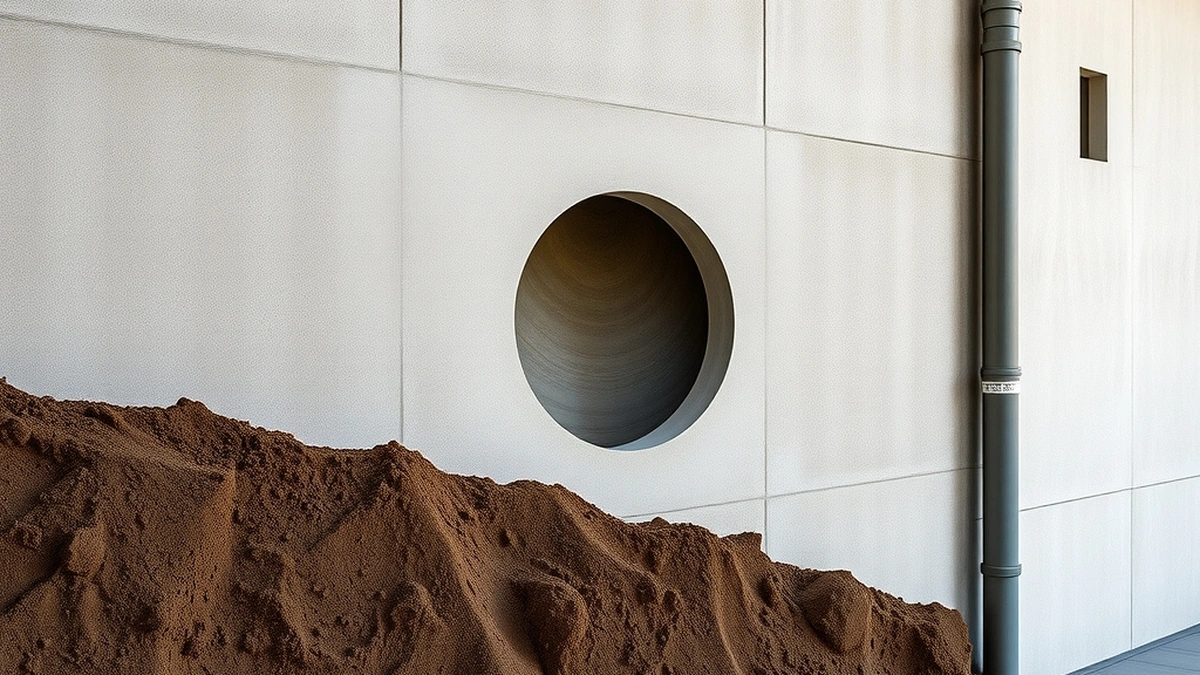
Water seeping between the stones or blocks is pressure you can see. It means the drain is not working or the backfill is saturated faster than it can drain.
Weep holes should run after rain. If they are dry in a wet spell, the water is going somewhere else or the drain is blocked.
A wall that weeps after every storm is a wall that is being loaded by water. The fix is drainage, not a sealant. Sealing the face traps the water behind the wall, which raises the pressure and accelerates the movement.
The bulge versus the lean
A lean is rotation about the base. A bulge is a section of wall moving outward while the sections on either side stay put.
A bulge is more serious, because it means the pressure is uneven and the wall is deforming rather than rotating as a unit. It often starts where a surcharge load sits above the wall. It can also start where a drain is blocked and one section of backfill is saturated while the rest is not.
A bulge over a length is the point at which an engineer should be involved, especially if the wall is above 4 feet.
Recording the movement
- Photograph the wall from both ends and from the front.
- Hold a level against the face at three points and measure the gap.
- Note the width of the joints at the top course.
- Check for cracks in the soil behind the wall.
- Look for water at the face after rain.
- Repeat in six months and compare.
A dated record turns a subjective worry into a measurement, and it is the most useful thing to hand a contractor or an engineer. It also protects you if the wall was built by someone else and the question of warranty comes up.
When to get an assessment
Get an assessment when the movement is accelerating, when the wall bulges over a length, when the toe is pushing out, or when the wall retains a slope above a structure.
A wall that is above the local height threshold should have an engineered design on file regardless. If it does not, and it is moving, the assessment comes first.
For the repair options, see leaning wall repair. For prevention, read leaning wall prevention, and for the drainage system, check retaining wall drainage.
Frequently asked questions
How do I know if my retaining wall is leaning?
Hold a level or a plumb line against the face. A gravity wall should lean back about 1 inch per foot; if it is vertical or leaning forward, it has moved.
Are open joints at the top of a wall a warning?
Yes. The top of the wall moves most for a given rotation, so joints open there first. Widening joints at the top are an early sign of movement.
What do cracks in the soil behind a wall mean?
They suggest the soil is settling or the wall is moving away from it. Either way, water can enter the crack and increase the pressure.
Is water at the wall face a bad sign?
It means the drainage is not carrying water away, or the backfill is saturated. Water at the face is pressure you can see.
When is a leaning wall an emergency?
When it is bulging over a length, when the movement is accelerating, or when it retains a slope above a house or a road. Keep people away and get an assessment.
Can a wall lean slightly and still be safe?
A small, stable lean may be within tolerance. The concern is change over time, which is why measuring and recording the batter twice a year is useful.
Sources
Some links are affiliate links.If you buy through them we may earn a commission at no extra cost to you. We do not accept payment for rankings. Read the full disclosure.