Landscape retaining wall: design that holds soil
How to design a landscape retaining wall for terracing, planting, and low garden edges, with heights, materials, drainage, and costs.
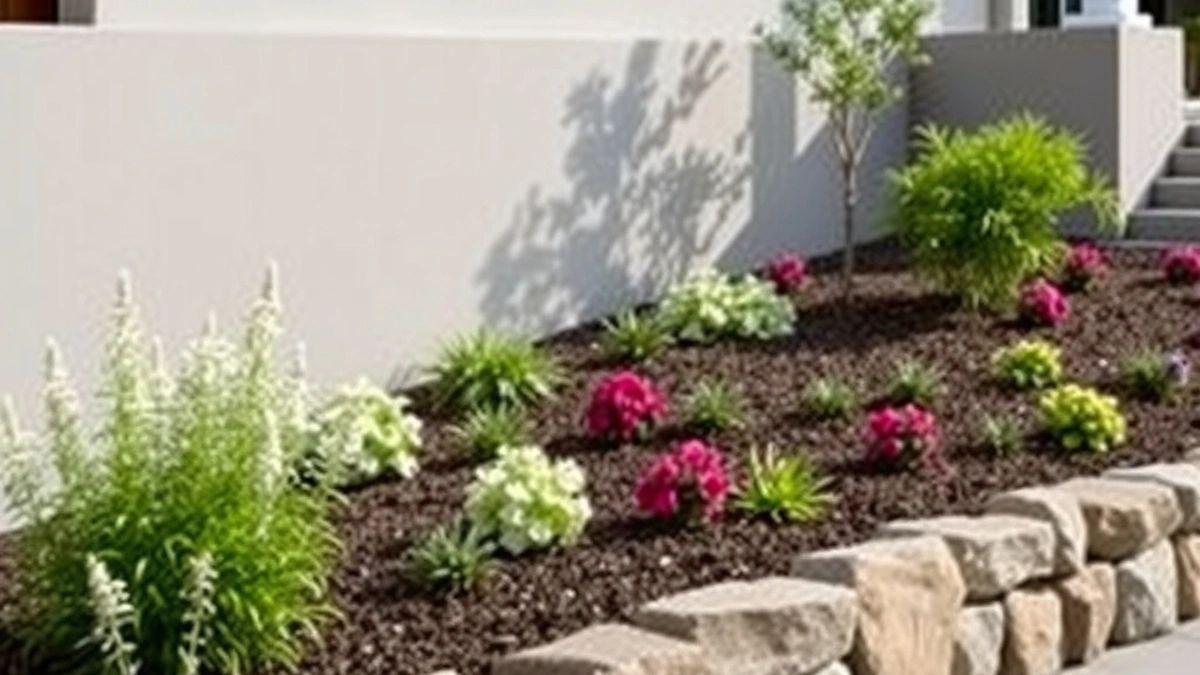
A landscape retaining wall is a low wall, usually 12 to 36 inches, built to terrace a garden or hold a planting bed. At that height, design and drainage matter more than structural engineering.
- Common garden height
- 12–36 in
- Block wall cost
- $15–$35 per sq ft
- Timber wall cost
- $10–$25 per sq ft
- Boulder wall cost
- $20–$45 per sq ft
Some links on this page are affiliate links.If you buy through them we may earn a commission at no extra cost to you. We do not accept payment for rankings. Read the full disclosure.
A landscape retaining wall is a low wall, typically 12 to 36 inches, built to terrace a garden, hold a planting bed, or turn a slope into two usable levels. At that height it is closer to hardscape than structure, and design decisions matter as much as engineering ones. But low walls still fail when water has nowhere to go, so the drainage detail does not disappear just because the wall is short.
What Makes a Landscape Wall Different
A retaining wall is a structure that holds soil at two elevations. In a landscape application, the elevation change is small and the wall’s job is partly visual: it defines a bed, creates a bench for planting, or makes a slope feel intentional.
That changes the priorities. Structural walls are judged on whether they stay plumb. Landscape walls are judged on whether they stay plumb and look right with plants growing over them, which means cap detail, material texture, and how the wall meets soil and paving all matter more than they would on a utilitarian wall.
Height and Terrace Design
Two low walls beat one tall one, almost always. A single 4-foot wall in a garden reads as a barrier; two 20-inch terraces read as a garden. The terraced version also costs less per unit of retained height, because each wall is shorter and the load is lower.
Keep each terrace at least 4 to 6 feet deep if you plan to plant it. A 2-foot bench is a ledge, not a bed, and it will dry out and wash. On a long slope, three 18-inch terraces with 5-foot beds will hold more soil, grow more plants, and cost less than one 4-foot wall along the same line.
Batter matters too. Leaning the wall back slightly, roughly 1 inch per foot of height, is standard practice for block and boulder walls and looks natural in a garden setting.
Materials for a Garden Wall
| Material | Cost | Look | Best for |
|---|---|---|---|
| Segmental block | $15–$35 / sq ft | Clean, modular | Formal beds, straight runs, patios |
| Boulder | $20–$45 / sq ft | Natural, irregular | Woodland gardens, sloped sites |
| Timber | $10–$25 / sq ft | Warm, temporary | Vegetable beds, low edges |
| Gabion | $20–$40 / sq ft | Industrial, textured | Modern gardens, drainage-heavy sites |
| Poured concrete | $25–$60 / sq ft | Smooth, architectural | Contemporary landscapes, seat walls |
A landscape wall is often a seat wall as well, in which case cap width matters: 12 inches is comfortable to sit on, 8 inches is a ledge. Cap units also protect the wall core from water entering the top, which is why they are worth the extra cost on any wall you plan to keep.
Planting Behind and Over the Wall
Plants are the reason most garden walls exist, and they are also a maintenance risk. Choose plants that spill over the face rather than plants with aggressive woody roots directly behind it. Groundcovers, low perennials, and shallow-rooted shrubs are the safe category. Trees and large shrubs belong at least a wall height away from the face.
Do not fill the drain core with soil to make planting space. That single mistake turns a drainage layer into a reservoir and defeats the wall’s main protection. If you want a planting pocket, build it in front of the wall or on the terrace above, separated from the core by filter fabric.
Irrigation needs the same discipline. Drip lines should run along the terrace surface, not behind the wall, and the zone should be checked for leaks, because a slow leak inside a backfill is a slow failure.
Drainage in a Planted Wall
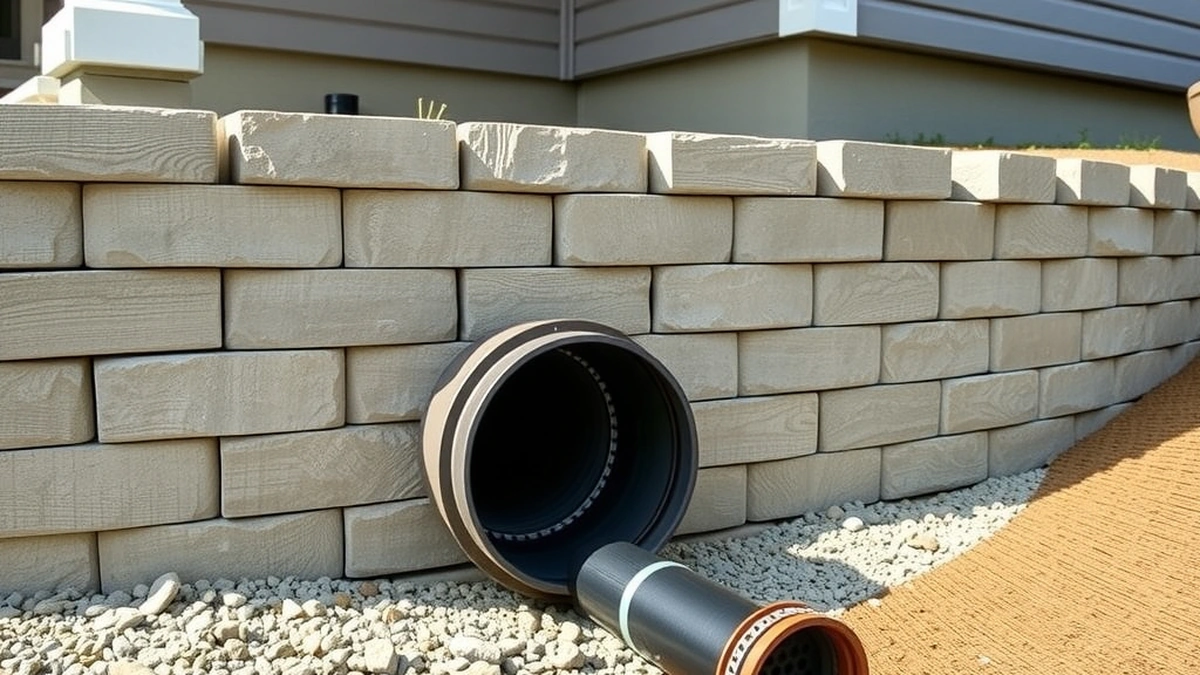
Even a 20-inch wall traps water. The detail scales down but does not change: a gravel layer behind the face, filter fabric between gravel and soil, and an outlet at the low end, either a weep hole or a short perforated pipe daylighting downhill.
For walls under 18 inches in sandy soil, weep holes at 4-to-6-foot spacing plus gravel backfill are often enough. Above that, run the pipe. The cost is small relative to the wall, and the failure mode — a bulged face behind a shrub you cannot see through — is expensive to fix.
What It Costs
Take a wall 30 feet long and 24 inches high. Face area:
30 feet × 2 feet = 60 square feet.
Block at $25 per square foot:
60 × $25 = $1,500.
Drainage and backfill at $10 per square foot:
60 × $10 = $600.
Total installed: $2,100, before planting, soil amendment, or paving.
The same wall in boulder at $30 per square foot would be $1,800 for the wall plus $600 for drainage, or $2,400. Timber at $18 would be $1,080 plus $600, or $1,680, with a shorter life.
How to Plan a Landscape Wall
- Map the slope and decide how many terraces you want, keeping each bed at least 4 feet deep.
- Set the height per wall at 12 to 30 inches, staying under your local permit threshold.
- Pick the material to match the house and the planting style, not the other way around.
- Detail the drainage before the wall is priced, including where the outlet will daylight.
- Choose plants that spill over the face and keep trees a wall height away.
- Price the whole assembly, including soil, mulch, and irrigation, which often equal the wall cost.
If your grade change is larger than a garden wall should handle, read retaining wall cost and types of retaining wall before you commit to a design the site cannot support. For the drain detail in full, see retaining wall drainage.
Frequently asked questions
What is a landscape retaining wall?
A low wall built to hold a planting bed, terrace a slope, or create a level garden area. Most are 12 to 36 inches high, which keeps them below the height where engineering is usually required.
What is the best material for a landscape retaining wall?
It depends on the look and the budget. Block is the most versatile at $15 to $35 per square foot, boulder suits naturalistic gardens, and timber is the cheapest at $10 to $25.
How high can a landscape wall be?
Garden walls are usually kept under 3 feet, both for cost and because many jurisdictions require permits and sealed drawings above 4 feet. Above that height, treat it as a structural project.
Can I plant directly behind a retaining wall?
Yes, with care. Keep soil out of the gravel drain core, use filter fabric to separate them, and choose plants whose roots will not open joints or block the drainage path.
Does a low garden wall need drainage?
Yes, though the detail is smaller. A 20-inch wall still traps water, so a gravel backfill and weep holes or a short drain run are worth including on any wall over about 18 inches.
How much does a landscape retaining wall cost?
A 30-foot wall at 24 inches high is 60 square feet of face. At $25 per square foot for block plus $10 for drainage, that is $1,500 plus $600, or about $2,100.
Sources
Some links are affiliate links.If you buy through them we may earn a commission at no extra cost to you. We do not accept payment for rankings. Read the full disclosure.