Types of retaining wall and how to choose one
The main retaining wall types, from segmental block and boulder to poured cantilever and sheet pile, with costs and height ranges.
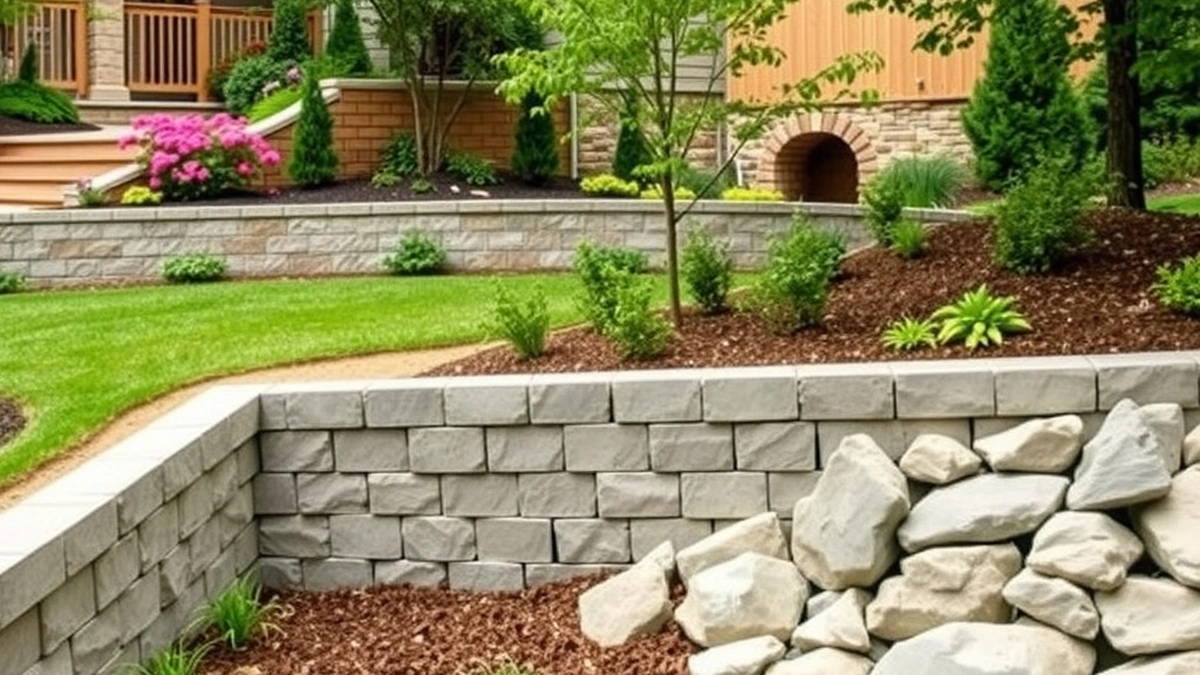
Retaining walls fall into three structural families — gravity, cantilever, and anchored — and five common residential types. Most US yards use segmental block at $15 to $35 per square foot installed.
- Block wall cost
- $15–$35 per sq ft
- Poured concrete cost
- $25–$60 per sq ft
- Timber wall cost
- $10–$25 per sq ft
- Boulder wall cost
- $20–$45 per sq ft
Some links on this page are affiliate links.If you buy through them we may earn a commission at no extra cost to you. We do not accept payment for rankings. Read the full disclosure.
There are three structural families of retaining wall — gravity, cantilever, and anchored — and within them five types you will actually see in US residential yards. The type should follow the soil, the height, and the load, not the look you saw on a driveway down the street. Here is how the types differ and where each one fits.
The Definition Worth Starting With
A retaining wall is a structure that holds soil at two different elevations and resists lateral earth pressure along its face. Every type below is a different answer to the same question: how do you keep that soil from pushing the wall over?
Gravity walls answer with mass. Cantilever walls answer with a footing and reinforcement. Anchored walls answer with something driven or grouted into the ground behind the face.
The Common Types Compared
| Type | Family | Cost | Typical height | Best use |
|---|---|---|---|---|
| Segmental block | Gravity, often geogrid-reinforced | $15–$35 / sq ft | 1–8 ft | Most residential walls |
| Poured concrete | Cantilever or gravity | $25–$60 / sq ft | 2–12 ft | Surcharge loads, tight sites |
| Timber | Gravity | $10–$25 / sq ft | 1–3 ft | Garden edges, temporary |
| Gabion | Gravity | $20–$40 / sq ft | 1–8 ft | Free-draining, rural, industrial |
| Boulder | Gravity | $20–$45 / sq ft | 1–5 ft | Naturalistic landscapes |
| Sheet pile | Anchored | Project-specific | 3–15 ft | Tight lots, waterfront, shoring |
| Soil nail | Anchored | Project-specific | 6 ft and up | Cut slopes, existing grade |
Segmental Block: The Default
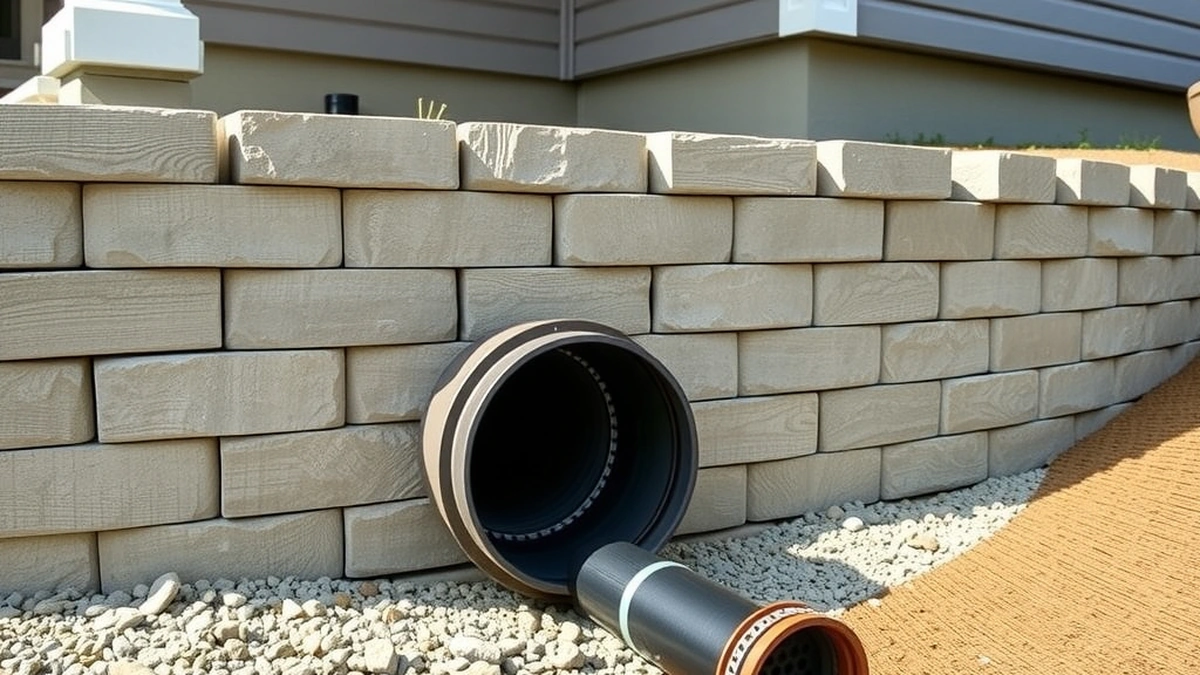
Segmental block is the type most homeowners end up choosing, and for good reasons. Units are modular, arrive on pallets, and stack without mortar. The joints drain, which means water escapes through the face as well as through the pipe. And the system accepts geogrid, so the same wall type can be built at 2 feet or at 8 feet with different reinforcement.
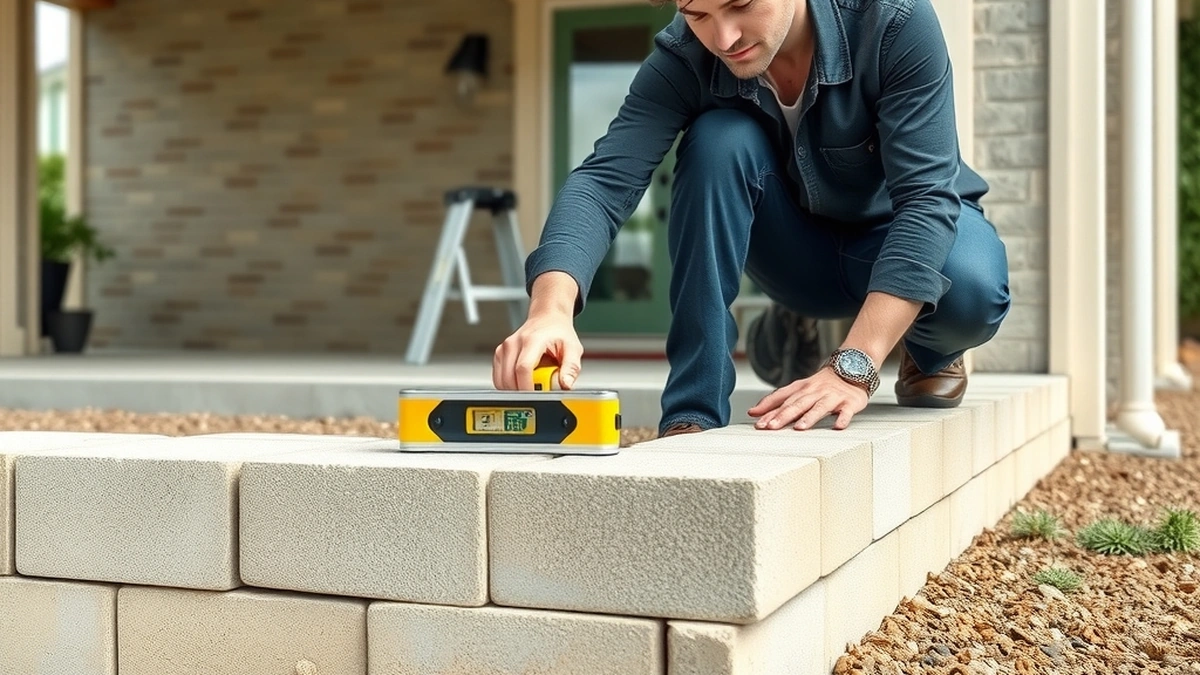
Its weakness is the base. A block wall sits on a compacted crushed stone leveling pad, and if that pad settles or was never compacted properly, the wall leans as a unit. Base preparation is where block walls succeed or fail.
Poured Concrete: Strength Where You Need It
Poured concrete walls are usually cantilever designs: a footing buried below grade with a vertical stem cast on top. The footing’s weight and the soil on its heel resist the overturning moment, and rebar carries the tension.
That makes poured concrete the right type for a wall carrying a driveway, a pool, or a structure, and for heights where a gravity wall would need an impractical base width. The cost, $25 to $60 per square foot, reflects formwork, reinforcement, and curing time. See concrete retaining wall cost for the line items.
Concrete masonry unit walls — CMU, or block laid with mortar and grout — are a separate type often confused with segmental block. They are structural, usually reinforced and filled, and priced between segmental block and poured concrete. If a contractor says “block wall,” ask which one, because the construction methods and the permits are not the same.
Timber, Gabion, and Boulder
Timber is the cheapest type at $10 to $25 per square foot and the shortest-lived at roughly 15 to 25 years in wet soil. It suits low garden walls and temporary holds, not structural retention.
Gabion walls are wire cages filled with stone. They drain freely by construction, tolerate differential settlement, and suit rural and industrial settings. Wire corrosion sets the service life at roughly 25 to 50 years.
Boulder walls are stacked natural stone, and their quality depends almost entirely on stone shape and the skill of the setter. A well-built boulder wall can last generations; a poorly built one with round stones and no batter will not.
Anchored Types: Sheet Pile and Soil Nail
Sheet pile is driven into the ground and tied back with anchors, which is how walls get built on lots with no room to excavate a footing. Soil nails are grouted into a cut slope and faced with shotcrete or panels. Both are contractor-designed systems, common on commercial sites, waterfronts, and tight urban lots, and rare on residential landscaping.
If a contractor proposes one of these for your yard, ask why a gravity or cantilever wall will not work. There is usually a good reason — access, property line, existing structure — but it should be explained.
How to Choose a Type
- Measure the height from the bottom of the footing to the top of the wall, because that is what the code and the cost both key on.
- Identify the load above the wall. Soil only, or a driveway, patio, pool, or structure? A surcharge changes the type.
- Check the soil. Granular soil drains; clay holds water and pushes harder. Clay often pushes a wall up a category.
- Confirm access. Boulder and gabion need machine access and delivery room. Block needs a pallet drop within reach.
- Set the drainage budget. Every type needs drainage, at $5 to $15 per square foot, and gabion needs the least because it drains through the face.
- Compare two types at your height, not five, because cost and constructability usually eliminate the rest quickly.
Bottom Line
Block suits most residential walls, concrete suits tall or loaded walls, timber suits low garden edges, and boulder or gabion suit naturalistic sites with access. Sheet pile and soil nail are problem-solvers for tight or steep sites. Whatever the type, drainage and base preparation decide whether it lasts. Compare the detail in retaining wall drainage and the per-foot numbers in retaining wall cost per square foot.
Frequently asked questions
What are the main types of retaining wall?
Gravity walls such as block, boulder, gabion, and timber; cantilever walls in reinforced concrete; and anchored systems such as sheet pile and soil nails used on larger or tighter sites.
What is the most common retaining wall for a house?
Segmental concrete block is the most common residential type because it is modular, drains through its joints, and can be reinforced with geogrid as height increases.
What is a gravity retaining wall?
A gravity wall resists soil pressure with its own mass. Block, boulder, gabion, and timber crib walls are all gravity types, and they get their stability from weight and base width.
When do you need a cantilever wall?
A cantilever wall suits heights above about 4 to 6 feet or sites with a heavy surcharge, because its footing and stem use reinforcement to resist overturning more efficiently than mass alone.
Are gabion walls good retaining walls?
Yes, for free-draining sites and naturalistic designs. They cost $20 to $40 per square foot and last 25 to 50 years, with wire corrosion the limiting factor.
Which retaining wall type lasts longest?
Boulder and poured concrete walls generally have the longest service life, commonly estimated at 75 years or more for sound stone and 50 to 100 years for reinforced concrete with good drainage.
Sources
Some links are affiliate links.If you buy through them we may earn a commission at no extra cost to you. We do not accept payment for rankings. Read the full disclosure.