Concrete retaining wall cost: poured vs block
What a concrete retaining wall costs per square foot, the line items behind the price, and when poured concrete beats segmental block.
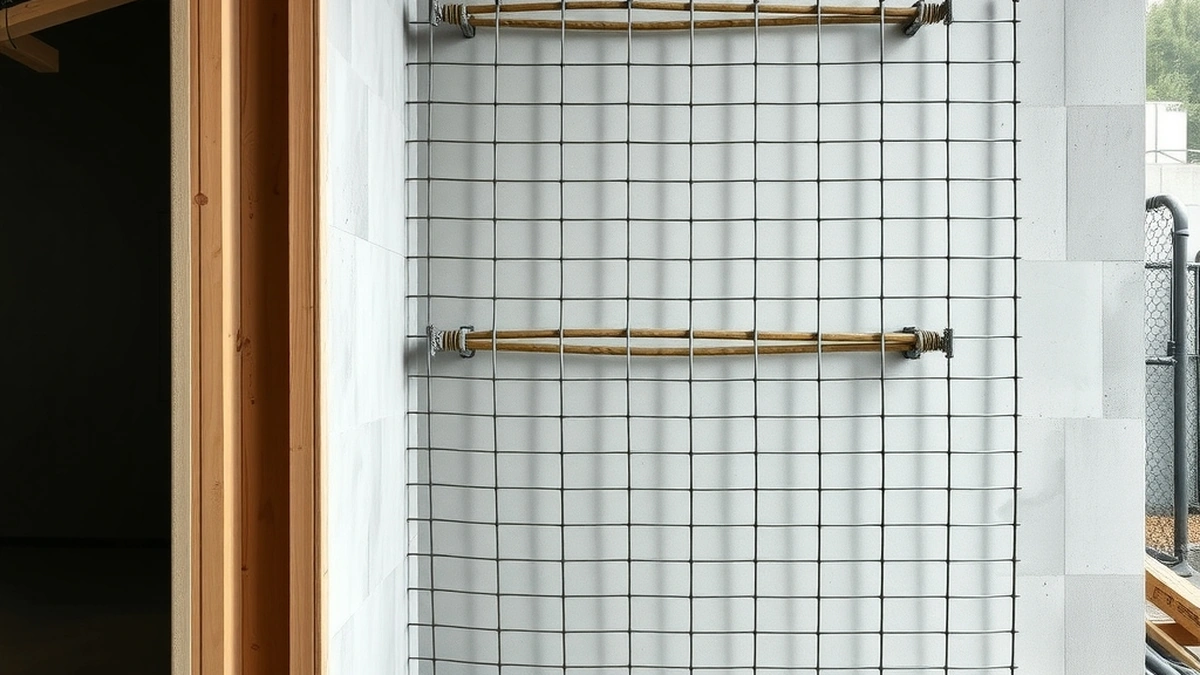
A poured concrete retaining wall costs $25 to $60 per square foot installed. At the low end it is a simple gravity wall; the high end covers a reinforced cantilever with a footing and forms.
- Poured concrete
- $25–$60 per sq ft
- Segmental block
- $15–$35 per sq ft
- Drainage and backfill
- $5–$15 per sq ft
- Typical wall life
- 50–100 years
Some links on this page are affiliate links.If you buy through them we may earn a commission at no extra cost to you. We do not accept payment for rankings. Read the full disclosure.
A concrete retaining wall costs $25 to $60 per square foot of wall face installed, which puts it well above segmental block at $15 to $35. The premium buys strength, a finished face, and a service life that can run 50 to 100 years. It also buys formwork, reinforcement, and a footing, which is where most of the money actually goes.
What Poured Concrete Includes
A retaining wall is a structure that holds soil at two elevations and resists lateral earth pressure. In poured concrete, that is usually a cantilever design: a footing buried below grade, a vertical stem cast on top, and rebar tying the two together so the footing’s weight and the soil on its heel resist overturning.
So the price is not “concrete.” Concrete is a small share of it. The cost is excavation, formwork, steel, placement, curing, and the drainage behind the wall.
Where the Money Goes
For a mid-range cantilever wall at around $40 per square foot, an approximate breakdown — an estimate that varies by region and height:
| Component | Share of cost | Notes |
|---|---|---|
| Excavation and footing | 20% | Wider than the stem; below frost depth |
| Formwork | 20% | Built, oiled, stripped, often reused once |
| Reinforcement | 10% | Rebar sized and spaced by design |
| Concrete | 15% | Delivered by truck or mixed on site |
| Placement and finishing | 10% | Vibration, screeding, curing |
| Drainage and backfill | 15% | Pipe, gravel, fabric, outlet |
| Overhead and profit | 10% | Crew, equipment, scheduling |
Formwork is the line homeowners underestimate. It is carpentry, not concrete work, and on a curved or stepped wall it can approach the cost of the concrete itself.
Concrete strength is not usually where the money goes, but it is where cuts get proposed. A wall designed for a specified compressive strength and a specified rebar cover should be built to both, and a bid that quietly downgrades either is not a saving. The engineer’s drawings name the mix and the steel for a reason, and substituting on site is the kind of economy that shows up as a crack eight years later.
Poured vs Block vs Precast
| Type | Installed cost | Strength | Look | Best for |
|---|---|---|---|---|
| Poured concrete | $25–$60 / sq ft | Highest | Smooth, architectural | Surcharge loads, tall walls, clean faces |
| Segmental block | $15–$35 / sq ft | High, with geogrid | Modular, textured | Most residential walls |
| Precast panels | Project-specific | High | Smooth, fast | Tight sites, commercial |
| Concrete block (CMU) | Between the two | High | Painted or parged | Structural walls with a finish |
The comparison that matters for most homeowners is poured vs segmental block. Block wins on cost, speed, and repairability. Concrete wins on strength per inch, on appearance when a smooth face is wanted, and on service life.
A Worked Example
Take a wall 40 feet long and 4 feet high. Face area:
40 × 4 = 160 square feet.
At $40 per square foot, mid-range for a formed, reinforced wall:
160 × $40 = $6,400.
Drainage and backfill at $10 per square foot:
160 × $10 = $1,600.
Total installed: $8,000, before permits, engineering, or haul-off.
For comparison, the same wall in block at $25 per square foot:
160 × $25 = $4,000.
Plus the same $1,600 for drainage, for $5,600 total. The concrete premium is $2,400 on this wall — about 43 percent more, for a wall that is stronger than a 4-foot residential wall usually needs.
When Concrete Is Worth the Premium
There is a surcharge. A wall under a driveway, a parking pad, or a structure has to resist loads block walls are rarely designed for. Concrete handles that more efficiently.
The wall is tall. Above about 6 feet, a cantilever wall often uses less space than a gravity wall that would need a very wide base.
You want a smooth face. Board-formed or smooth concrete is a design choice block cannot match, and it can be left exposed or finished.
Access is tight. A concrete wall can be poured in a narrow space where delivering and stacking block would be impractical.
Longevity is the priority. Fifty to a hundred years, with drainage and good cover over the steel, is a long service window.
What Maintenance Adds Over Time
The purchase price is not the whole number. A concrete wall needs its joints inspected and resealed, its drain outlet kept clear, and any crack monitored so water does not reach the steel. None of those tasks is expensive annually, but skip them for a decade and the repair is a spall, not a crack.
The realistic budget is a few hundred dollars every few years, against a rebuild at $25 to $60 per square foot. That ratio is why maintenance is the cheapest line item in the life of a concrete wall, and the easiest to defer until it is no longer cheap. Our retaining wall maintenance checklist covers the annual items in order.
How to Keep the Cost Down
- Keep the wall straight. Every corner and curve adds formwork, and formwork is a fifth of the cost.
- Reduce the height by terracing into two walls, which also lowers the reinforcement requirement.
- Pour against the cut where soil allows, instead of building forms on both sides.
- Reuse forms on long straight runs, and ask whether the bid assumes reuse.
- Coordinate the drainage with the pour so the pipe and gravel are not a second mobilization.
- Schedule outside the peak season, when crews are more available.
If the numbers are close in your market, compare the maintenance profile too: concrete needs crack monitoring and joint upkeep, while block can be reset unit by unit. Our retaining wall cost guide puts both in a full project budget, and poured concrete cost breaks the material side down further.
Frequently asked questions
How much does a concrete retaining wall cost?
Poured concrete runs $25 to $60 per square foot of wall face installed, plus $5 to $15 per square foot for drainage and backfill. The spread reflects footing design, reinforcement, and site access.
Is poured concrete cheaper than block?
No, usually more expensive. Block is $15 to $35 per square foot and poured concrete is $25 to $60, though concrete needs less maintenance over a longer service life.
What is a cantilever retaining wall?
A wall with a wide footing and a vertical stem, reinforced so the footing's weight and the soil on its heel resist overturning. It is the standard poured concrete design for walls of 4 feet and up.
How thick should a concrete retaining wall be?
Thickness is set by the engineer and depends on height and load. A residential cantilever stem is commonly in the 8-to-12-inch range at the base and tapers upward.
Does a concrete retaining wall need a footing?
A cantilever wall does, and the footing is a major cost item because it is wider than the stem and must bear below frost depth. A low gravity wall may sit on a prepared base instead.
How long does a concrete retaining wall last?
Reinforced concrete with good cover and drainage is commonly estimated at 50 to 100 years. Water reaching the rebar is what shortens that, because corrosion expands and spalls the face.
Sources
Some links are affiliate links.If you buy through them we may earn a commission at no extra cost to you. We do not accept payment for rankings. Read the full disclosure.