Timber Problems: Rot, Bowing, and Leaning
Timber problems in retaining walls: rot at the ground line, bowing, leaning, and loose boards, plus how to tell which ones need repair.
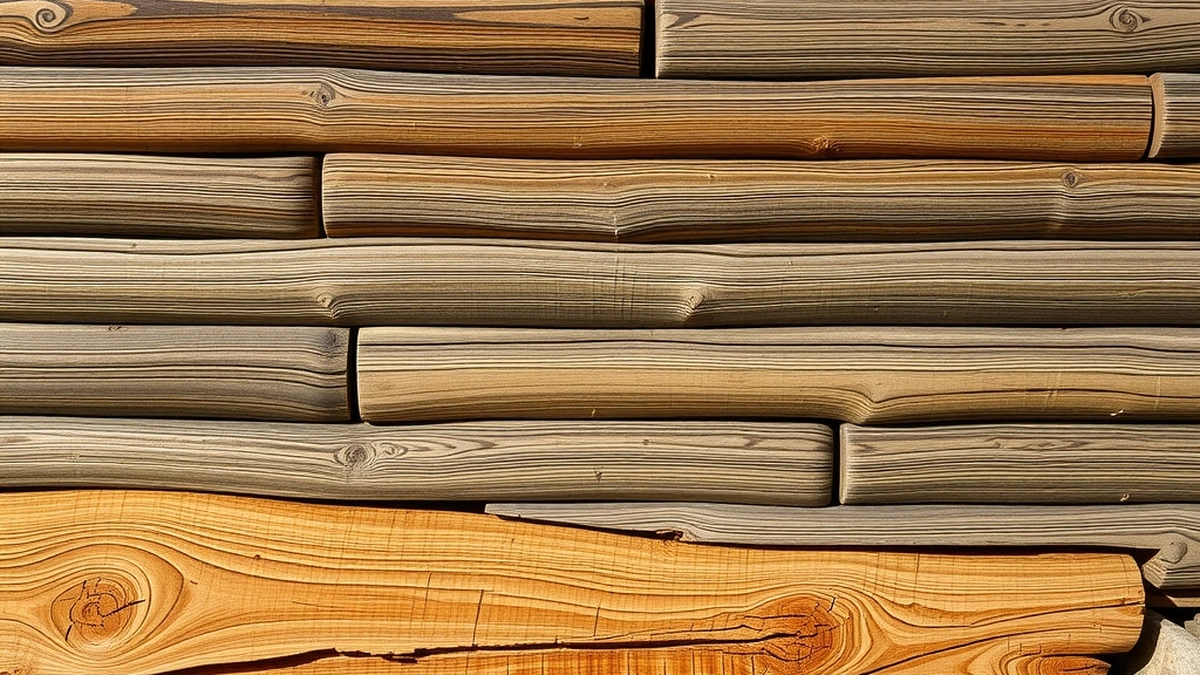
Timber wall problems trace back to water: rot at the ground line, bowing from saturated backfill, and posts pulled loose. A lean over about 2 inches is structural, not cosmetic.
- Most common failure
- Rot at the ground line
- Second most common
- Bowing from wet backfill
- Repair threshold
- Lean over 2 inches
- Rebuild rate
- $10-$25 per sq ft
Some links on this page are affiliate links.If you buy through them we may earn a commission at no extra cost to you. We do not accept payment for rankings. Read the full disclosure.
Timber retaining wall problems nearly all reduce to moisture: rot where the wood meets soil, bowing where wet backfill pushes on the boards, and posts that pull loose when water cannot drain away. The visible symptom tells you which of those is happening, and the difference matters because a rotted board is a maintenance item while a leaning wall is a structural warning. This guide covers what fails, why, and what to do about each case.
Rot at the ground line
The bottom course lives in the worst environment on the property. Soil holds water against the timber, runoff collects at the base, and the wood spends most of the year above the fiber saturation point. Decay fungi need water and oxygen, and the ground line supplies both in the right ratio.
Rot shows as soft wood that a screwdriver sinks into, dark staining, a hollow sound when tapped, and white or brown fungal growth in the joints. Pressure-treated lumber rated for ground contact resists this for years; untreated lumber, reclaimed ties, and boards with field-cut ends exposed do not.
The fix depends on depth. If rot is limited to the bottom course and the posts are sound, cut out the affected boards and replace them with ground-contact rated timber, then rebuild the gravel base and drain. If rot has reached the posts or more than two courses, the wall is near the end of its life.
Bowing and bulging
A bulge is a lateral load problem, not a wood problem. Water in clay or silt backfill raises the lateral pressure far beyond what dry granular soil exerts, and the boards deflect between posts. Once a board bows, it also opens the joints, which lets more water in, which increases the load.
Bowing almost always means the drainage behind the wall is missing or blocked. Replacing the bowed boards without opening the backfill and installing a gravel chimney and perforated pipe just repeats the failure. On a wall that has bulged, plan on removing the affected run, re-compacting the base, and rebuilding with drainage.
Leaning and post pull-out
A wall that leans forward has lost either its embedment or its tie-back. Common causes are posts set too shallow, posts set in native soil rather than gravel or concrete, deadmen that were undersized, and soil that became saturated and lost bearing capacity.
Measure the lean against a plumb line at the top of the wall. Under about 2 inches on a 3 to 4 foot wall, monitor it monthly through a wet season and look for movement at the base. Over 2 inches, or any lean that grows week to week, treat the wall as unsafe: do not park on the ground above it and do not let children play against the face. This is the point where an engineer or an experienced contractor should look at it.
Loose boards and fastener corrosion
Nails and electroplated screws corrode fast in damp soil, and a corroded fastener releases the board it was holding. Boards then shift, gaps open, and the wall loses the friction between members that helps it act as a unit.
Look for rust staining down the face, boards that move when pushed, and nails backing out. The correct repair is to re-fasten with hot-dip galvanized or stainless structural screws, not to drive the old nails back in. Where a board is loose because the post behind it has rotted, re-fastening will not hold.
Insect and fungal damage
Subterranean termites and carpenter ants both work on ground-contact timber, and decay fungi do the rest. Termites leave mud tubes on the face and hollow galleries inside; carpenter ants leave clean galleries and sawdust-like frass. Both are a sign that the wood is wet enough to be attractive.
Pressure treatment is the defense, but treatment does not penetrate cut ends or field-drilled holes, so those should be brushed with a copper-based preservative when the wall is built. Keep soil, mulch, and irrigation spray off the face; a sprinkler head aimed at a timber wall is a decay accelerator.
Drainage failures
| Symptom | Likely cause | What to do |
|---|---|---|
| Bowing between posts | Saturated clay backfill | Rebuild run with gravel chimney and drain pipe |
| Soft wood at base | Missing gravel base, poor grading | Replace bottom course, re-bed on stone |
| Rust streaks, loose boards | Corroded fasteners | Re-fasten with galvanized or stainless |
| Lean over 2 inches | Lost embedment or tie-back | Stop loading, get professional assessment |
| Water weeping through joints | Blocked drain or no outlet | Clear outlet, rod the pipe, re-grade uphill |
| Termite mud tubes | Wet ground-contact wood | Treat for termites, correct moisture source |
That table is a starting point, not a diagnosis. Two symptoms often appear together, and the one you can see is usually the second problem, not the first.
What to do next
- Photograph the wall from both ends and straight on, and mark the current lean with a pencil line on a stake so you can measure movement.
- Probe the bottom two courses with a screwdriver at 3 foot intervals and record where the wood is soft.
- Check the drain outlet. If water stands at the base after rain, the drainage system is the root cause regardless of what the boards look like.
- Clear gutters, downspouts, and any uphill swale so surface water stops running at the wall.
- Repair isolated rot and re-fasten loose boards only if the posts and tie-backs test sound.
- Get a professional assessment if the wall leans, if the ground above it cracks, or if the wall is taller than 4 feet.
Costs scale with what you find. A partial rebuild at the timber rate of $10 to $25 per square foot for a 20 foot by 3 foot section, or 60 square feet, is 60 × $10 = $600 to 60 × $25 = $1,500, plus $5 to $15 per square foot for drainage, which adds 60 × $5 = $300 to 60 × $15 = $900. That is $900 to $2,400 for the section, and it is the reason patching without drainage is a poor investment.
Repair or rebuild
Repair makes sense when the damage is shallow, the posts are sound, and the drainage can be restored without removing the wall. Rebuild makes sense when the wall has lost its line, when rot reaches the posts, or when the original build had no drainage at all.
Before rebuilding in timber, price the alternatives. The same 60 square foot section in segmental block at $15 to $35 per square foot is 60 × $15 = $900 to 60 × $35 = $2,100, and block does not rot. Timber vs segmental block sets out the comparison, and timber maintenance covers the annual work that prevents most of what is described here. If the wall is already moving, retaining wall repair covers shoring and replacement sequencing.
Frequently asked questions
Why is my timber retaining wall rotting at the bottom?
The bottom course sits in the wettest zone, where soil holds water against the wood and oxygen is limited. Untreated or under-rated lumber and a missing gravel base both speed decay at that line.
Is a leaning timber wall dangerous?
A lean of more than about 2 inches, or any lean that is accelerating, suggests the wall has lost tie-back or the soil has failed. Keep people and vehicles away and have it assessed before loading the ground above it.
Can I replace just the rotted boards?
Sometimes. If the posts and tie-backs are sound, the rotted courses can be cut out and replaced one at a time, but the repair only holds if the drainage behind the wall is fixed at the same time.
Why are the boards in my timber wall bowing outward?
Bowing is almost always water pressure. Clay or silt backfill holds water against the boards, and the resulting load exceeds what the timbers and fasteners were designed to resist.
Do wood retaining walls attract termites?
Ground-contact timber can be attacked by subterranean termites and by wood-decay fungi. Pressure treatment resists both, but cut ends and field-drilled holes expose untreated wood and should be retreated.
When should a timber wall be replaced rather than repaired?
Replace when rot affects the posts or more than a few courses, when the wall has lost its batter, or when the original drainage was never built. Patching a wall that has no drain behind it just buys one more season.
Sources
Some links are affiliate links.If you buy through them we may earn a commission at no extra cost to you. We do not accept payment for rankings. Read the full disclosure.