Segmental block vs Poured concrete
Segmental block and poured concrete retaining walls compared on cost, appearance, repairability and engineering, with drainage for both.
Segmental block walls cost $15 to $35 per square foot and poured concrete $25 to $60. Block is repairable, flexible and often cheaper; poured concrete is stronger, smoother and better for tall or heavily loaded walls.
- Segmental block
- $15 - $35 per square foot
- Poured concrete
- $25 - $60 per square foot
- Drainage and backfill
- $5 - $15 per square foot
- Engineering
- Required above about 4 feet
Some links on this page are affiliate links.If you buy through them we may earn a commission at no extra cost to you. We do not accept payment for rankings. Read the full disclosure.
Segmental block and poured concrete are the two common engineered retaining wall types, and they solve the same problem in different ways. Block is a stack of interlocking units, often reinforced with geogrid; poured concrete is a reinforced monolithic wall built in formwork. Block costs $15 to $35 per square foot, poured concrete $25 to $60.
What each wall is
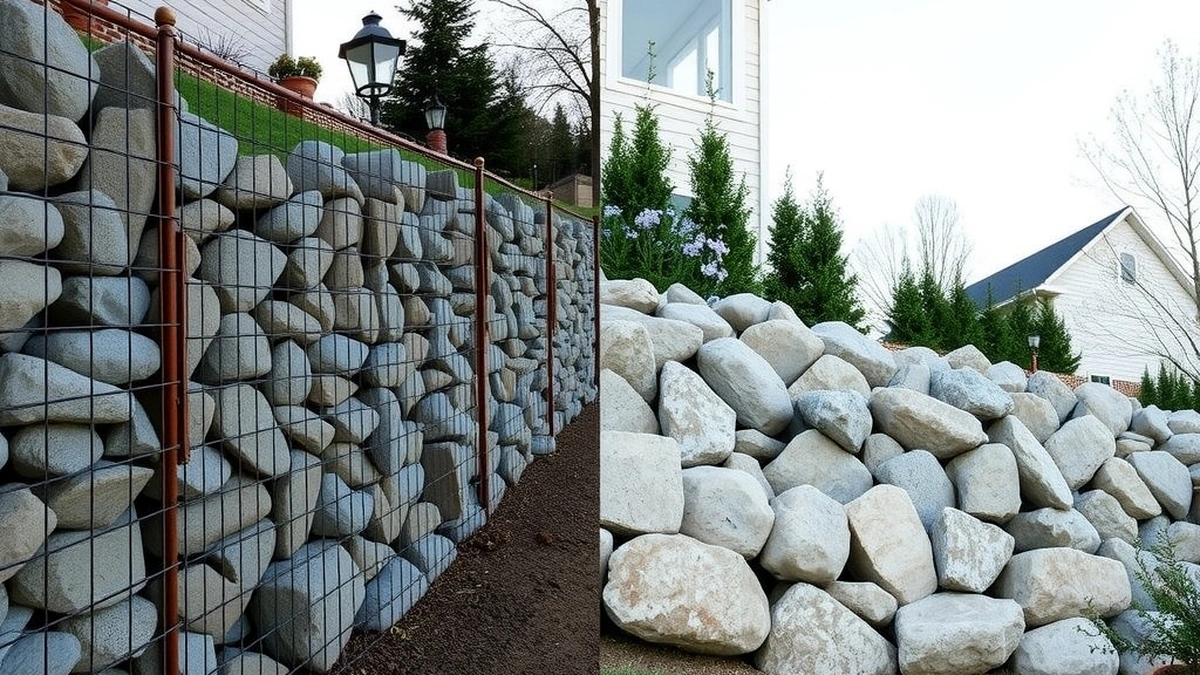
A segmental block wall is built from manufactured concrete units, dry-stacked and often tied back with geogrid layers that extend into the soil. The wall and the reinforced soil act together. It is a flexible system: the units can shift slightly without the wall losing its capacity.
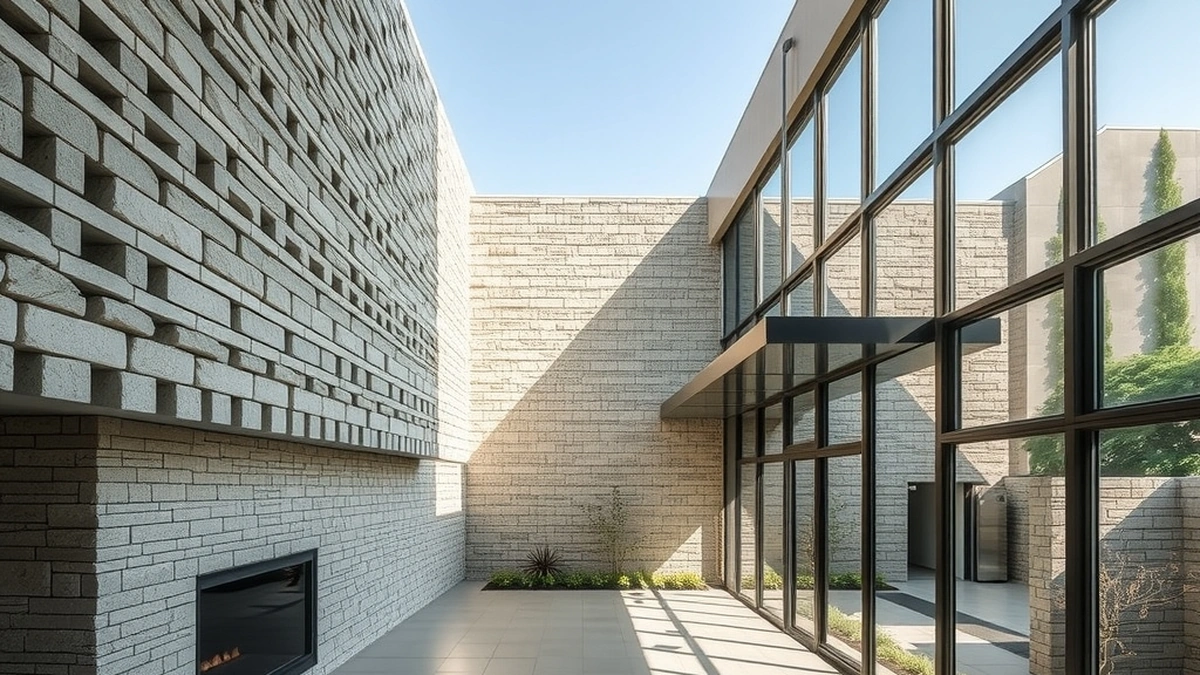
A poured concrete wall is formed and cast in place with steel reinforcement. It is a single structural element, designed by an engineer and built to a reinforcement schedule. It is rigid: movement in the soil shows up as a crack rather than a shift.
Both retain soil. Both need drainage. The difference is in how they resist the load and how they are repaired.
Side by side
| Trait | Segmental block | Poured concrete |
|---|---|---|
| Cost | $15 - $35 / sq ft | $25 - $60 / sq ft |
| Strength | High with geogrid | Very high with steel |
| Appearance | Textured units | Plain, formwork finish |
| Repair | Replace units | Patch or structural repair |
| Build speed | Fast | Slower, formwork and cure |
| Flexibility | Tolerates slight movement | Rigid |
| Height potential | High with geogrid | Very high |
| Drainage | Gravel and pipe | Gravel and pipe, weep holes |
The flexibility row matters in cold climates. A block wall can accommodate slight movement; a rigid concrete wall cracks when the soil moves.
The arithmetic on a 120 square foot face
A 40 foot long, 3 foot high wall has 120 square feet of face.
Segmental block at $25 per square foot: 120 × $25 = $3,000. Drainage and backfill at $10: 120 × $10 = $1,200. Total: $4,200.
Poured concrete at $35 per square foot: 120 × $35 = $4,200. Drainage and backfill at $10: 120 × $10 = $1,200. Total: $5,400.
The poured wall is $1,200 more on this example, before engineering, which is required for both above the local threshold. On a taller wall, the gap widens because the concrete wall needs more steel and thicker formwork.
Where block wins
Cost is the first advantage, and it is significant on a residential wall. The savings can pay for the drainage and the engineering on a smaller project.
Build speed is the second. Block goes up quickly without formwork or a cure period, which shortens the disruption to the yard. A poured wall needs forms, a pour, a cure and a strip, which is a longer sequence.
Repair is the third. A damaged unit is replaced individually, and a section can be rebuilt without touching the rest of the wall. That is why block is often chosen on a wall that has already moved once.
Where poured concrete wins
Strength is the main advantage. A reinforced concrete wall can carry loads and heights that a block wall cannot match economically. That is why highway walls, basement walls and tall retaining structures are usually concrete.
Smoothness is the second. A poured wall can be finished smooth or textured, and it takes a facing material well. That makes it a common choice where the wall is part of the architecture rather than a landscape edge.
Durability is the third. A well-built concrete wall has a very long service life, and it does not depend on the interlock between units. It does, however, depend on the reinforcement being correct, which is why the design and the inspection matter.
Drainage is not optional for either
Both walls need gravel backfill, filter fabric and a perforated drain at the base. A poured wall also needs weep holes through the face.
Water pressure is the dominant load, and a saturated backfill can double it. A concrete wall with no drainage will crack; a block wall with no drainage will lean. Neither material is a substitute for a drain.
The drainage and backfill line at $5 to $15 per square foot applies to both, and it is the part most often value-engineered out of a quote. On a 120 square foot face at $10, that is 120 × $10 = $1,200, and removing it saves less than the repair it causes.
Engineering and permits
A poured concrete wall is a structural element and always needs a designed reinforcement schedule. A block wall above the local height threshold needs an engineered design too, including the geogrid specification.
Many jurisdictions set that threshold at about 4 feet, lower where the wall retains a slope above a structure or carries a surcharge. The permit check comes before construction, for either type.
Building a retaining wall without the required design is not a shortcut. It is a liability that surfaces when the wall moves. The permit and the design are also what an insurer and a future buyer will ask for.
Choosing between them
- Check the local height threshold and permit requirement.
- Decide whether the wall needs to carry a surcharge load.
- Consider the climate: a rigid wall cracks where a flexible one moves.
- Compare the total with drainage and engineering included.
- Decide how the wall should look and whether it will be faced.
- Ask for the design and the drainage detail in writing.
For block costs, see segmental block cost. For the concrete side, read poured concrete cost, and for the drainage detail both need, check retaining wall drainage.
Frequently asked questions
Is poured concrete stronger than segmental block?
A reinforced poured wall is stronger and stiffer, which is why it is used for tall walls and heavy loads. A block wall with geogrid is strong enough for most residential walls.
Which is cheaper, block or poured concrete?
Block is usually cheaper at $15 to $35 per square foot against $25 to $60 for poured concrete, though formwork and access can change the comparison.
Which is easier to repair?
Block. A damaged unit is replaced individually, while a cracked concrete wall needs patching or a structural repair.
Do both need drainage?
Yes. Both need gravel backfill and a perforated drain at the base, and both fail when water pressure builds behind them.
Can I build a poured wall without engineering?
No, not above the local threshold. A poured wall is a structural element and needs a designed reinforcement schedule and a permit.
Which looks better?
That is a matter of taste. Block comes in textured and colored finishes, while poured concrete is usually left plain or faced with another material.
Sources
Some links are affiliate links.If you buy through them we may earn a commission at no extra cost to you. We do not accept payment for rankings. Read the full disclosure.