Segmental Block Reviews: A Guide to Choosing the Right.
Compare segmental block options for retaining walls. Our independent guide covers drainage, soil pressure, and cost per square foot.
Segmental block walls typically cost $15–$35 per square foot, making them the most affordable option among common wall types when drainage and backfill are included.
- Typical range
- Varies by system and site
- First step
- Measure the space and confirm the load
- Professional help
- Recommended for structural or electrical work
Some links on this page are affiliate links.If you buy through them we may earn a commission at no extra cost to you. We do not accept payment for rankings. Read the full disclosure.
Segmental Block Reviews: A Guide to Choosing the Right Wall
Segmental block walls are among the most cost-effective choices for residential retaining walls, typically costing between $15 and $35 per square foot. When properly engineered with adequate drainage and backfill, they can safely resist soil pressure and last decades. Our independent reviews evaluate these systems against other wall types, focusing first on drainage and soil pressure before considering block selection.
Why Drainage and Soil Pressure Matter First
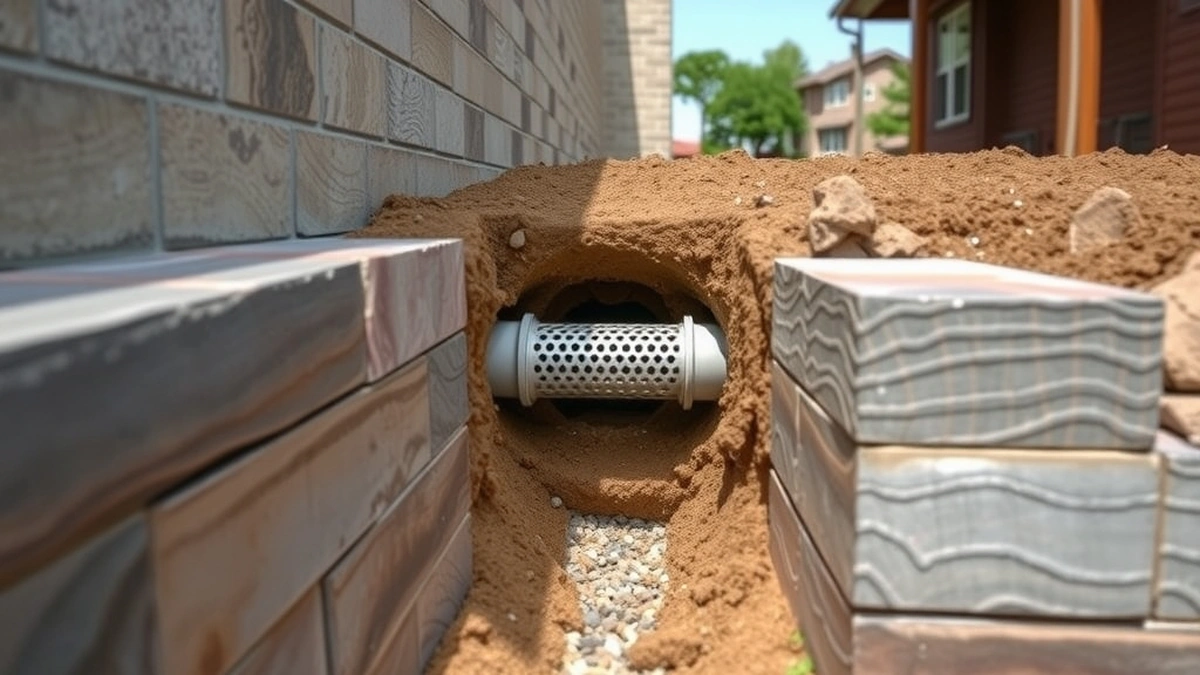
Water accumulation behind a retaining wall creates hydrostatic pressure that can push the wall outward. To prevent failure, a reliable drainage system is non-negotiable. This usually means installing a perforated pipe at the base, surrounded by a layer of compacted gravel. Backfill behind the wall must be granular—such as clean sand or crushed stone—and compacted to a firm bearing surface.
Soil pressure is calculated using the active earth pressure coefficient. For a typical sandy soil with an angle of repose of 30°, the coefficient K equals 1 – sin(30°) = 0.5. If the soil unit weight is 100 pounds per cubic foot and the wall height is 5 feet, the lateral pressure is:
P = K × γ × H = 0.5 × 100 lb/ft³ × 5 ft = 250 lb/ft²
This pressure acts against the wall face. Without drainage, this force builds up steadily and can exceed the wall’s capacity.
Comparing Wall Types by Cost
The following table summarizes typical costs per square foot for common retaining wall materials. All figures are estimates based on industry averages.
| Wall Type | Cost Range (USD/sq ft) | Key Characteristics |
|---|---|---|
| Segmental block | $15–$35 | Most economical; easy to repair; requires good drainage |
| Poured concrete | $25–$60 | Strongest; highest cost; professional installation |
| Timber | $10–$25 | Budget; rot risk; needs replacement every 10–15 years |
| Gabion | $20–$40 | Stone fill; aesthetic; moderate cost |
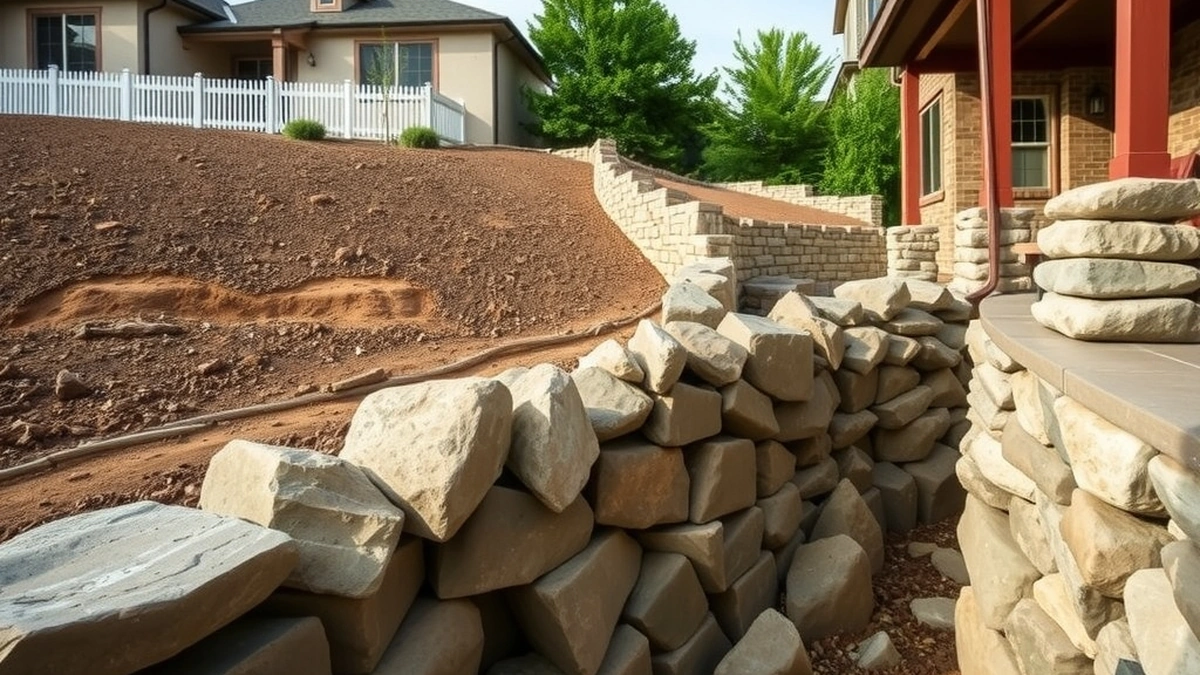
| Boulder | $20–$45 | Large stones; labor-intensive; varies widely |
Segmental block sits comfortably below poured concrete and above timber, making it an attractive middle-ground option. Timber is cheaper but demands more frequent maintenance. Gabion and boulder walls are pricier and may require specialized equipment.
Segmental Block Construction Details
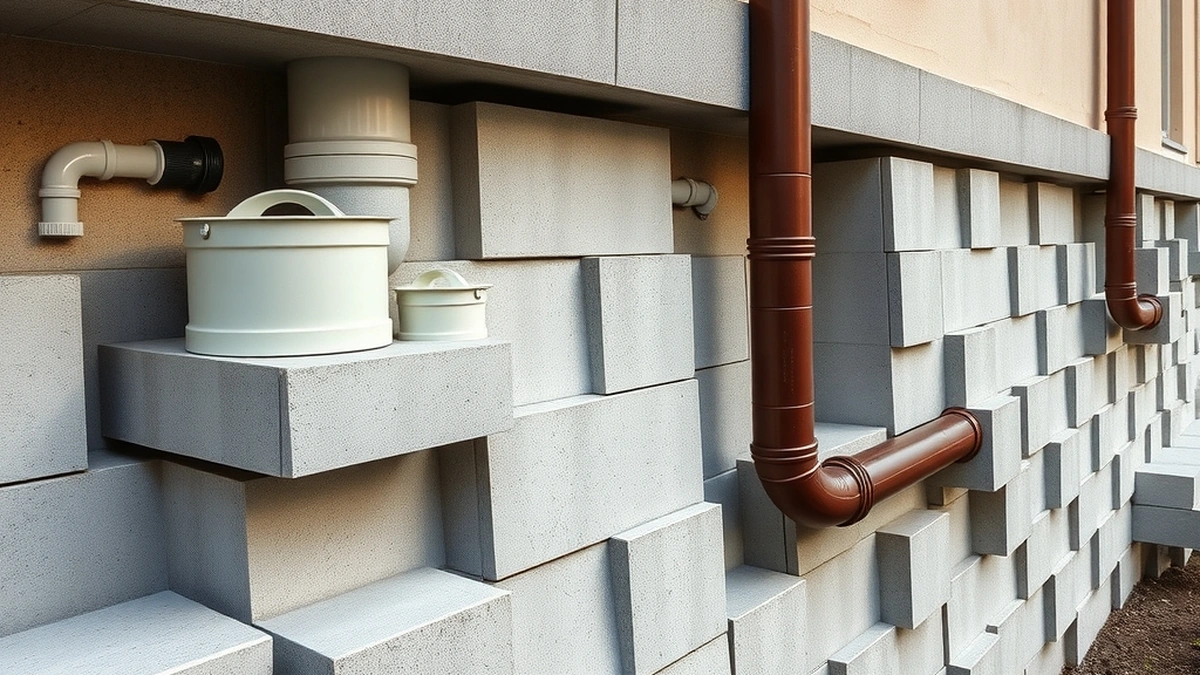
Segmental blocks—also known as interlocking concrete blocks (ICB)—come in standard sizes such as 8×8×16 inches. They are available in dry-stack (no mortar) and wet-stack (mortar-bonded) configurations. Dry-stack walls rely on geometric interlock for strength, while wet-stack walls use mortar joints for added rigidity. Both types incorporate holes through which drainage pipes pass.
To estimate the number of blocks for a typical wall, consider a wall that is 10 feet long, 2 feet tall, and 8 inches thick. The volume of one block is approximately 8×8×16 = 1,024 cubic inches, or 0.59 cubic feet. The wall volume is:
10 ft × 2 ft × (8/12) ft = 13.33 cubic feet
Dividing wall volume by block volume gives:
13.33 ÷ 0.59 ≈ 22.6 blocks, rounded up to 23 blocks.
This calculation assumes a single-wythe wall. Multi-wythe walls would require proportionally more blocks.
Load Calculations and Arithmetic
Once you know the wall dimensions, you can determine the required thickness based on allowable soil pressure. Using the earlier example of 250 lb/ft² lateral pressure and a wall capacity of 150 lb/ft², the minimum thickness is:
Thickness = 250 ÷ 150 = 1.67 ft, rounded up to 2 feet.
With a block height of 16 inches (1.33 ft), you need:
Courses = 2 ft ÷ 1.33 ft ≈ 1.5 → 2 courses
Along the 10-foot length, each 8-inch block fits:
Blocks per course = 10 ft ÷ (8/12) ft = 15 blocks
Total blocks = 15 blocks × 2 courses = 30 blocks.
These numbers illustrate how modest block counts translate to substantial structural support.
Installation Steps
Proper installation is critical to performance. Follow these steps:
- Excavate the trench to the desired depth, ensuring a stable footing.
- Lay a perforated drainage pipe at the base, wrapped in landscape fabric.
- Add a 4–6 inch layer of compacted gravel for water flow.
- Build the first course of segmental blocks, pressing them firmly together.
- Continue courses vertically, staggering joints for strength.
- Install cap stones or coping pieces on top.
- Backfill behind the wall with granular material, tamping lightly.
- Install additional drainage outlets if needed.
For detailed installation procedures, see our guide to retaining wall installation.
Maintenance and Repair
Even well-built segmental block walls benefit from regular inspection. Check drainage holes annually for clogging, and inspect for cracked or displaced blocks. Damaged blocks can be individually removed and replaced without disturbing the entire wall—a significant advantage over poured concrete or timber repairs. Routine maintenance extends service life and prevents minor issues from becoming costly failures.
When to Choose Other Walls
While segmental block excels in cost and repairability, other materials have distinct strengths. Timber walls are cheapest but rot quickly and require frequent replacement. Poured concrete offers maximum strength and longevity but at a premium price. Gabion and boulder walls provide striking visual appeal and can blend with natural surroundings, though they come at a higher cost and demand specialized handling.
If your primary goals are affordability, ease of repair, and adequate drainage, segmental block remains a top-tier choice.
Final Review Summary
After reviewing multiple factors—cost, drainage requirements, soil pressure resistance, and ease of repair—segmental block walls emerge as a practical, durable solution for most residential applications. They deliver strong performance when paired with proper drainage and compacted backfill, all while staying well below the cost of poured concrete. For homeowners seeking a reliable, maintainable wall, segmental blocks represent a sound investment.
Next, compare how much does retaining wall cost, retaining wall installation, retaining wall repair before you commit.
Frequently asked questions
How much does a segmental block wall cost per square foot?
Segmental block walls usually cost between $15 and $35 per square foot, which is often the lowest price among common wall types when drainage and backfill are factored in.
What is the main advantage of segmental block walls?
They offer a strong balance of affordability, durability, and ease of repair compared to poured concrete, timber, gabion, and boulder walls.
Do segmental block walls require drainage?
Yes, proper drainage is essential. Water behind the wall creates hydrostatic pressure that can cause failure, so a perforated pipe and gravel reservoir are necessary.
How do I calculate the number of blocks needed?
Measure the wall length, height, and thickness (typically 8 inches). Divide the total volume by the volume of one block (about 0.6 cubic feet) to get the count.
Can segmental blocks be repaired easily?
Yes, individual broken blocks can be replaced without major demolition, unlike timber or poured concrete walls that require more extensive work.
Which wall type is best for budget-conscious homeowners?
Segmental block walls are typically the most cost-effective option, especially when paired with proper drainage and compacted backfill.
Sources
Some links are affiliate links.If you buy through them we may earn a commission at no extra cost to you. We do not accept payment for rankings. Read the full disclosure.