Best retaining wall: what actually matters
How to judge a retaining wall on drainage, base, and load instead of looks, with installed material costs from $10 to $60 per square foot.
The best retaining wall is the one whose base, drainage, and reinforcement match the soil and load behind it. For most US residential yards that means segmental block on compacted gravel, at $15 to $35 per square foot installed.
- Block wall cost
- $15–$35 per sq ft
- Poured concrete cost
- $25–$60 per sq ft
- Timber wall cost
- $10–$25 per sq ft
- Drainage and backfill
- $5–$15 per sq ft
Some links on this page are affiliate links.If you buy through them we may earn a commission at no extra cost to you. We do not accept payment for rankings. Read the full disclosure.
The best retaining wall is not the most expensive one on the quote. It is the wall whose base, drainage, and reinforcement match the soil and load behind it. For most US residential yards that means a segmental block wall on a compacted gravel base, with a drain core and an engineer’s review once the wall passes 4 feet or carries anything heavier than soil.
What “Best” Actually Means
A retaining wall is a structure that holds soil at two different elevations, so the ground above it stays put while the ground below stays usable. Every good decision follows from that single job. The wall has to resist lateral earth pressure for decades, in wet soil and dry, without moving enough to crack its face or settle the ground it supports.
That is why appearance is the last question, not the first. A wall with beautiful stone and no drain will bulge within a few seasons. A plain block wall with a proper drain core and compacted backfill will still be plumb in 30 years. Buyers who shop on the face material alone are shopping on the cheapest variable.
Soil Pressure and Water Decide the Design
Two numbers drive everything: how heavy the soil is and how much water it holds. A rough working estimate for lateral earth pressure uses a soil unit weight of about 110 to 120 pounds per cubic foot and an earth pressure coefficient near 0.3 for drained granular soil.
At 4 feet of height, the pressure at the base works out to:
110 pounds per cubic foot × 4 feet × 0.3 = 132 pounds per square foot.
Now add water. Water weighs 62.4 pounds per cubic foot, and a saturated backfill pushes with full hydrostatic pressure:
62.4 pounds per cubic foot × 4 feet = 250 pounds per square foot at the same depth.
That is the whole argument for drainage in one line. Wet soil does not just get heavier, it loses the friction that lets a wall stand up, and the water adds its own load on top. A 4-foot wall that was fine when built can be carrying more than twice its design load after a week of rain if the drain is clogged.
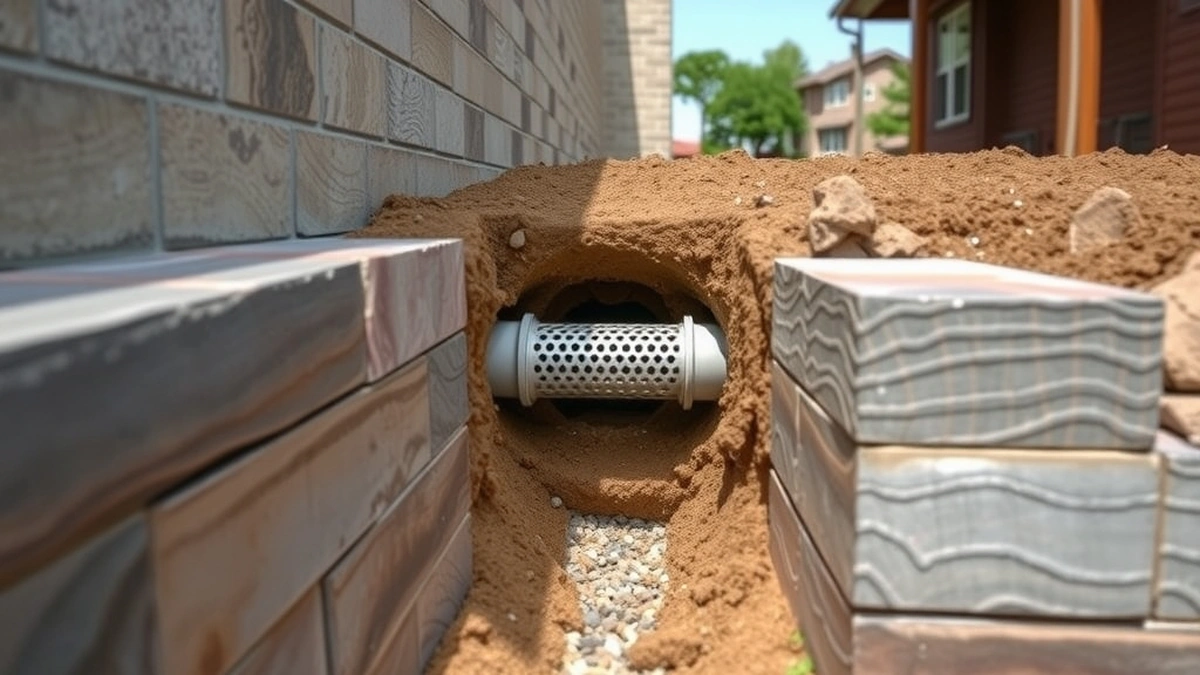
Budget drainage and backfill at $5 to $15 per square foot of wall face. On a 100-square-foot wall that is $500 to $1,500 — cheap insurance against a rebuild.
Materials Compared
Installed costs below are per square foot of wall face, including material and labor but not permits, engineering, or major excavation.
| Material | Installed cost | Best height range | Main weakness |
|---|---|---|---|
| Timber | $10–$25 / sq ft | 1–3 ft | Rot in wet soil; 15–25 year life |
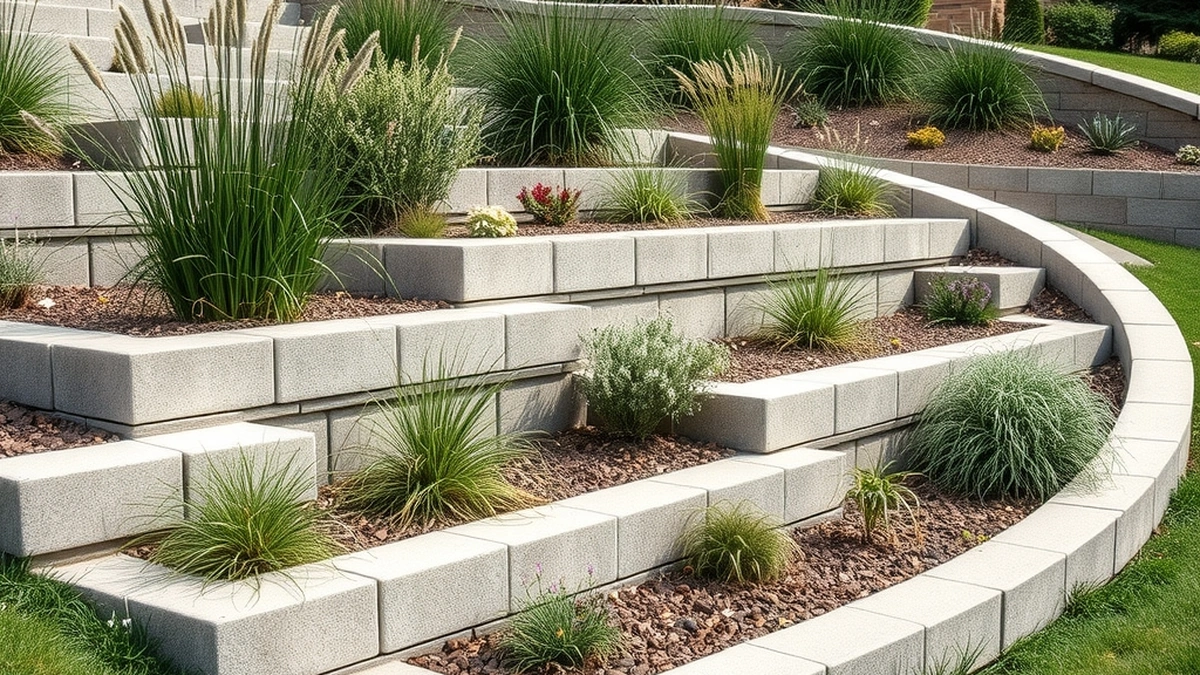
| Segmental block | $15–$35 / sq ft | 1–6 ft | Needs a level base; face can shift if drainage fails |
| Gabion | $20–$40 / sq ft | 1–8 ft | Wire corrosion in salt air |
| Boulder | $20–$45 / sq ft | 1–5 ft | Needs heavy equipment access |
| Poured concrete | $25–$60 / sq ft | 2–12 ft | Cracking if reinforcement or joints are wrong |
Where Each Material Wins
Segmental block vs poured concrete is the decision most homeowners actually face. Block is modular, arrives on a pallet, and can be laid by a crew without formwork. Poured concrete is stronger and better suited to a cantilever wall that has to resist a driveway surcharge, but it needs forms, rebar, and a footing, which is where the extra $10 to $25 per square foot goes.
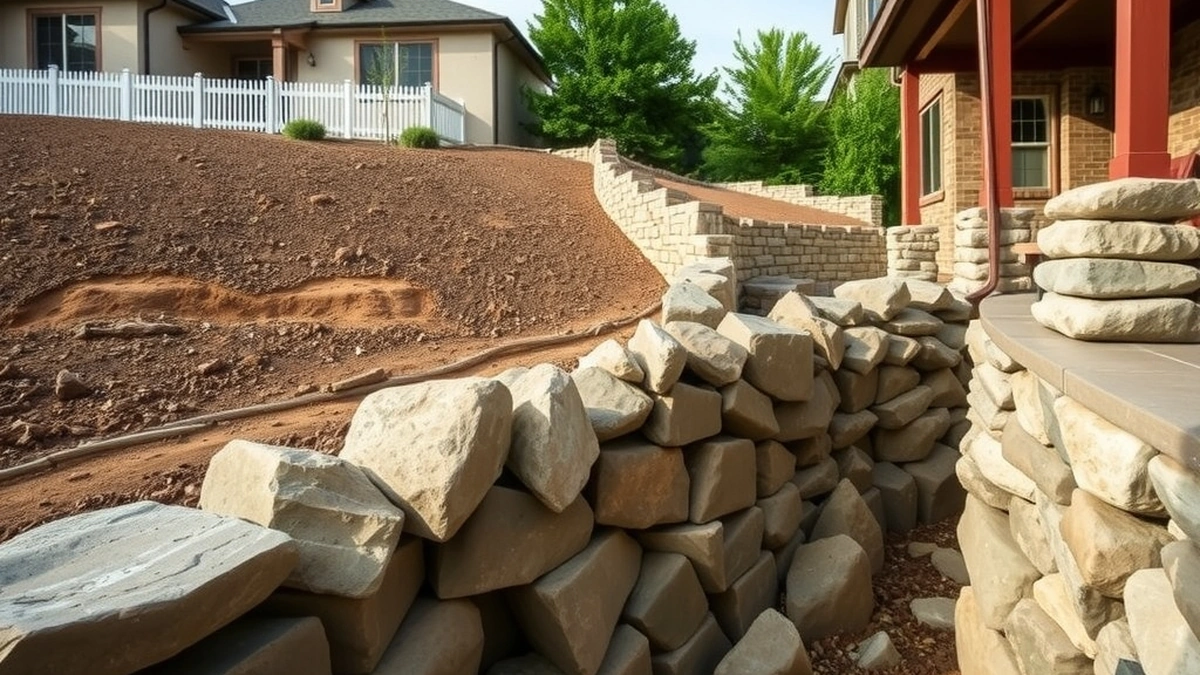
Timber is the right answer for a 2-foot garden edge you might remove in ten years, not for a wall holding up a parking pad. Boulder and gabion suit rural sites with machine access and a naturalistic look, and both drain freely, which is their real advantage. None of these materials is “best” in isolation; each is best against a specific height, soil, and access condition.
Cost Arithmetic for a Typical Wall
Take a wall 30 feet long and 4 feet high. The face area is:
30 feet × 4 feet = 120 square feet.
At the midpoint of the block range, $25 per square foot:
120 square feet × $25 = $3,000.
Add drainage and backfill at $10 per square foot:
120 square feet × $10 = $1,200.
Total installed estimate: $4,200, before permits or engineering.
The same wall in poured concrete at $40 per square foot would be $4,800 for the wall plus the same $1,200 for drainage, or $6,000. That $1,800 gap buys strength the block wall may not need at 4 feet. Our retaining wall cost guide breaks the same numbers down by height.
How to Judge a Wall Before You Pay for It
- Fix the height first. Measure from the bottom of the footing to the top of the wall, because that is how most building departments measure it, and it drives the permit and engineering question.
- Get drainage on paper. The bid should name the perforated pipe, the gravel gradation, the filter fabric, and where the outlet daylights.
- Ask for the base specification. “Six inches of compacted 3/4-inch crushed stone” is a specification; “we’ll prep the base” is not.
- Ask who stamps the design. Above 4 feet, or with any surcharge, the answer should be a licensed engineer in your state, not the sales rep.
- Compare scope, not totals. The low bid usually wins by leaving out drainage, haul-off, or compaction, and those items come back as change orders.
Questions That Separate Good Contractors From Cheap Ones
Ask each bidder how they compact backfill, in what lift thickness, and with what equipment. Ask what happens if they hit rock or a utility. Ask for two walls they built at least five years ago that you can look at. A contractor who can answer those three questions without hedging is worth a higher number than one who cannot.
Bottom Line
The best retaining wall is the one built for its site: correct base, real drainage, reinforcement where the load demands it, and an engineer involved at the height your jurisdiction requires. Material is a cost and appearance decision that comes after those. Start with retaining wall drainage and types of retaining wall, then price the wall you actually need rather than the one that photographs best.
Frequently asked questions
What is the best material for a retaining wall?
Segmental concrete block is the best all-round choice for residential walls from 1 to 6 feet because it is modular, drains freely through the joints, and accepts geogrid when the design calls for it.
Is a concrete wall better than a block wall?
Poured concrete is stronger per inch and better for cantilevered walls above 4 feet or walls carrying a surcharge, but it costs $25 to $60 per square foot versus $15 to $35 for segmental block.
Does the cheapest retaining wall last?
Timber at $10 to $25 per square foot is the cheapest option, but pressure-treated timber in wet soil typically lasts 15 to 25 years, so the lower price is partly a shorter service life.
How tall can a retaining wall be without an engineer?
Rules vary by jurisdiction, but many US building departments require sealed drawings once a wall exceeds 4 feet, or at any height when it supports a driveway, structure, or steep slope above it.
What is the most common reason a retaining wall fails?
Water. Saturated backfill adds hydrostatic pressure and reduces soil friction, so a wall without a gravel drain core, perforated pipe, and graded surface typically bulges or leans first.
How much does drainage add to a retaining wall project?
Drainage and backfill typically add $5 to $15 per square foot of wall face, which is roughly a third of the cost of a block wall and is not a place to save money.
Sources
Some links are affiliate links.If you buy through them we may earn a commission at no extra cost to you. We do not accept payment for rankings. Read the full disclosure.