How long does retaining wall last? By material
Typical service life for timber, block, poured concrete, gabion, and boulder retaining walls, and the four things that shorten it most.
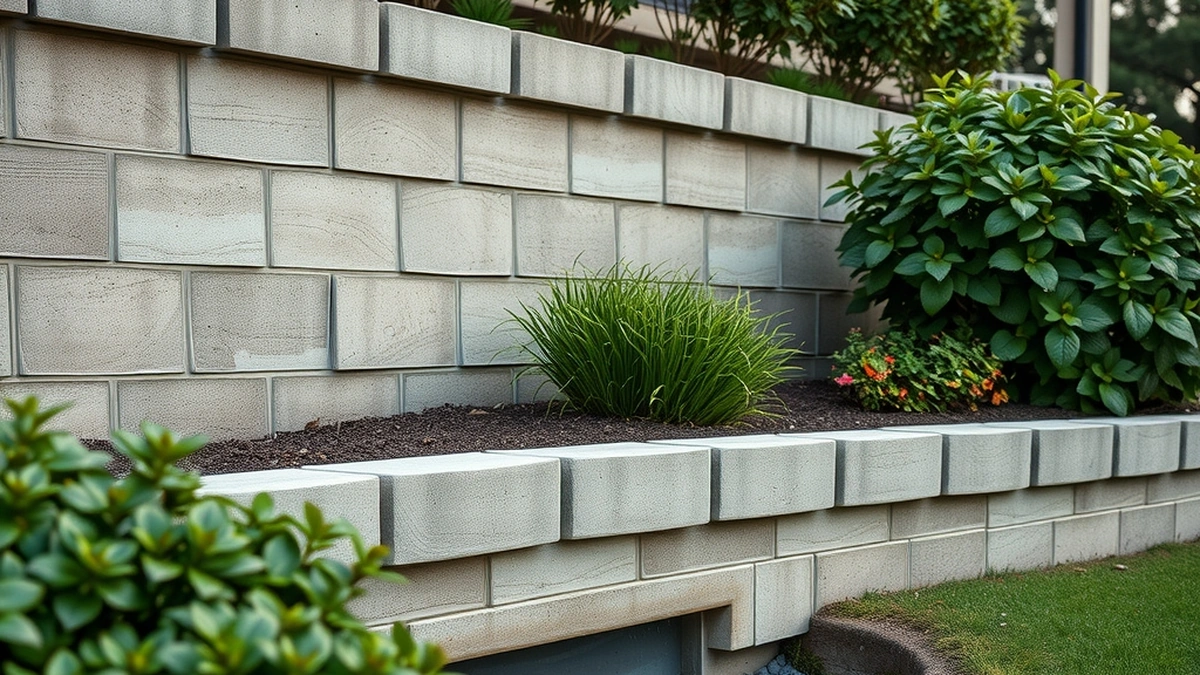
A well-drained retaining wall lasts 25 to 100 years depending on material. Pressure-treated timber is the short case at roughly 15 to 25 years; segmental block and poured concrete commonly reach 50 years or more.
- Timber service life
- 15–25 years
- Block service life
- 50+ years
- Poured concrete life
- 50–100 years
- Drainage and backfill
- $5–$15 per sq ft
Some links on this page are affiliate links.If you buy through them we may earn a commission at no extra cost to you. We do not accept payment for rankings. Read the full disclosure.
A retaining wall lasts 25 to 100 years depending on material, but its material is only half the answer. Drainage and construction quality decide whether a wall reaches its expected life or fails in a decade. A well-built timber wall outlasts a badly built concrete one, and that is not a rhetorical point.
What “Service Life” Means Here
A retaining wall is a structure that holds soil at two different elevations and resists lateral earth pressure for as long as the grade difference exists. Service life means the period before the wall stops doing that job well enough — not the day it collapses, but the day it starts leaning, bulging, or leaking enough to need repair.
The ranges below are typical estimates for properly built walls on ordinary soils, not warranties. Site conditions move them in both directions.
Service Life by Material
| Material | Typical service life | Installed cost | The limiting factor |
|---|---|---|---|
| Timber | 15–25 years | $10–$25 / sq ft | Rot at the soil line |
| Segmental block | 50+ years | $15–$35 / sq ft | Base settlement, drainage failure |
| Poured concrete | 50–100 years | $25–$60 / sq ft | Cracking, freeze-thaw, reinforcement corrosion |
| Gabion | 25–50 years | $20–$40 / sq ft | Wire corrosion, stone loss |
| Boulder | 75+ years | $20–$45 / sq ft | Stone quality, settlement of the base |
The pattern is simple: the more the wall depends on a manufactured component that can corrode or rot, the shorter the range. Stone lasts; wire and wood do not.
The Four Things That Shorten Life
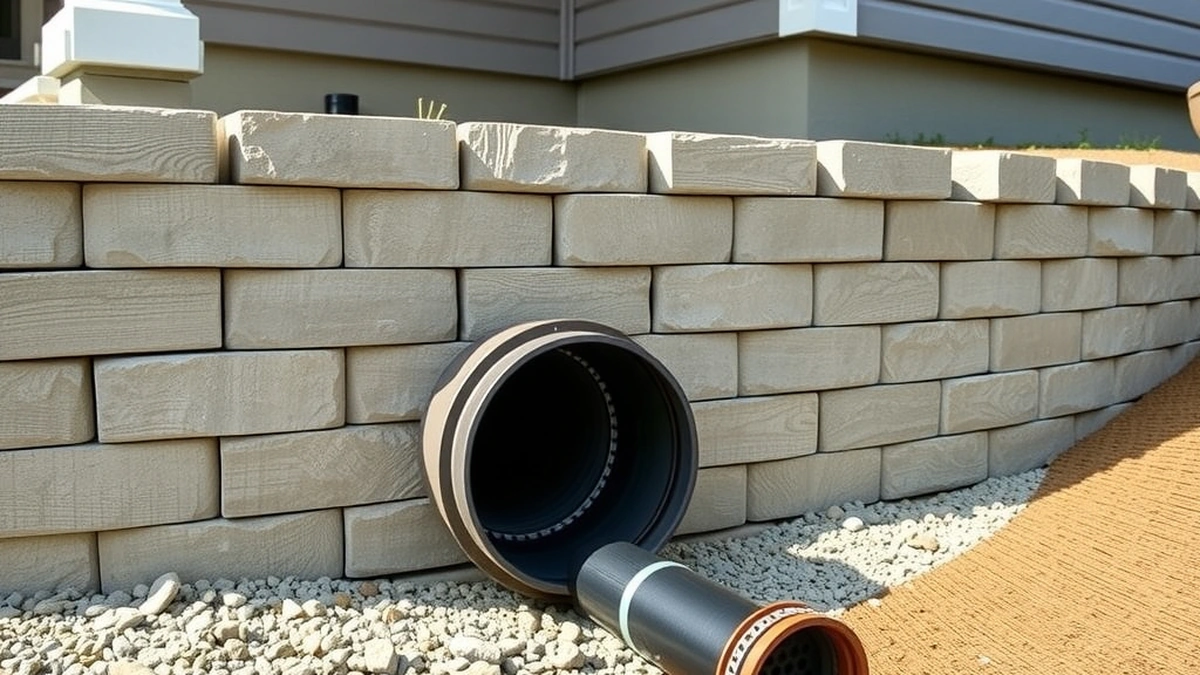
Water. Saturated backfill roughly doubles the lateral load on a wall and removes the soil friction the wall relies on. Water behind a wall is the single largest cause of early failure, and the cost to prevent it is $5 to $15 per square foot of face.
Poor compaction. Backfill dumped in thick lifts and never compacted settles later, leaving a void behind the wall and a dip in the surface above it. That settlement pulls the wall face out of line.
Clay backfill. Clay holds water against the wall and expands. A wall backfilled with native clay can carry loads well beyond its design even with a drain installed, because the clay itself becomes the reservoir.
Trees and shrubs. Roots open joints, and a mature tree within a wall height of the face can displace units. Vegetation looks good until the wall starts to move.
Timber: The Short Case
Pressure-treated timber is the cheapest wall at $10 to $25 per square foot, and it is priced for a shorter life. In continuously wet soil, 15 to 25 years is the usual estimate, with the low end applying to untreated or non-ground-contact lumber and to walls with no drainage.
Timber also fails in a specific way: it rots at the soil line, where moisture and oxygen alternate. That is usually a third of the way up the exposed face, not at the bottom, which is why a wall can look fine and then lose a course suddenly.
Railroad ties and reclaimed timber are the worst case, because their treatment history is unknown and their lifespan is already partly spent. New lumber rated for ground contact is the only sensible choice, and even then the 15-year end of the range applies when the wall sits in shade with poor drainage.
Block and Concrete: The Long Case
Segmental block and poured concrete both commonly reach 50 years, and poured concrete can go far beyond that. Their failure mode is rarely the material. It is the base, the drainage, or the reinforcement.
For concrete, the vulnerable element is the steel. Water reaching rebar through a crack starts corrosion, corrosion expands, and the expansion spalls the face. Good cover, control joints, and a drained backfill protect the steel, which is why concrete walls on wet sites underperform their material’s reputation.
Control joints are the other half of that. A long concrete wall without joints will crack wherever it wants to, and the crack it chooses is rarely the one you would have picked. Joints placed at regular intervals and sealed give the wall a place to move, and sealed joints are far cheaper to maintain than spalled faces.
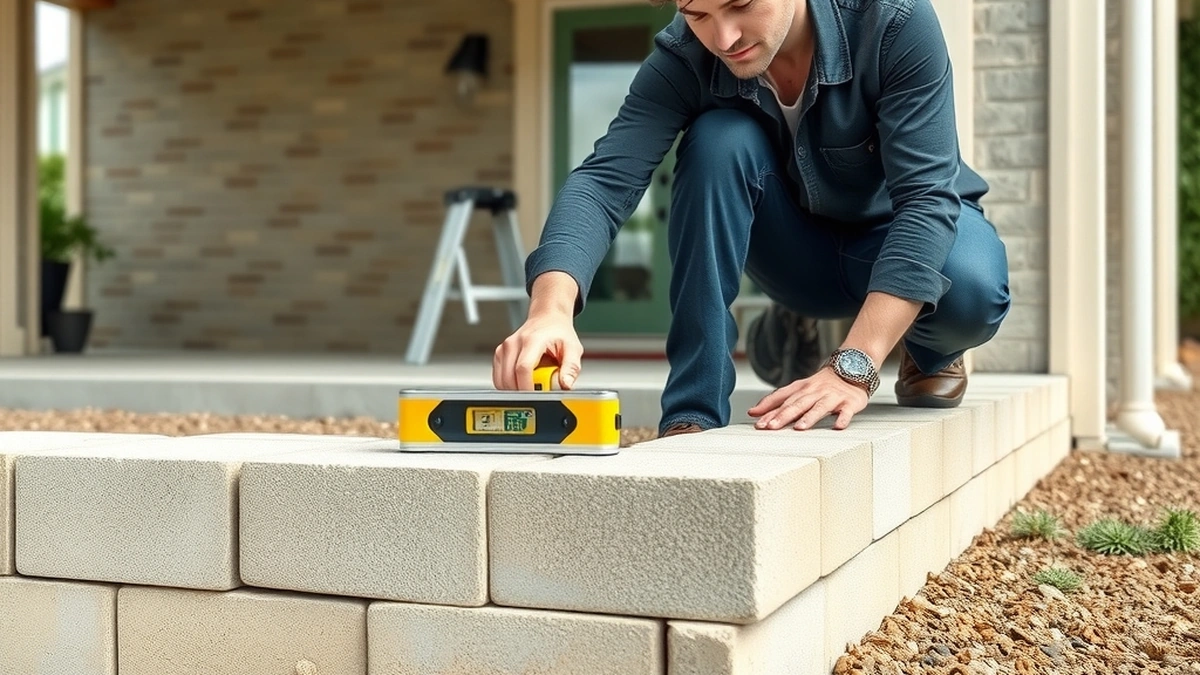
Block walls fail at the base first. If the leveling pad was not compacted or the first course was not embedded, the wall rotates as a unit rather than cracking, and that shows up as a uniform lean.
How to Add Years to a Wall
- Inspect annually. Walk the face in spring and fall, looking for bulges, new cracks, offset joints, and staining that marks a blocked drain.
- Clear the drainage path. Flush the perforated pipe outlet, clear weep holes, and confirm the outlet daylights downhill rather than into soil.
- Move water away from the top. Grade the surface above the wall to fall away, and extend downspouts well past the backfill.
- Manage vegetation. Remove saplings and volunteer trees within a wall height of the face, and keep irrigation off the backfill.
- Repair small defects early. A repointed joint or a reset cap costs a fraction of a rebuild.
When Repair Stops Making Sense
A wall with a blocked drain and one bulged section is a repair. A wall that has moved more than about 2 inches over a long section, has a continuous horizontal crack, or is holding up a structure is an engineering question, not a maintenance one. The cost of a rebuild at $15 to $60 per square foot is the benchmark to compare against. If repairs approach a third of that, replacement usually wins.
For the failure modes behind these numbers, read leaning wall cost and settlement prevention. For the drain detail that buys the years, see retaining wall drainage.
Frequently asked questions
How long does a retaining wall last?
It depends on material and drainage. Timber is typically estimated at 15 to 25 years, segmental block at 50 or more, poured concrete at 50 to 100, and boulder walls at 75 or more when the stone is sound.
Do retaining walls need maintenance?
Yes. Annual inspection, clearing weep holes and drain outlets, keeping downspouts away, and controlling vegetation are the tasks that protect a wall's service life.
What makes a retaining wall fail early?
Water is the leading cause. A clogged drain or missing gravel core lets saturated soil add hydrostatic pressure, and the wall starts to bulge, lean, or settle long before its material wears out.
Do concrete retaining walls crack over time?
They can. Shrinkage cracks and freeze-thaw damage are normal aging, but wide, offset, or leaking cracks usually point to a footing or reinforcement problem rather than simple age.
How long does a timber retaining wall last in wet soil?
Pressure-treated timber in constant contact with wet soil is often estimated at 15 to 25 years, and the lower end applies when drainage is poor or the timber is not rated for ground contact.
Can I extend the life of an existing wall?
Often yes. Restoring drainage, regrading the surface above the wall, repairing joints, and removing trees and shrubs whose roots are opening the face can add years to a wall that is still structurally sound.
Sources
Some links are affiliate links.If you buy through them we may earn a commission at no extra cost to you. We do not accept payment for rankings. Read the full disclosure.